Final Verdicts Issued for Eight Environmental Activists in Iran: Total of 58 Years in Prison
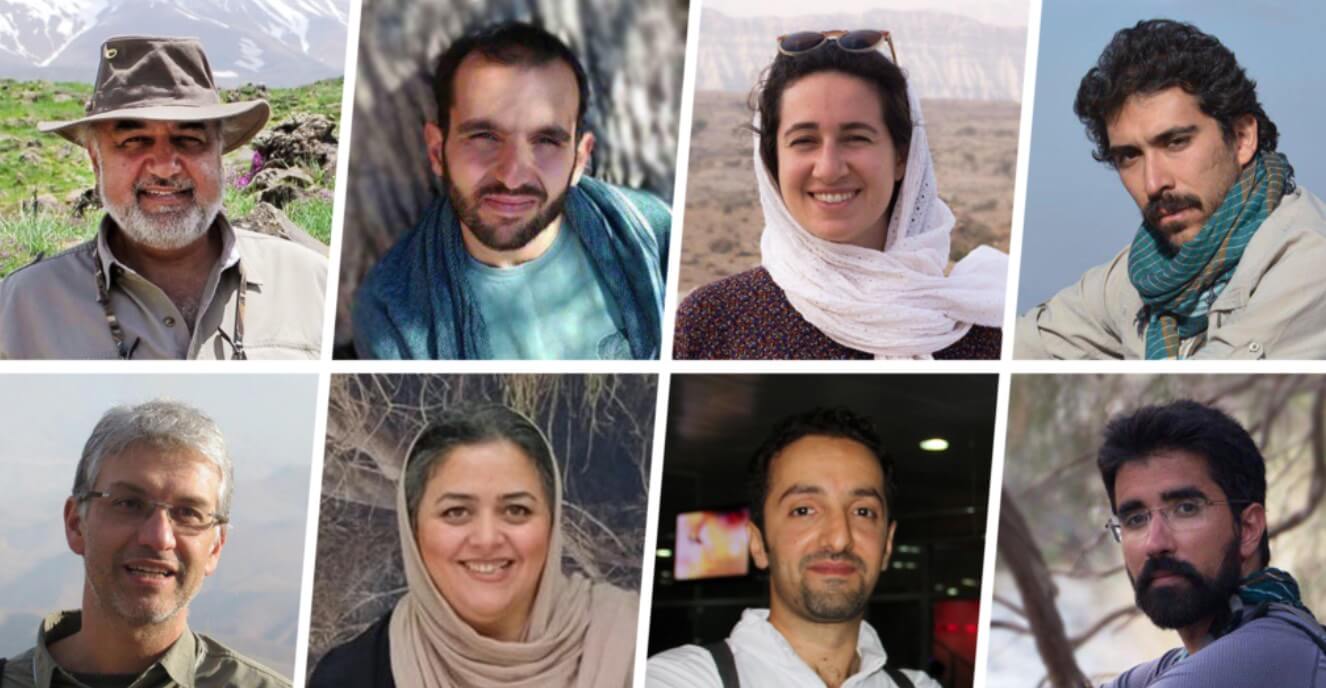
More than two years after eight environmental activists were temporarily detained in Iran, the imprisoned environmental activists have been sentenced to a combined total of 58 years in prison.
Gholamhossein Esmaili, spokesman for the Judiciary, announced on Tuesday, February 19, the final verdicts in the environmental activists’ case, stating that Morad Tahbaz and Niloufar Bayani, among the defendants in this case, have been sentenced to 10 years in prison and forfeiture of received funds on charges of “cooperation with America.”
According to this judicial official’s announcement, Houman Jokar and Taher Ghadyrian have also been sentenced to 8 years in prison each on similar charges.
On this basis, Sam Rajabi, Sepideh Kashani, and Amirhossein Khaleghi Hamidi, other imprisoned environmental activists in Iran, have been sentenced to 6 years in prison each on charges of “espionage.” For Abdolreza Kouhpaie, another detained environmental activist, a sentence of 4 years in prison has been issued on charges of “gathering and conspiracy with intent to act against national security.”
The published final verdicts show that the sentences of these environmental activists remain unchanged despite all the criticism, and these severe sentences have been upheld by the authorities of the Islamic Republic.
Previously, the UN Environment Program had expressed deep concern over the issuance of severe prison sentences for several environmental activists accused of “espionage” in Iran.
The U.S. State Department spokesperson condemned the initial ruling of the Islamic Republic’s Revolutionary Court for Iranian environmental activists, which sentenced them to six to ten years in prison.
Houman Jokar, Taher Ghadyrian, Morad Tahbaz, Sepideh Kashani, Niloufar Bayani, Amirhossein Khaleghi, Sam Rajabi, and Abdolreza Kouhpaie are among the detained environmental activists in Iran. These defendants have been held in temporary detention for more than two years.
Kavous Seyed Emami was also among those arrested, and two weeks after his detention, news of his death in prison was released. Islamic Republic authorities claimed he committed suicide; however, Seyed Emami’s family has rejected this claim.
The environmental crisis in Iran has long drawn the attention of the international community. U.S. authorities have repeatedly warned about the mismanagement of Iran’s natural resources, widespread deforestation, and unnecessary and unplanned dam construction aimed at filling the pockets of corrupt officials of the Islamic Republic regime, describing it as one of the main factors in the emergence of various environmental crises, including devastating floods and unprecedented droughts.
Source: Voice of America