Floods in Iran; Death Toll Rises to ’44 People’ and Warning to ‘Rumor Spreaders’
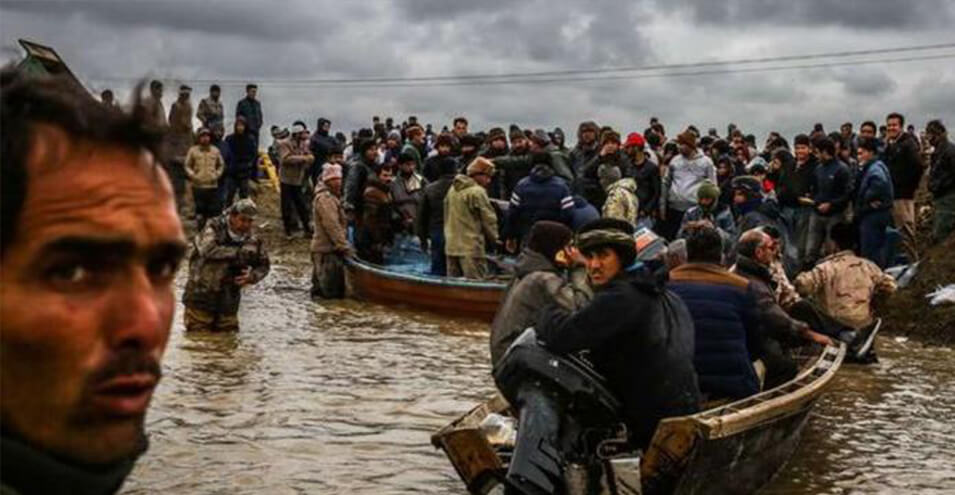
The death toll from the recent floods in Iran has reached “44 people.” More than 29,000 flood victims received “emergency shelter.” According to NAJA, 27 highways in the country are blocked. A judicial official has also warned “those spreading rumors” in cyberspace.
Intense rainfall and flooding in recent days have caused heavy casualties and damage in most provinces of Iran, during which tens of thousands of people lost their homes. Morteza Salimi, head of Iran’s Red Crescent Organization for Relief and Rescue, today Thursday, the 8th of Farvardin (March 28), reported “emergency and temporary shelter” for more than 29,000 flood victims.
According to this Iranian Red Crescent official, from the 4th until this morning, the 8th of Farvardin, “rescue operations have been underway in all provinces of the country except Alborz Province.”
Morteza Salimi told the state news agency IRNA: “Over the past four days, a total of 56,585 people have been provided with relief services, of which 29,030 people were given emergency shelter and five injured people requiring care services were transferred to medical centers and hospitals.” This Iranian Red Crescent official added that “rescue operations continue in 14 provinces of the country.”
Death Toll Rises to “44 People”
HamidReza Khankeh, deputy head of the “National Crisis Emergency Organization,” said today Thursday that the death toll from recent weather events in Iran has reached 44 people.
According to Mehr News Agency, this Iranian Emergency Organization official added: “21 people died in Fars Province, 7 in Golestan, 5 in Mazandaran, 3 in North Khorasan, 2 in Kohgiluyeh and Boyer-Ahmad, 1 in Kermanshah, 1 in Khuzestan, 2 in Lorestan, 1 in Hamadan, and 1 in Semnan.”
Yesterday’s report from Iran’s Legal Medicine Organization stated that the death toll from flooding and heavy rains in recent days in the country was 40 people. Mehrdad Bakhshi, deputy crisis management of Iran’s Legal Medicine Organization, said regarding the death toll from recent floods in various provinces: “In the second wave of rainfall, 19 people in the city of Shiraz (Fars Province), 1 person in Khuzestan Province, 2 people in Kohgiluyeh and Boyer-Ahmad Province, 5 people in Golestan Province (boat capsizing), 2 people in Lorestan Province (building collapse), 1 person in Semnan Province, and 1 person in Kermanshah Province (Sarpol-e Zahab) lost their lives as a result of flooding.”
The deputy crisis management of Iran’s Legal Medicine Organization also noted regarding “death statistics from the first wave of rainfall (before the Shiraz incident two days ago)”: “In the first wave of rainfall, unfortunately 9 of our compatriots in Mazandaran, Golestan, and North Khorasan provinces lost their lives.”
Closure of 27 Transportation Routes
Nader Rahmani, head of the Information Center and Traffic Police of Iran’s Law Enforcement, said today Thursday that 27 transportation routes in the country are blocked “until further notice.” This official reported yesterday that 24 transportation routes in Iran were blocked.
Mehr News Agency, citing the head of the information center and traffic police of NAJA, reported that the blocked routes are in most Iranian provinces including Tehran, Alborz, Golestan, Semnan, Gilan, Kohgiluyeh and Boyer-Ahmad, Hamadan, Kurdistan, Mazandaran, Ilam, Khuzestan, Chaharmahal and Bakhtiari, Lorestan, Bushehr, Razavi Khorasan, South Khorasan, and Qom.
Reasons for blocking these transportation routes include “insufficient safety,” “mountain collapse,” “freezing,” “flooding and bridge and road destruction,” “landslide,” “waterlogging,” “rising water levels and river overflow,” and “flooding and road subsidence.”
Further Warning to “Rumor Spreaders”
In addition to media and official sources of the Islamic Republic, the recent floods in Iran received widespread coverage in cyberspace and social media with an abundance of news and images. Users of these networks, in addition to sharing news and images, have addressed topics such as possible factors contributing to the floods, resulting damages, how to address the consequences of this natural disaster, and the role of “mismanagement” in causing the floods.
Some of this news and commentary has met with harsh reactions from Iranian government and judicial officials. Javad Javidnia, Deputy Prosecutor General in charge of cyberspace affairs, said today Thursday, referring to “rumors” spread regarding the recent floods in Iran: “The Prosecutor General’s cyberspace office has asked the cyber police to monitor spread rumors and deal with those who produce and spread false news.”
Javidnia added that “all cases involving the dissemination of falsehoods, inciting public anxiety, and rumor-mongering in current circumstances will be dealt with,” and furthermore “those who produce these rumors will be dealt with, as well as those who spread news without regard to its accuracy or inaccuracy.” This judicial official emphasized that “rumor spreaders” themselves would be considered “accomplices in the crime.”
The “cyber information production and exchange” police of Iran, known as Feta, also reported yesterday on “dealing with rumor-mongers” regarding the recent floods in the country. According to ISNA, Ramin Pashaei, social deputy of the Feta police, said that “the police will deal legally with those who attempt to spread rumors about the recent flood events in cyberspace and cause public anxiety and disturb social peace.”
This Feta police official added: “For the past few days, images about flooding and related incidents have been circulating in cyberspace, and they mention financial and human damages that, with some reflection and careful examination, one can realize these images relate to flood damages outside the country or previous incidents.” He also asked cyberspace users not to pay attention to news spread in cyberspace and to follow news related to rainfall and flooding “only” through official and “credible” media of the Islamic Republic.
Almost simultaneously with this Feta police official, Iran’s Prosecutor General also linked “spreading false news” about the floods to “national security” and announced that those responsible for disseminating such news would “be dealt with.” Mohammad Jafar Montazeri said: “In the first stage, sources of spreading false news must be identified, and when the sources of these types of news are determined, they will be dealt with.”
Iran’s Prosecutor General also emphasized that dealing with “those seeking to undermine national security” is on the “agenda.”
Abdolreza Rahmani Fazli, Interior Minister of the Islamic Republic, also announced on the evening of Monday last week, referring to “some misbehaviors in cyberspace regarding the government’s performance in the Golestan floods,” that he has told “judicial authorities and the prosecutor” to “deal with those spreading false and fabricated news who are seeking to exaggerate the problems of flood-affected areas.”
Iran’s Interior Minister complained about “some misbehaviors in cyberspace regarding the government’s performance in the Golestan floods” and said: “Some people in social networks and cyberspace are seeking political revenge and do not hesitate to exploit any opportunity, even displaying people’s suffering to attract more votes in ballot boxes.”
Supporters of Rouhani’s administration attribute some of the news spread in cyberspace to hard-line opponents of the government. Among these was the spread of remarks attributed to Manaf Hashemi, former governor of Golestan. Manaf Hashemi, who faced severe criticism from media and cyberspace users for being abroad at the same time as flooding occurred in Golestan Province, was removed from his position as governor of Golestan by Ishaq Jahangiri, First Vice President of Iran.
In the published news attributed to Manaf Hashemi, it was reported that after his removal from office, he “revealed” and said that at the same time as him, “20 governors and 100 parliament members” are also living abroad. This news was later denied by the spokesperson of Iran’s Interior Ministry as well as by Manaf Hashemi himself.
Source: DW