Four Seasons of Crisis; Iran’s Environment in 1396
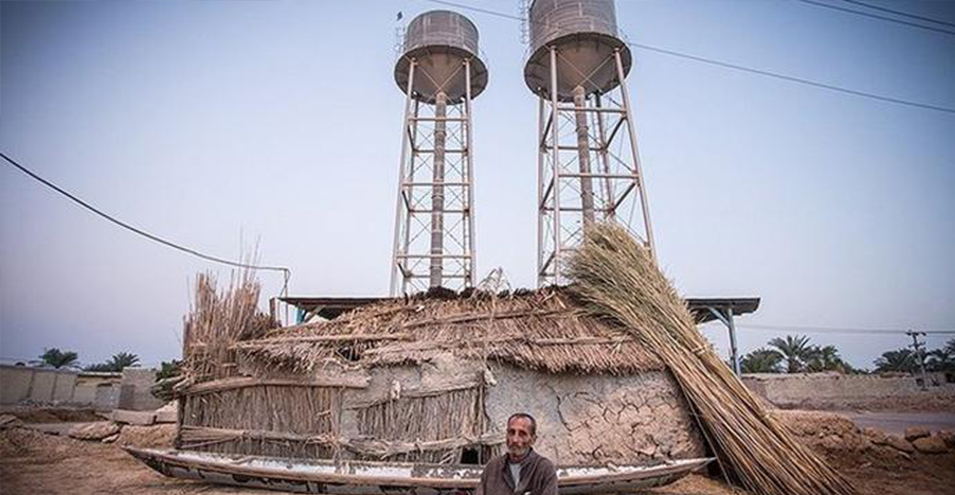
The year 1396 came to an end with a number of environmental activists behind prison bars. Environmental problems, which represent the greatest challenge facing Iranian officials, transformed into a security crisis over the past year.
The head of Iran’s Department of Environment says he has no accurate information about detained environmental activists. Isa Kalantari said in his final press conference of 1396: “Unfortunately, the other side has power and is not willing to talk.” This other side is presumably the Basij Intelligence Organization of the Revolutionary Guards, which has detained a number of environmental activists. These individuals have been accused of “providing the country’s water information” to the United States.
Iran’s water situation during the past year was critical. Not only unprecedented drought due to very little rainfall and snow in the autumn and winter of 1396, but also the implementation of major projects without scientific backing, including by companies affiliated with the Revolutionary Guards, has brought Iran to the brink of an environmental disaster. One of these projects is the massive Gotvand Dam, built by “Sepasand” company affiliated with the Revolutionary Guards.
The Gotvand Dam on the Karun River is Iran’s tallest earthen dam, and its reservoir is also considered the second largest artificial lake in Iran after Karun. The natural walls of this dam’s shell contain layers of salt that cause the water of the lake behind the dam to become saline.
As a result, the water flowing from this lake toward the Persian Gulf leaves behind salt marshes where no vegetation or habitation remains, and it has even dried the palm trees in its path. According to Asad Pourmohammad, one of the officials of Jihad Agriculture Organization in Khuzestan, the salinity of Gotvand water, which is five times saltier than Persian Gulf water, threatens the life of Khuzestan.
97 Percent of Country’s Area Suffering from Drought
The environmental situation in Khuzestan province, an oil-rich province whose sale of underground reserves provides a large portion of the country’s national budget, was also dire during the past year. Uncontrolled extraction of water resources from this province, the decrease in the water level of the Karun River, and the drying of Hawizeh Marsh increased the dust storm crisis and dust concentration in the province to 60 times the permitted level during winter.
Not only Khuzestan, but 97 percent of Iran’s land area suffers from serious water shortage. Isfahan with its waterless Zayanderud, Azerbaijan with the gradual death of Lake Urmia, Sistan and Baluchestan with its dried Hamoun Lake, and Khorasan province and cracked lands of farmers all exemplify Iran’s failure to manage the water crisis.
Hassan Rouhani, who had listed addressing the environmental situation as a priority of the eleventh government of the Islamic Republic, began 1396 while two major European foundations had warned about the uninhabitability of vast areas of Iran due to drought.
The Heinrich Böll Foundation in Germany and the Small Media Foundation in England published a 160-page report at the beginning of 1396 and warned that the water crisis is continuously making more areas of Iran uninhabitable. This report examined the roots of Iran’s environmental crisis, its future consequences, and the necessary strategies to address it.
Invitation from Civil Society Organizations to Cooperate with the Government
The Rouhani government, which after the nuclear agreement with six major world powers had begun extensive efforts to attract international cooperation in the field of environment, began 1396 with hope for increasing participation of non-governmental organizations in environmental protection programs. Hassan Rouhani introduced ten pillars in his election campaign for the twelfth government, one of which was “environmental programs and sustainable development.”
In his election campaign, he repeatedly emphasized: “The eleventh government considered the people as an active and constructive force in all fields, including in the field of environment, and had the most positive approach toward organizing civil groups and non-governmental organizations in the environmental sector.” Hassan Rouhani emphasized that the 80 percent increase in environmental organizations is considered one of the major achievements of his first term as president.
Active participation in environmental conferences, including the Climate Conference in Bonn, had given many hope that with the Rouhani government, using all available capacities, Iran’s environmental crises would be controlled. Majid Shafiepour, head of the National Institute of Climate Change and Environment at the University of Tehran, who participated in the Bonn Climate Conference, told Deutsche Welle while emphasizing the importance of international cooperation for Iran in the field of environment: “Public opinion in Iran is completely in favor of a positive plan to address climate change because people feel the adverse effects of these changes in their daily lives.”
A Severe Blow to Environmental Activists
The cooperation of Iranian environmental organizations with international bodies active in the field of environment, however, turned into a security crisis only a few months after Hassan Rouhani’s victory in the presidential election. The arrest of Kavous Seyed-Emami, sociology professor and CEO of the “Pars Wildlife Heritage Institute,” and his suspicious death in prison in Bahman month was a fatal blow to the fragile foundation of public confidence. Accusing Kavous Seyed-Emami of espionage and raising the question of why he was concerned with protecting the Iranian cheetah rather than the Mazandaran tiger—a feline that became extinct 60 years ago—shocked environmental activists.
The arrest and possible interrogation of Kaveh Madani, deputy education director of the Department of Environment, raised speculation that the Revolutionary Guards, due to the Department of Environment’s opposition to Revolutionary Guard projects on water transfer and power plant construction, was seeking to settle accounts with this institution and the Rouhani government.
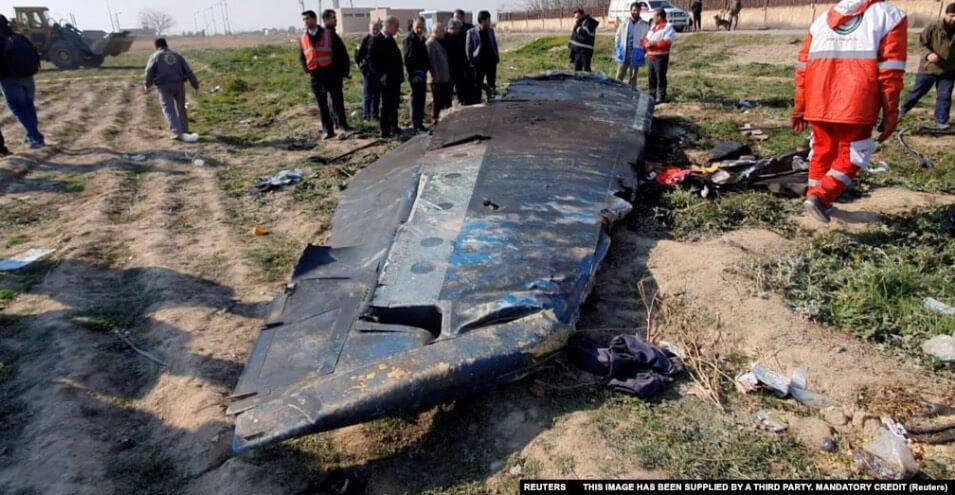
The death of a group of environmental activists who had traveled to Tehran to speak with parliament representatives and follow up on the situation of detained activists following the crash of the Tehran-Yasuj plane was another shock for environmental activists. The travel ban imposed on Maryam Mombeni, the wife of Kavous Seyed-Emami, and the resonance of her phrase to her children “Get out of this horrible place and never come back” in international media cast another heavy shadow over Iran’s name and the government’s environmental policy.
The environmental crisis is considered one of the greatest, and perhaps the greatest, challenges facing Hassan Rouhani. The unprecedented protests of Isfahan farmers against the method of resource distribution in Iran in the final days of the year and their slogans in Friday prayer ceremonies against officials were merely a vent from the volcano of suppressed anger in Iran’s feverish society.
Despite this dire situation, the environmental affairs budget for the coming year is expected to account for approximately 0.2 percent of the government’s general budget. 0.2 percent.
Source: DW