Fresh Rainfall Continues to Threaten Various Regions of Iran

Iran’s Meteorological Organization announced the activation of a new rainfall system. Precipitation will be particularly severe in eastern Mazandaran and Golestan Province. Khuzestan also faces greater flood risk. There is a possibility that the city of Susangerd could be submerged.
On Tuesday, 20 Farvardin (April 9), according to ISNA news agency, citing Ahed Vazifeh, Director General of Forecasting and Early Warning at Iran’s Meteorological Organization, announced the activation of a new rainfall system in Iran starting Friday, 23 Farvardin. Vazifeh stated that “the rainfall system is entering Iran from the west” and noted that precipitation will not be flood-prone everywhere, but there is a possibility of water accumulation on roads.
According to this meteorological official, on Saturday and Sunday (24-25 Farvardin), southern Fars, Bushehr, Hormozgan, Kerman, and Sistan and Baluchestan will witness significant rainfall, and on Monday (26 Farvardin), the provinces of North Khorasan, Razavi Khorasan, and South Khorasan will be affected by the rainfall system.
Vazifeh emphasized: “Precipitation in eastern Mazandaran and Golestan Province will be more notable and severe, and could result in river overflow and road flooding.”
The Director General of Forecasting and Early Warning further clarified that southwestern Iran will not be significantly affected by the new rainfall system, and in northern Khuzestan and the provinces of Lorestan and Ilam, rainfall is “not very severe.”
ISNA reported: “It is said that European meteorology has sounded the alarm for next week.” However, Vazifeh emphasized in his conversation with the news agency: “This is a rumor and there is no alarm.”
Water in Turkmen Steppe
On Tuesday, IRNA news agency mentioned water entering the Turkmen Steppe. The mayor of Turkmen County reported the collapse of part of the Gharesoo river embankment and stated that the volume of water flowing toward the plains is large and threatens several villages. Hiyavechi warned that if the collapse of the river embankment is not stopped, there is a possibility of water entering the city of Bandar Turkmen.
According to the mayor of Turkmen County, 300 tons of relief forces are working to repair the river embankment damage.
Damage Assessment Still Unclear
Iranian news agencies have published scattered reports in recent days regarding the extent of damage from severe flooding in 24 provinces, 231 cities, 269 towns, and five thousand villages, but precise statistics on damage levels still do not exist.
According to IRNA, following the overflow of the Dez, Karun, and Karkheh rivers since 11 Farvardin, orders have been issued to evacuate seven cities and more than 210 villages in Khuzestan, of which 78 villages have been flooded.
Mehr News Agency reported on 19 Farvardin that water has overflowed from Karun Dam and extensive areas of Khuzestan are likely to be submerged.
Based on Interior Ministry data, 400,000 people in Khuzestan are at risk from flooding.
The National Crisis Management Organization warned that there is a possibility of the city of Susangerd being submerged due to increased water discharge from dams.
This organization also estimated the total financial damage from flooding until 18 Farvardin at 15 trillion tomans, equivalent to 14 percent of Iran’s oil revenue before sanctions. Observers believe the damage levels are far greater.
School Conditions
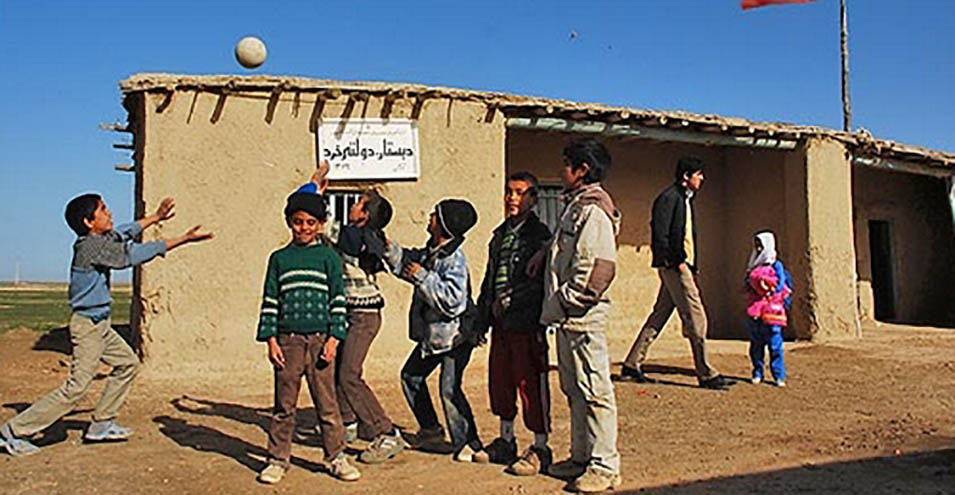
Conditions in schools in flood-affected provinces have been reported as dire. It is said that schools in Lorestan and Golestan have suffered the most damage. The special representative of the Minister of Education in Lorestan Province has prohibited entry to these schools due to the possibility of school building collapse in flood-affected areas.
According to provincial officials, at least 81 schools in Lorestan have been completely destroyed due to flooding, more than 120 other schools in the province have lost their educational equipment and facilities, and approximately 550 schools also require repairs for students to resume use.
Damage to schools in Golestan Province has been reported at approximately 26 billion tomans.
Unprecedented Levels of Precipitation
According to government officials, in some parts of Iran, this level of rainfall during this period has no precedent in the past 50 years. In Khuzestan, average rainfall from the beginning of the water year to now has been approximately 500 millimeters, which according to the Director General of the Crisis Management Organization of the province has “increased 275 percent compared to last year and 70 percent compared to the long-term average.”
Kiamars Haji-Zadeh announced the total capacity of dams at 22 billion cubic meters (useful capacity 13.4 billion cubic meters) and stated that approximately 97 percent of these dam reservoirs are now full.
Who Is Responsible?
Since the recent floods, the debate continues over the extent to which non-standard human interference with nature has contributed to expanding the scope of the disaster. The latest opinion on this matter was expressed by Ali Akbari, representative from Shiraz and member of the Agriculture, Water, and Natural Resources Commission of the tenth parliament. Akbari emphasized in conversation with ILNA that the conditions for flooding in Shiraz were created by “two categories of environmental and human factors.” He stated: “On one hand, due to recent droughts with reduced vegetation cover and also diminished soil capacity, it could not tolerate the recent precipitation severity, which was unprecedented in the past 50 years.”
Akbari simultaneously emphasized “the impact of human activities on flood occurrence” and stated: “(In Shiraz) the space that was designed to allow 100 cubic meters of water to pass has been reduced to 15 cubic meters.”
This parliament member called for examination of such measures by an impartial body and “action against violators.”
Source: DW