From Forced Confessions to Forced Disappearances: Five Dissenting Citizens in the Grip of Islamic Republic Repression
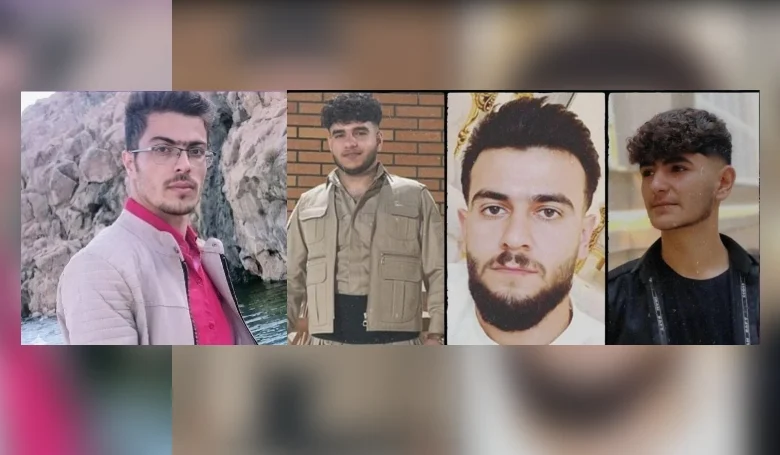
As the Islamic Republic faces intensifying domestic crises and international isolation alongside a new wave of social discontent, reports published by human rights organizations show that the government’s security apparatus is attempting to spread terror and intimidation across different Iranian cities through widespread arrests, security file fabrication, forced confessions, and enforced disappearances. In the latest cases, four Kurdish citizens in Sanandaj have been faced with heavy and vague charges, while simultaneously a Turkish activist in Tabriz has disappeared after arrest by security forces without access to a lawyer or contact with his family—a process that, according to human rights observers, is part of the Islamic Republic’s systematic policy to suppress any opposing voices.
Based on information released by Kurdish human rights organizations, four citizens from Sanandaj named “Aras Azizi,” “Hejir Shahazi Ilu,” “Artin Kalhor,” and “Arian Osman” have faced heavy security charges following their arrest during December 2025 protests. Arian Osman, identified as a kickboxing athlete and provincial champion, along with 17-year-old Aras Azizi, have been temporarily released on bail, but the other two remain in uncertain conditions in Sanandaj prison.
Published reports indicate that the Islamic Republic’s security institutions have requested “maximum punishment” for these individuals, and charges such as “action against national security,” “disrupting the country’s security,” and even “cooperation with elements linked to Israel” have been leveled against them—charges that have repeatedly been used against protesters, civil activists, and political prisoners in Iran in recent years. According to released documents, 17-year-old Aras Azizi has been accused of playing a role in making Molotov cocktails to “create disorder” and has been forced under pressure from security institutions to confess against himself.
In the case of Hejir Shahazi Ilu, it has been claimed that she made Molotov cocktails “in line with the objectives of the Democratic Party of Kurdistan” with the party’s connection to Mossad being referenced—a scenario that human rights activists consider part of the Islamic Republic’s recognized pattern of securitizing public protests and attributing opposition to foreign governments. International reports in recent years have repeatedly emphasized that Iran’s security institutions use torture, psychological pressure, and deprivation of legal counsel to employ forced confessions as a tool for file fabrication.
The arrest of these citizens continues the wave of suppression of December protests, protests that according to reports from human rights organization Hengaw have been accompanied by widespread arrests of citizens, including children and minors. Hengaw had previously announced that the Iranian government, during recent protests, is implementing an organized policy to create public terror through “widespread and arbitrary arrests, field courts, lethal use of force, and militarization of cities.” The organization had warned that the Islamic Republic’s suppression pattern could constitute “crimes against humanity.”
In a separate case, “Yaser Ranjbar,” a Turkish activist living in Tabriz, was arrested by security forces approximately ten days ago and transferred to an unknown location. According to reports, the officers at the time of his arrest presented no judicial warrant, and his family has so far been unable to obtain information about his whereabouts or health status. Enforced disappearance and keeping families uninformed about the fate of detainees is one of the methods that human rights organizations have repeatedly accused the Islamic Republic of systematically using.
Concurrent with these arrests, international reports indicate increased pressure on civil activists, lawyers, and political prisoners in Iran. The organization Front Line Defenders recently announced that “Abolfazl Ranjbari,” a lawyer and university professor in Tabriz, has been sentenced to 22 years in prison on charges including “espionage” and “cooperation in corruption on earth”—charges that this organization has linked to his peaceful human rights activities.
Human rights organizations believe that the Islamic Republic, by expanding the security sphere, intensifying executions, arresting ethnic and political activists, and attributing protesters to “Israel” or “foreign-affiliated groups,” is attempting to keep society in a state of perpetual fear. According to reports published by Hengaw, in April 2026 alone, at least 26 people were executed in Iranian prisons, a significant portion of which took place secretly and without public announcement.
The increasing arrest of children, pressure on ethnic and religious minorities, security file fabrication, and forced confessions have once again intensified concerns about the state of human rights in Iran—a country whose government has demonstrated over the past years that it has no hesitation in using brutal repression, public intimidation, and silencing critics in order to maintain power.