From Surgery to Hengam-Zhal: Lives Disappearing at Iran’s Margins Under Bullets and Poverty
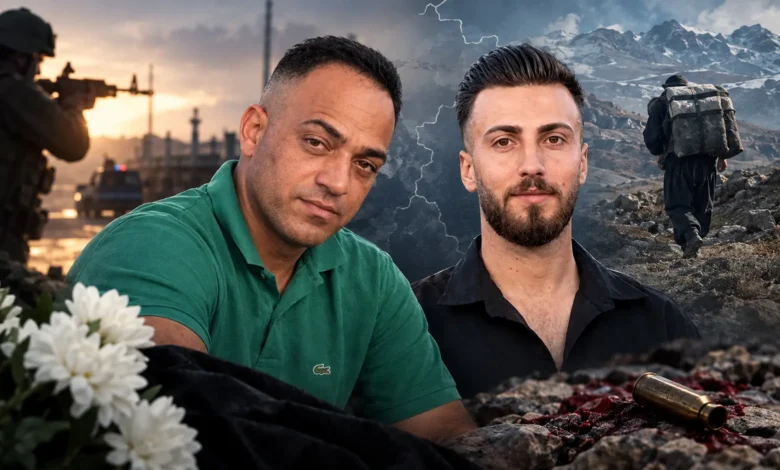
“Hakim Vahidi,” an Arab citizen from Surgery (Charan) in Mahshahr, died after being shot by government forces, and at the same time, “Arvin Azizi,” a 20-year-old porter from Sanandaj, was shot and wounded by border guard forces at the Hengam-Zhal border area near Baneh. Two different cases highlight one shared reality: in Iran, many victims of shootings by armed forces neither find a chance to be heard nor do their deaths receive widespread coverage; particularly porters who, in deprived areas, resort to deadly work to make a living.
Hakim Vahidi, an Arab citizen from the city of Surgery (Charan), a suburb of Mahshahr, was shot by government forces on Wednesday and later died at a medical center in the city.
According to human rights organizations, Vahidi died on Thursday, September 26, from severe injuries caused by gunshot wounds. According to the news channel “Moj,” he was pursued by government forces the day before, and a government force named “Iman Shirafi” from Ramshir shot at him.
Despite this citizen’s death, up to the time of this report’s publication, judicial and administrative authorities of the Islamic Republic have provided no explanation regarding the reason for the pursuit and shooting.
This very silence is one of the concerning aspects of such cases: a citizen loses his life, but the public may not know why he was pursued, what happened at the scene, and whether the use of firearms by government forces had legal necessity or not.
On the other side, just a few days before Hakim Vahidi’s death, Arvin Azizi, a 20-year-old porter from the village of Ghoureh-Dareh, a suburb of Sanandaj, was shot by border guard forces at the Hengam-Zhal border area near Baneh.
According to Hengaw’s report, this incident occurred on Monday, September 23. According to informed sources, a Kalashnikov rifle bullet hit the porter’s abdomen area, and after being wounded, he was transferred to a hospital for medical treatment.
Arvin is only 20 years old—an age that for many young people could be the beginning of studies, professional work, or building an independent future, but in deprived border areas with very weak economic conditions, it sometimes pushes young people toward jobs that come with the risk of death and permanent harm.
Portering cannot be viewed solely as a dangerous job in border areas. Behind many of these arduous journeys lies a deeper issue: poverty, unemployment, and the absence of stable job opportunities in border regions.
Porters carry heavy loads through mountainous and difficult terrain, and in addition to the risk of falling from heights, mine explosions, frostbite, and natural disasters, they also face the danger of shooting by military forces.
In recent years, numerous cases of young porters being killed or wounded in border areas of Kurdistan have been reported. In some cases, victims have been teenagers. Human rights reports show that shooting by border forces is one of the recurring factors in porter deaths and injuries. For example, reports published about the Hengam-Zhal border in recent years have documented multiple cases of porters being shot at.
In such circumstances, the fundamental question is: why should a 20-year-old young man have to risk his life on border routes to earn a meager income?
The answer must be sought in a set of economic and social problems; problems that are felt more acutely in deprived border areas and limit formal and stable job opportunities.
For many families in border areas, portering is not a desirable and safe choice; rather, in conditions where economic opportunities are limited, it can become the last option for meeting living expenses.
The image of a 20-year-old young man passing through mountainous routes with a heavy backpack and then being targeted by a military bullet is not merely a border incident. This image is part of a social reality in which poverty and lack of opportunity push a person toward a job where each entry onto the route could be his last journey.
From this perspective, the issue of porters is not only a matter of border security; it is also a matter of human dignity, the right to worthy work, and the right to a safe and humane life.
If the government is fighting organized smuggling, this should not mean armed and opaque dealings with individuals who have resorted to portering to make a living. There is a serious difference between organized smuggling networks and an unemployed young man carrying goods to survive, and border policies must take this distinction into account.
The cases of Hakim Vahidi and Arvin Azizi also reveal a larger issue: many victims of violence in deprived areas of Iran are fundamentally not given a chance to be seen.
In Tehran or major cities, the death of a citizen may become widespread news; but in border and deprived areas, many incidents are only recorded in brief reports by human rights organizations or local media and disappear from news cycles within days.
This issue is more acute regarding porters. Many of them do not have recognized names or social standing, and their families lack the necessary means for media or legal follow-up of their cases.
For this reason, a person may be shot at, wounded, or killed in the mountains, but their name is only recorded in a brief report and then forgotten.
Death should not be considered less important because of a person’s poverty, place of residence, or occupation. Regarding Hakim Vahidi, officials have so far provided no explanation for the reason for the pursuit and shooting. Regarding Arvin Azizi, published reports indicate direct shooting by border forces.
In such cases, a fundamental principle must be independent and transparent investigation: Why was the shooting carried out? Was there a threat to the lives of armed forces? What orders or regulations formed the basis for the use of force, and was the use of lethal force necessary and proportionate?
The answer to these questions should not be limited only to the account of government forces. The families of victims also have the right to know how their loved ones were killed or wounded and who was responsible for the incident.
Hakim Vahidi and Arvin Azizi come from two different regions and have two different fates; one lost his life and the other was hospitalized after being shot. But both cases carry one common warning: the lives of citizens in deprived areas of Iran should not be considered less valuable than the lives of other citizens.
Regarding porters, this responsibility is twofold; on the one hand, unnecessary and disproportionate use of lethal force against them must be investigated and stopped, and on the other hand, the government must take seriously the economic roots of the porter phenomenon.
A young man forced to carry a heavy load through mountains to feed his family’s hunger is, before being “a porter,” a human being with the right to life, dignity, and a future.
In a society where freedom and human dignity are respected, poverty, ethnicity, or place of residence should not cause the death of a human being to pass silently by public awareness. The names of Hakim Vahidi and Arvin Azizi remind us of dozens, perhaps hundreds of cases that may never be sufficiently seen and heard; people who deserve not only to survive, but to have lives worthy of living.