Gorgan Bay Facing Desiccation and Conversion to Wetland
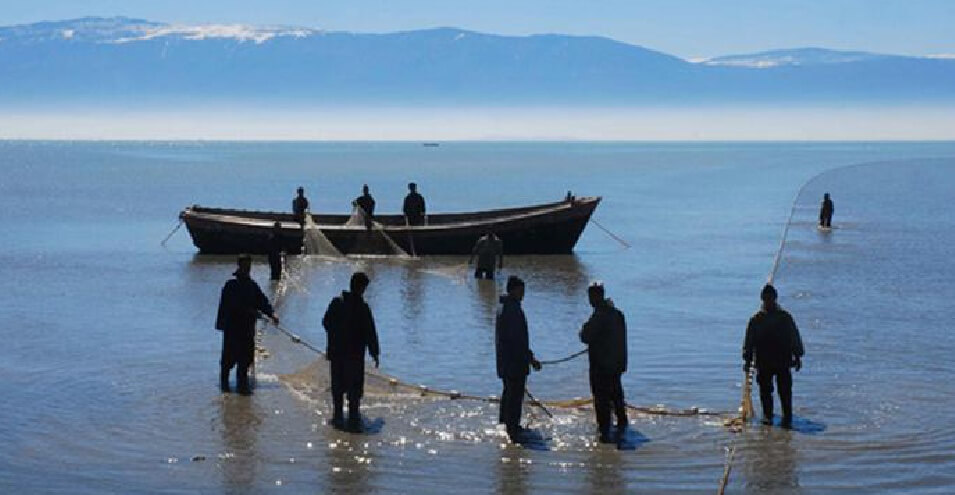
Gorgan Bay, the largest bay of the Caspian Sea, is drying up and being converted into an internal wetland according to experts. Biodiversity reproduction in this region has been lost, and consequently the bay is facing food and energy scarcity.
The Deputy of Research and Technology at the National Institute of Oceanology and Atmospheric Sciences says that without implementing measures based on precise scientific solutions to improve the ecosystem conditions of Gorgan Bay in the southern Caspian Sea, the bay faces conversion into an internal wetland.
Gorgan Bay is the only bay of the Caspian Sea within Iran’s geographical boundaries, located between two provinces: Mazandaran province (Babol Sar city) and Golestan province (Bandar Gaz city).
In 1354 (1975), Gorgan Bay, along with Miankaleh Wetland and Lapuyeh Zaghmaraz (in Golestan and Mazandaran provinces), was registered as the first international wetland complex in the world on the Ramsar Convention wetlands list, proving that not only this bay but also the surrounding areas, including the Miankaleh Peninsula (wildlife sanctuary) and the Gumisshan International Wetland, constitute a valuable environmental complex. Gorgan Bay is considered part of the Miankaleh Wildlife Sanctuary.
Previously, Ismail Mohajir, Director General of Environmental Protection in 2017, stated that an area that naturally had several hundred hectares of water and was habitat for very rare and endangered aquatic species such as sturgeon fish has now become a pile of pollution due to decreased water inflow and the entry of urban wastewater.
The Director General of Environmental Protection added that the government has not allocated a single rial to save Gorgan Bay. He said that the types of pollution from Iran differ from those of neighboring countries.
The Deputy of the Environmental Protection Organization stated that from Russia and Azerbaijan, most pollutants from oil extraction, exploration, transportation enter the Caspian Sea, but in the southern Caspian Sea and on Iran’s side, oil pollution is not significant; rather, pollution from wastewater and agricultural runoff is predominant.
Hamid Alizadeh Lahijani, Deputy of Research and Technology at the National Institute of Oceanology and Atmospheric Sciences, told IRNA: “Considering the observed changes in the depth and area of Gorgan Bay during studies of previous seasons and also observations from the current study, which could be caused by factors such as the reduction of the Caspian Sea water level, the closure of communication channels between Gorgan Bay and the Caspian Sea such as the Khazini Canal, the high rate of sedimentation in Gorgan Bay, and the high level of nutrient input that causes excessive growth and accumulation of seaweed, especially in the first half of the year, there is concern that without implementing measures based on precise scientific solutions to improve the conditions of this valuable ecosystem in the southern Caspian Sea, this bay will be converted into an internal wetland.”
Based on conducted surveys, approximately 27 percent of Gorgan Bay has dried up, and the habitat value of this amount exceeds 80 percent of the habitat value of the entire bay. In fact, the most sensitive ecological unit of Gorgan Bay, which is the biodiversity reproduction zone, has been lost, and accordingly the bay faces food and energy scarcity.
Various reasons are cited for the desiccation of Gorgan Bay, including climate change and global warming, excessive extraction from aquifers surrounding the bay, decreased rainfall, and increased evaporation. According to Alizadeh, the cause of all these is only humanity’s insatiable nature, which wants to appropriate everything that exists in nature.
Alizadeh Lahijani added that this bay and its surrounding areas constitute a valuable environmental complex even at the global level, which in addition to maintaining the Caspian Sea’s lifecycle, has a direct impact on the livelihood of local communities; however, it has been struggling with desiccation for several years.
Source: DW