Government Criticizes Restrictions in Cyberspace
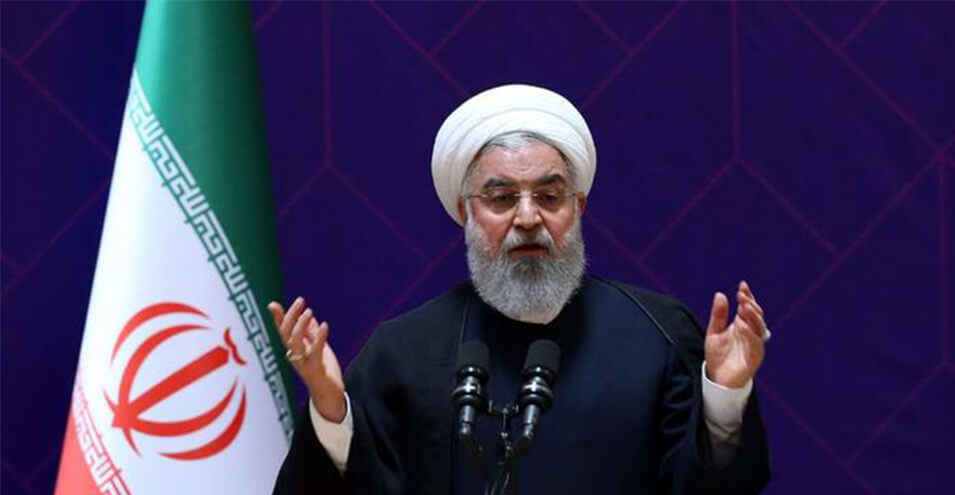
The government has issued a critical statement regarding restrictions in cyberspace. This statement addressed the principles of government policy and programs in the field of cyberspace and emphasized that easy, affordable, and secure access to information is a citizen’s right.
According to ISNA, the Iranian Students’ News Agency, in a statement issued on Tuesday (April 21), the Secretariat of the Government Information Council addressed existing restrictions in Iran’s cyberspace, including references to “easy, affordable, and secure access to information and communications as one of the prominent examples of citizen’s rights” and “confronting any blockade or monopoly in the field of social networks.”
In this statement, which was released one day after the issuance of a Telegram filtering order, there was also criticism of the judiciary’s case-by-case decisions: “Determining public matters that are related to the needs and demands of tens of millions of citizens cannot be based solely on individual judicial decisions and assessments.”
The statement also emphasizes that “identifying threats to national security, policymaking, and taking appropriate action is solely the responsibility of the Supreme National Security Council” and others are obliged to coordinate with this “supreme body.”
Communications Minister of Rouhani Government Criticizes Telegram Filtering
Mohammad Javad Azari Jahromi, Minister of Communications and Information Technology in Hassan Rouhani’s government, also criticized the filtering of the Telegram messenger on Tuesday by posting a tweet. Azari Jahromi said: Technology in itself is neither criminal, nor corrupt, nor deviant.
In his Twitter message, the communications minister stated: “Citizens’ access to information sources is unstoppable; even if one software is blocked. Alternative software, identified and free flow of information will be reactivated and circulated again. This is a characteristic and necessity of free access to information in the age of communications.”
According to ISNA, the Iranian Students’ News Agency, Mohammad Javad Azari Jahromi further wrote: “Technology in itself is neither criminal, nor corrupt, nor deviant; it is humans who, through its misuse, promote crime or corruption in virtual cyberspace.”
The prosecutor of the second branch of Tehran’s Culture and Media Court, on Monday (April 20), issued a judicial order filtering Telegram. In this order, the Telegram messenger was described as a security platform for committing various crimes.
The aforementioned court listed “various crimes” in ten categories, including “propaganda against the Islamic Republic system,” “actions against national security through terrorist groups,” “insulting sacred Islamic values,” and “inciting and tempting people to riot and chaos.”
The spread of “corruption and obscenity,” “smuggling of goods, currency, and drugs,” or “fraud” on Telegram were cited as other reasons for filtering this messenger.
The judicial order to filter Telegram comes as many link Telegram’s filtering directly to nationwide protests in December of last year (2017). At that time, Telegram was the most important messenger of protesters.
During these protests, although Telegram was blocked for a week, three-quarters of its users bypassed this restriction using VPNs. Information, videos, and photos from nationwide protests published on Telegram were distributed inside and outside Iran, and many media outlets around the world used them.
Alauddin Boroujerdi, head of Iran’s National Security and Foreign Policy Commission, said in early March 2018 that the decision to filter Telegram was made at the “highest level” of Iran’s government and would be replaced by a “similar national system” by the end of March.
This similar national system is called “Soroush,” but has not yet attracted the attention of citizens in various regions of Iran. Soroush currently has five million users, while the number of Telegram users in Iran is 40 million.
The communications minister of Iran, who is the youngest minister in Hassan Rouhani’s government, previously acknowledged that there is no service similar to Telegram in Iran and its capabilities cannot be replaced using domestic messaging applications.
Azari Jahromi, Minister of Communications and Information Technology in Hassan Rouhani’s government, submitted his resignation to the head of government in response to the judiciary’s interference in the ban on Telegram, but Rouhani did not accept his resignation.
It is said that despite the ban on Telegram, this messenger is still very popular in Iran and citizens are trying to access it by circumventing censorship.
Source: DW