Guardian Council Rejected Qualifications of “56 Percent” of Eleventh Parliament Election Candidates
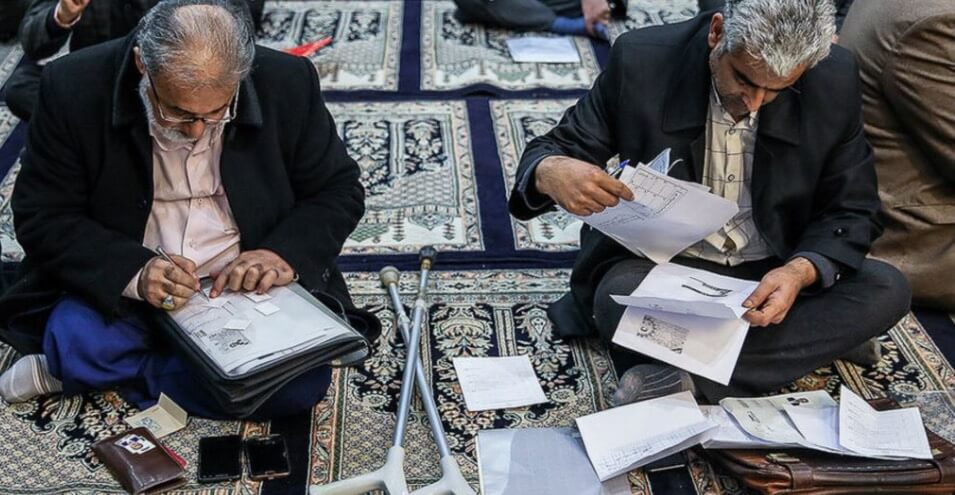
The qualifications of approximately 56 percent of candidates for the eleventh parliamentary elections, including a number of prominent political figures and eight current representatives from Tehran, were not approved.
The names of parliamentary election candidates were announced on Wednesday, the 23rd of Bahman, and Jamal Orf, head of the country’s election headquarters, announced that 7,148 people were approved for the 290 parliamentary seats.
The approval of this number of candidates came as 16,145 people had registered as candidates for the eleventh parliament elections, meaning that approximately 56 percent of their qualifications were rejected.
In the tenth parliamentary elections, 12,123 people had registered as candidates and the qualifications of 5,944 people were approved, showing that approximately 51 percent of candidates’ qualifications were rejected.
According to the ISNA news agency report, Ali Motahhari, Mahmoud Sadeghi, Elias Hazrati, Gholamreza Haidari, Fatemeh Saeedi, Behrouz Nemati, Tayebeh Siavoshi, and Alireza Rahimi are on the list of disqualified individuals.
The Supreme Policy Council of Reformists had previously announced that it would not submit a list for the eleventh parliamentary elections in Tehran’s electoral district.
This council reported that 90 percent of its candidates were disqualified in the parliamentary elections and announced that if this process continues, they have no candidates for 230 of the 290 parliamentary seats.
This is while Ahmad Jannati, secretary of the Guardian Council, claimed that “contrary to some incorrect statements, the upcoming elections are completely competitive and representatives of all factions are present in the elections.”
The political deputy of the Islamic Revolutionary Guards also said on Wednesday that “the enemy, counter-revolutionaries and Westernists are trying to form a non-revolutionary parliament.”
Yadollah Javani announced that the Islamic Revolutionary Guards will not be indifferent to this matter and work so that “a parliament in line with the revolution and strong is formed.”
Ayatollah Ali Khamenei, the leader of the Islamic Republic, had warned critics of the Guardian Council on the 16th of Bahman that attacking this council “is the worst thing to do.”
Following the protests in November, a large group of protesters announced that they would boycott the parliamentary elections. Many political groups outside the country have also boycotted the elections.
Nargess Mohammadi, imprisoned human rights activist, has also asked people not to go to the polling booths in the Islamic Consultative Assembly parliamentary elections and the mid-term expert elections and to boycott the elections.
MohammadReza Bahonar, a prominent figure among principalists, said that in the upcoming parliamentary elections, principalists have “no worthy rival” and “if we don’t succumb to our weaknesses,” these elections are “a principalist playground.”
Some principalist groups have announced their electoral lists and mentioned Mohammad Baqer Qalibaf as a possible speaker of the future parliament.
However, the Resistance Front group, which is a hardline faction of principalists, published a list of 60 primary candidates for Tehran in which Mr. Qalibaf’s name does not appear.
Source: Radio Farda