Hamid Nouri Trial: Witness Testifies About Ali Akbar Natiq Nouri’s Role
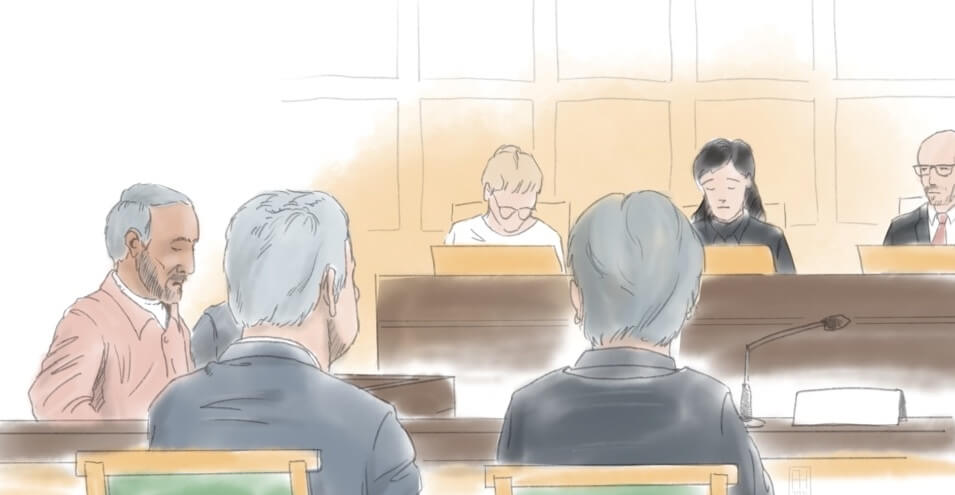
The trial of Hamid Nouri continued on Monday, December 29 in Stockholm, Sweden, during which Hussein Maleki testified as a witness that in 1369 (1990) at Evin Prison he learned that the real name of Hamid Abbasi was Hamid Nouri.
According to Mr. Maleki, he was arrested in 1359 (1980) due to his cooperation with the “Forqan Group” and was sentenced to life imprisonment, spending eleven years in Evin, Qarchak, and Gohardasht prisons.
Hamid Nouri is accused of participating in mass executions of political prisoners at Gohardasht Prison in Karaj, an accusation which he denies. He arrived at Stockholm airport on November 9, 2019 on a direct flight from Iran and was immediately arrested.
Hussein Maleki testified in Hamid Nouri’s trial that he was 19 years old at the time of his arrest and was sentenced to life imprisonment in October 1360 (1981) in a Sharia court in Ward 209 of Evin Prison.
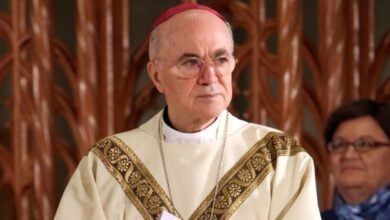
According to him, Ali Akbar Natiq Nouri was “the religious judge [court] of the Forqan Group and after the initial arrest of the Forqan Group leaders and their trial, Natiq Nouri transferred this position to (Ali) Mabsheri.”
Ali Akbar Natiq Nouri is a member of the Expediency Discernment Council who previously served as Interior Minister, Speaker of the Islamic Consultative Assembly, and head of the inspection office of Supreme Leader Ayatollah Khamenei’s office.
Hussein Maleki said that in February 1366 (1987) he was transferred to Gohardasht Prison along with several other prisoners, and on the night of arrival at that prison, he saw Hamid Abbasi along with Davoud Lajevardi and Nasserian (Mohammad Megisseh).
Hamid Nouri claims that he was in Evin Prison from 1361 (1982) to 1372 (1993) and made several brief visits to Gohardasht Prison on assignment.
Mr. Maleki, however, said that Hamid Nouri played a key role in transferring him and other prisoners to Ward Jehad of Gohardasht Prison and that he saw Hamid Abbasi twice without a blindfold in that prison: “Hamid Abbasi (Nouri) was the decision-maker and would give orders that we had to go there. Nasserian (Mohammad Megisseh) and Davoud Lajevardi were also with a number of Revolutionary Guards.”
He said that based on the guards’ referral, Nasserian (Mohammad Megisseh) was of higher rank and until the day of his release, he knew Hamid Abbasi (Nouri) as the deputy warden of Gohardasht Prison.
Mr. Maleki said his life sentence was reduced to eight years in 1364 (1985) after a meeting with a representative of Ayatollah Montazeri in Qarchak Prison: “The representative of Mr. Montazeri was a cleric named Nasseri who spoke with me and asked questions like what would you do outside prison and whether you would be willing to be interviewed or not. After the meeting, my sentence was reduced from life to eight years. In September my sentence ended and I should have been released but I was still in prison. In late September or early October, Hamid Abbasi (Nouri) called me. I went inside the room. He said remove your blindfold. I removed it. He gave me three pages, said read, write what you saw and sign. I read and saw that my sentence had changed again and been converted to 15 years of imprisonment. I asked Hamid Abbasi (Nouri) why my sentence was increased and why I wasn’t released? He answered that the Ministry of Intelligence received a letter from Khomeini and is reviewing all sentences that had been reduced under the title of Mr. Montazeri’s amnesty, and is opposed to 99 percent of these amnesties and is reversing these sentences.”
He added that Hamid Nouri told him: “He said pray that you get out of here alive; there is no difference between 15 years and life. Don’t think you’ve escaped from us and survived. Whenever and whenever necessary, we will use severity in dealing with you.”
Hussein Maleki spoke of another meeting with Hamid Nouri in Gohardasht Prison: “In late September or October, Khomeini had issued a fatwa and permitted chess and music. I personally asked Hamid Abbasi (Nouri) now that chess is permitted and it’s not forbidden from your perspective, can we play chess? With his usual contemptuous smile he said you well know why the Imam has permitted chess. This is for the people outside and it is still forbidden for you. Before that we had made chess pieces out of bread dough and secretly, away from the guards’ eyes, played chess inside the ward.”
According to Hussein Maleki, even after the executions he saw Hamid Abbasi three times: “I was transferred to Evin in late February 1367 (1988) and until my release in April 1370 (1991) I was in Evin Prison. Hamid Abbasi (Nouri) was Nasserian’s (Mohammad Megisseh) deputy in the office of the warden of Evin Prison and after Nasserian (Mohammad Megisseh) left Evin, Hamid Nouri again was deputy to Shekhpur who had succeeded Nasserian.”
He then explained his meeting with Hamid Nouri in 1369 (1990) at Evin Prison, saying that on that same day he learned that the real name of Hamid Abbasi was Hamid Nouri: “In Hall Two of the school where survivors of the 1367 (1988) executions were, there were also young prisoners and minors who had protested during a football competition in Tehran and had been imprisoned, a number of prisoners related to the Ministry of Foreign Affairs were. In December of that year they wanted to bring a football, volleyball and wrestling team to Qarchak Prison for competition and were not allowing a prisoner named Hussein Tokali to attend whom they had arrested for non-political crimes and who was a well-known sports figure in volleyball and water polo. In this regard, the third warden of the prison whose name was Hamid Rahmani or Rahmanyan said that Hamid Nouri would come himself and I realized that the real name of Hamid Abbasi was Hamid Nouri.”
According to him, on February 22 of that year a general amnesty was announced and 700 prisoners were released: “They gave us one in-person visit in all the wards in a place where our friends had been hanged a few months earlier and the behavior of Nasserian (Mohammad Megisseh) and Hamid Abbasi (Nouri) was like military commanders who had won and were walking over the bodies that had fallen on the ground and watching.”
The trial of Hamid Nouri, which will continue at Stockholm Court in Sweden through April of next year, has also prompted reactions from the authorities of the Islamic Republic.
Said Khatibzadeh, spokesperson for the Iranian Foreign Ministry, on the first day of the trial called Mr. Nouri’s prosecution “a design” by the Mujahedin-e Khalq Organization and claimed that the Swedish court “has relied on a series of stories and fabrications and false witness testimony that were all done by a small group.”
Source: Radio Farda