Hashtag “I Testify” Trends on Twitter; Iranian Users Write About Crimes and Widespread Human Rights Violations in Iran
Iranian Twitter users, using the hashtag I_testify, recalled numerous cases of human rights violations over more than four decades of the Islamic Republic’s existence.
The U.S. government, which has repeatedly protested human rights violations in Iran, sanctioned a number of individuals and entities in Iran a week ago, including two judges, for human rights violations. A week earlier, dozens of countries also condemned widespread human rights violations in Iran in a statement.
Initially, Maryam Karimbeigi, whose brother was killed by the government during the 2009 protests, reminded on Twitter that Shahin Naseri disappeared for testifying to Navid Afkari’s torture, and suggested that Iranian Twitter users write about the tyrannical actions of the Islamic Republic using this hashtag; hours later, with the posting of thousands of messages, this hashtag trended and became the number one trending topic on Twitter in Iran.
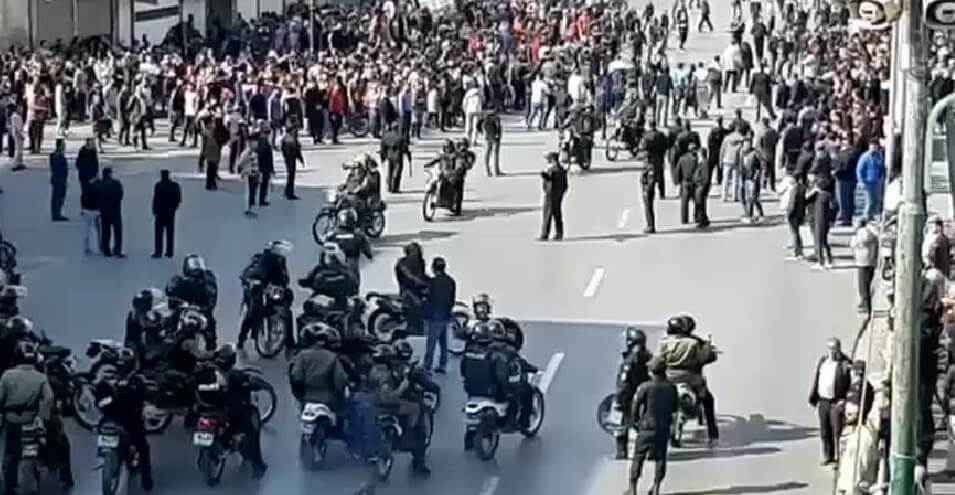
These users on Friday, October 2, following the Twitter request of “Maryam Karimbeigi,” sister of “Mostafa Karimbeigi” among the victims of the 2009 protests, using #I_testify in their tweets, referred to the killing of protesters in November of last year, the suppression of Dervishes and Baha’is, harassment of families of political and security prisoners, the massacre of political prisoners in the 1980s, and other anti-human rights actions of the Islamic Republic.
Mahdiyeh Golrou, a political activist and former prisoner, referred in her tweet to the execution of Zahra Bahrami in 2009 and wrote: “#I_testify when they took Zahra Bahrami from her bed after the blackout in her pink blouse and pants for execution, we never thought it would be the last visit.”
Hanieh Daemi, sister of Atena Daemi, a detained civil activist, referred in her tweet to the harassment of prisoners’ families and wrote: “I testify that the officers of the IRGC Intelligence and the Ministry of Intelligence beat my mother in front of my eyes.”
A user named Faezeh referred to the deaths of Kolbars who bought the risk of cold and border guards’ gunfire for meager wages and, by adding the names of deceased Kolbars such as Farhad Khosravi, wrote: I testify to bread in exchange for life.
Babak Ghaffari Azar, a journalist, also referred to the execution of Saeid Soltanpour, a filmmaker and writer who was executed in 1981.
Another user, by posting a photo of Mohsen Mohammadpour, a 17-year-old worker, wrote about his death in last year’s November protests.
Some users also referred to the imprisonment of two Sharif University of Technology students for their political activities. One user wrote: I testify that Ali Younesi and Amir Hossein Moradi, elite Iranian students, are now in prison instead of being at university.
Shahraz Akmaeli, mother of Mostafa Karimbeigi, also used this hashtag to refer to numerous cases of anti-human rights actions by the Islamic Republic, including deaths of detainees and arrests of families of activists, including the innocence of Masih Alinejad.
Some users also referred to victims of the IRGC air defense shooting down a commercial passenger plane. A user, by posting photos of children who were killed in that incident, wrote: I testify that these children became victims of your harsh retaliation.
A number of users, referring to the widespread executions of 1988, stated that they testify that these prisoners were executed while they had prison sentences.
Another number of users referred to the dire situation of political and security prisoners in prison, including Arash Sadeghi who is deprived of cancer treatment.
The mass arrest of Gonabadi Dervishes and the execution of Mohammad Salas are among other cases that were mentioned.
Shahin Milani also wrote in her tweet that she testifies that the Islamic Republic executed someone just for drinking alcohol.
The trending of the hashtag I_testify comes as the Islamic Republic, due to human rights violations in the past year, including issuing execution sentences for opponents, torture and suppression of protesters, and pressuring civil activists and human rights defenders, has repeatedly been criticized and protested by international organizations and some countries.
Source: Voice of America