Historic Union of Indian Churches Formed to Counter Pressures and Christian Persecution
In an unprecedented and historic move, prominent leaders of Indian churches launched the “National Council of Churches in India” with the aim of creating a unified front against escalating pressures, violence, and legal restrictions targeting Christians. This newly established institution, which has brought together representatives of various Christian denominations—from Catholic to Protestant, Evangelical, and Pentecostal—under one umbrella, has begun its work at a time when reports indicate a sharp increase in attacks against Christians in recent years, and church leaders warn that religious freedom in the world’s largest democracy faces a serious threat.
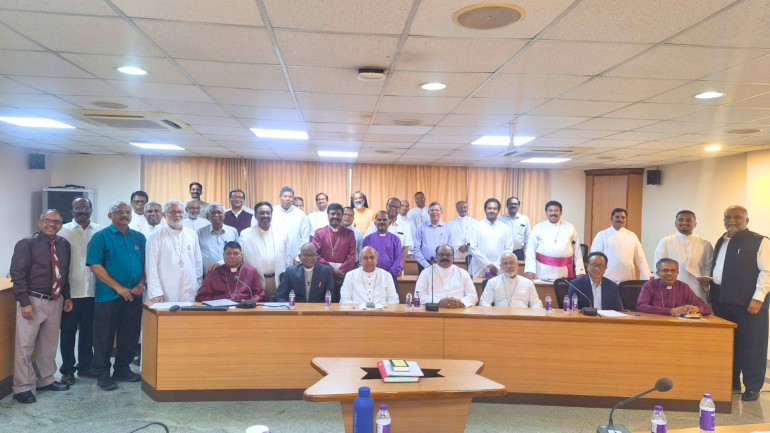
Church leaders in India formally established the “National Council of Churches in India” on May 8 during the fourth national meeting of bishops in the city of “Bangalore”; an institution that, according to its organizers, represents the first comprehensive nationwide structure for unity among all major branches of Christianity in the country. The meeting was held with the attendance of approximately 45 bishops, church leaders, and representatives from various Christian denominations.
The presidency of this council has been entrusted to Cardinal Antony Poola, a figure who has been one of the recognized faces of the Catholic Church in India in recent years. Archbishop Joseph Desouza, head of the Evangelical “Good Shepherd” Church and chairman of the All-India Christian Council, is also among the key figures of this new initiative.
Archbishop Desouza stated regarding the purpose of forming this council: “This council is the first universal assembly of its kind in India, formed to deliberately counter the harassment and persecution of Christians.”
Church leaders have announced that the increase in violent attacks against priests, arrests, and pressure on Christians under anti-conversion laws, as well as concerns about government interference in church property management and financial aid, were among the primary reasons for establishing this institution. They have particularly expressed concerns about proposed amendments to the “Foreign Contribution Regulation Act” (FCRA); a law that, according to critics, could impose greater control over the financial resources and assets of Christian institutions.
Based on reports published by Christian organizations and religious freedom advocates, the trend of violence against Christians in India has increased significantly over the past decade. The “United Christian Alliance of India” has reported that documented cases of violence against Christians have risen from 127 incidents in 2014 to 834 incidents in 2024. In just the first four months of 2025 alone, at least 245 attacks and incidents of violence against Christians have been reported; a statistic that, according to this organization, translates to an average of “two attacks per day” against India’s Christian community.
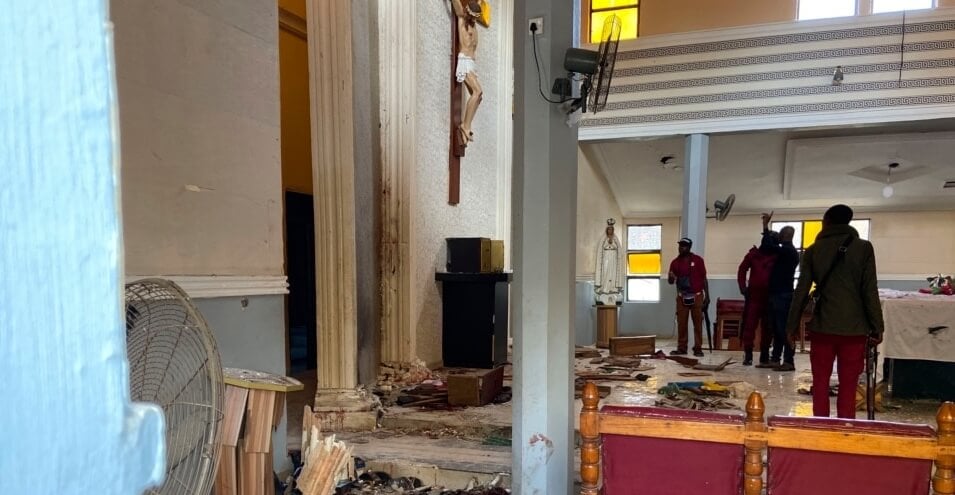
Separate reports have also emerged of attacks on worship services, beatings of priests, destruction of churches, and even prevention of Christian burials in some states. The states of “Uttar Pradesh” and “Chhattisgarh” are among the regions where the highest number of violent incidents have been recorded.
Meanwhile, Indian churches have also launched a new legal battle against anti-conversion laws. Some Christian organizations have taken cases to India’s Supreme Court, arguing that these laws have become a tool for pressure, arrests, and intimidation against religious minorities.
India, with a population exceeding 1.4 billion people, is considered a Hindu-majority country, and Christians constitute approximately 2.3 percent of the nation’s population. Nevertheless, church leaders warn that the social and political environment against religious minorities has become harsher in recent years.
Archbishop Desouza, in remarks that received widespread coverage in Christian media, emphasized: “We cannot simply sit and pray.”