Human Rights Activist in Interview with Voice of America: Several Arab Political Prisoners from Ahvaz Were ‘Tortured’ Before Execution
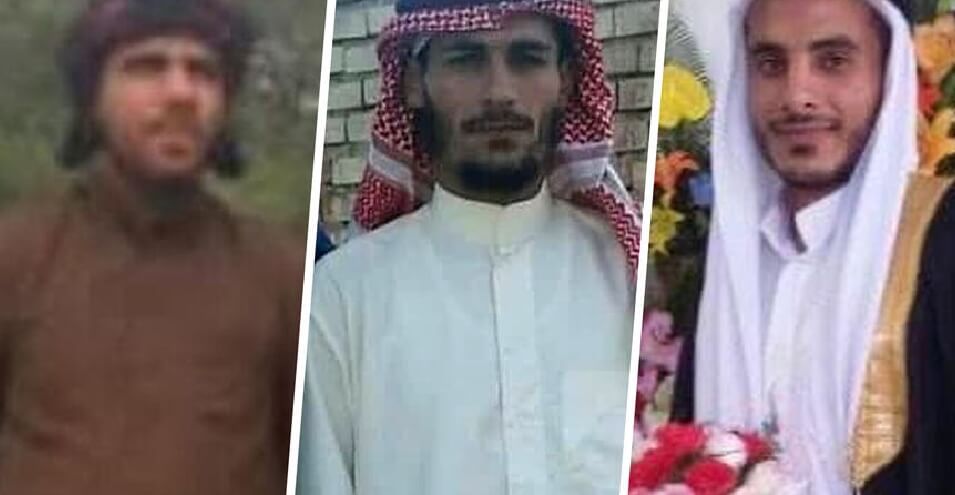
Karim Dahimi, a human rights activist based in London, says based on information he received from the families of several Iranian Arab political prisoners that these individuals were tortured before being suddenly executed.
The human rights activist says bruise marks resulting from torture were observed in various parts of the bodies of Ali Khosraji, Hossein Silawi, and Jasim Haidari. These three were transferred on Sunday, the 10th of Esfand, from solitary cells in Shiban Prison to Sepidari Prison in Ahvaz for the execution of their sentences.
It is reported that another one of these political prisoners named Nasser Khafajian Zadeh, who was transferred from Sepidari Prison to an unknown location after widespread prisoner protests in Sepidari and Shiban prisons in Farvardin of the current year, was brought to Sepidari Prison in Ahvaz on Sunday for the execution of his sentence, and his execution order was carried out. According to Mr. Dahimi, the family of this political prisoner had managed to visit him in Dezful Prison a few days before his execution.
Karim Dahimi told Voice of America that these four Iranian Arab activists were rarely held in regular prison wards during their imprisonment and throughout this time they were subjected to repeated “severe physical and psychological torture.” Furthermore, according to this human rights activist, Ali Khosraji, Hossein Silawi, and Jasim Haidari went on a hunger strike a few days before their execution by stitching their lips in protest of the execution order of another political prisoner.
According to information received by Voice of America, the time of execution was communicated to the families of these prisoners through a call by security officials. Furthermore, only one family member of each of these individuals was allowed to meet with them one last time, in a completely restricted and brief manner.
He stated that after the execution, the bodies of these prisoners were not handed over to their families and no death certificates were issued, and the responsible authorities told the families of these prisoners that the bodies of the executed would be buried in a place that the Islamic Republic has named “Lanat Abad” (Cursed Town). Furthermore, according to Karim Dahimi, the families were “threatened” not to hold any ceremonies for these individuals.
According to Mr. Dahimi, “Lanat Abad” is a name that the authorities of the Islamic Republic of Iran have given to a section of the “Behesht Abad” cemetery near Padshah Kuy (Elhiyale) in Ahvaz, where it is said that opponents of the Islamic Republic of Iran are buried after execution.
Mr. Dahimi told Voice of America: “Unfortunately, this is a process that has been used in recent years for Arab Ahvazi activists whose execution orders have been carried out, and these discriminations are used by judicial and security institutions to suppress and prevent any protest in marginalized areas.”
Ali Khosraji, Hossein Silawi, and Nasser Khafajian Zadeh were arrested in Ordibehesht of 1396 on charges of attacking the police station in Mujahid Kuy in Ahvaz, and their death sentences were issued without legal representation by the Revolutionary Court.
Jasim Haidari was also arrested in Azar of the same year in Tehran and was tried in the Revolutionary Court on charges of “rebellion,” “connection with anti-regime groups,” and “action against national security” and was sentenced to death.
Source: Voice of America