Inflation in Iran; Four More Food Items to Become More Expensive
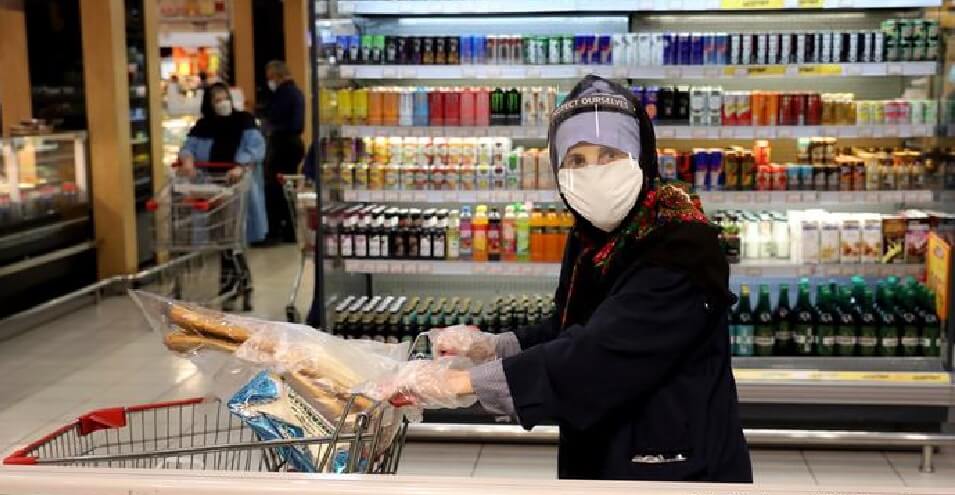
Iran’s Minister of Interior announced that the prices of chicken, eggs, dairy products, and oil will increase with changes in the allocation method of the 4,200-toman exchange rate. The head of the Planning and Budget Organization, acknowledging the widening class gap, said that flour will be distributed at the support price until further notice.
On the evening of Tuesday, the 20th of Ordibehesht, officials of the thirteenth government provided explanations in separate television programs about the price increases of essential goods and the elimination of preferential exchange rates.
The head of the Planning and Budget Organization assured that the price of bread and medicine would remain fixed and reminded that no decision has yet been made regarding fuel. Ahmad Vahidi, the Minister of Interior, announced that the prices of eggs, chicken, oil, and dairy products will also increase with the targeting of subsidies and promised that price increases would be limited to these four items only.
Vahidi said: “No other goods have the right or permission to become more expensive, and of course, they don’t have authorization to increase prices either.”
He stated that the price increases would not extend to the transportation sector and consumers would receive subsidies for the price increases of the mentioned items: “Drivers do not have the right to increase fares and cannot raise their prices under the pretext of these four items becoming more expensive.”
Masoud Mirkazemi, Vice President and head of the Planning and Budget Organization, also provided detailed explanations about the decisions of the “Popular Subsidy Popularization and Fair Distribution Headquarters” and the method of paying living subsidies.
Mirkazemi said that government subsidies for two months and for essential goods other than medicine and bread will be deposited and added: “Still, goods based on the 4,200-toman exchange rate are being distributed in society and prices must change.”
“Living subsidies” in packages of 400,000 and 300,000 tomans were deposited into citizens’ accounts on the 19th of Ordibehesht and, according to domestic media reports, covers 23 million households; a figure equivalent to 72 million people out of Iran’s 85 million population.
Mirkazemi stated that from the following months, this assistance would be paid only once in an “aggregated” form so that families can manage how to spend it themselves. Ibrahim Raisi’s deputy promised that the price of bread would not change and bakeries would continue operating as before until further notice. IRNA news agency quoted Mirkazemi as saying: “Now living subsidies have been deposited for the three lowest income deciles, and for medicine and bread all deciles are still equal, and if someone gets sick, insurance covers them at the hospital. Medicine and bread are subsidized as before.”
In explaining the price increases, he referred to the impact of the Ukraine war on the prices of corn, wheat, barley, and oilseeds and suggested that this process and market turmoil could continue for up to three years.
Bad Government, Good Government
Ibrahim Raisi, who called his government “promise-keeping,” in his last television interview emphasized that the price of bread, medicine, and gasoline would not increase under any circumstances. He announced that living assistance would be paid for two or three months until the electronic goods card is prepared.
Mirkazemi held the Rouhani government responsible for spending 8 billion dollars on essential goods and, while praising the Raisi cabinet, said: “The previous government managed essential goods reserves in such a way that they were 30 to 70 percent less than the minimum required amount and also spent 8 billion dollars on essential goods. But when the thirteenth government came to power, it secured the reserves of essential goods.”
The head of the Planning and Budget Organization acknowledged that the class distance in society has widened and, despite preferential exchange rate allocation and direct subsidy payments, the Gini coefficient has reached 0.4. He promised that the government has plans to reduce this coefficient to 0.35 and eliminate absolute poverty: “In chicken and egg production, the most imported inputs are consumed, and in the distribution of red meat and dairy products, less is used. Regarding edible oil and wheat, subsidized exchange rates are allocated. At this stage, medicine and wheat receive subsidies as before, and in the future, insurances will be equipped and the list of medicines covered by insurance will expand.”
He announced that regarding fuel no decision has yet been made and added: “We also don’t have legal obligation.”
The efforts of the thirteenth government officials to calm the turmoil caused by the price surge come at a time when Mohammad Baqer Qalibaf, the speaker of parliament, in an unprecedented criticism, strongly questioned the government’s approach regarding pasta and flour, and while defending the return of coupons, said: “Essential living goods must be given to people through electronic goods cards at the September 1400 price.”
Source: DW