Internet Cutoff and Access Restrictions, No News of Sistan and Baluchestan Protesters’ Status
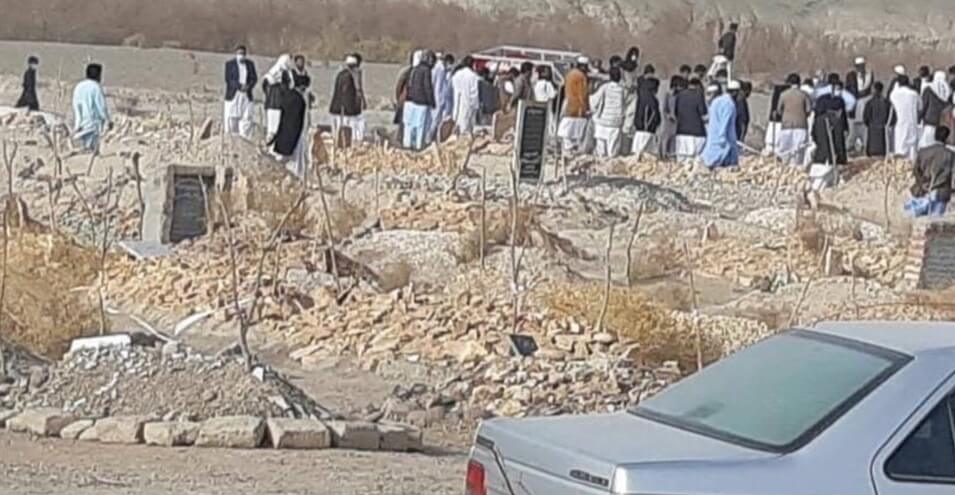
Four days after gunfire targeted fuel smugglers at the Askhan border zero point in Saravan’s vicinity, the atmosphere in various cities across Sistan and Baluchestan province is heavily securitized, internet is cut off in many cities of the province, and there is no news about the status of detainees and the wounded.
There is no information about the number of those killed in recent days’ protests.
Abdullah Arif, director of the Baloch Activists Campaign, in an interview with Radio Farda confirmed the killing of two people and the wounding of one person in Qaleh Bid and Shoro during Wednesday’s protests, and says that on Thursday he received reports of more than 15 protesters being killed, but due to internet cutoffs and blocked communication channels, as well as uncertainty about the identities of the deceased, he cannot verify these reports.
On Monday, the 24th of Esfand, Revolutionary Guards forces in the southeastern border of Iran in Sistan and Baluchestan province opened fire on fuel smugglers who were protesting against the closure of the border crossing. The protests against this shooting, which resulted in at least 10 deaths and five injuries, continue in various cities of Sistan and Baluchestan, while Ahmad Taheri, commander of the law enforcement force of Sistan and Baluchestan, announced the “end of unrest” and “control of the situation” by law enforcement officials.
Abdullah Arif, director of the Baloch Activists Campaign, however, told Radio Farda: “The situation is completely securitized and the atmosphere is very tense, because citizens of other cities in Sistan and Baluchestan province, following a call issued by Baloch civil activists in support of fuel smugglers and the killed fuel smugglers of Saravan, went on strike in many cities and some citizens gathered in front of law enforcement stations or Revolutionary Guards bases, some of which turned violent and in some cities citizens entered the stations. In any case, citizens are very angry about this situation and the killing occurring in Baluchestan, and no one is accountable.”
Videos of some protesters entering a police station in Zahedan and stations in other cities of Sistan and Baluchestan province have been shared on social media. Based on the published videos, protesting people have been targeted with tear gas and rubber bullets. Abdullah Arif says: “Now with the internet cutoff, the situation is completely securitized, and the last message sent to the Baloch Activists Campaign was from Sarjangl where people had gathered and the station had opened fire, and Morsad entered the city. They said the situation is very bad and we don’t know what will happen to us and the internet is being cut off. This is the last message we received from a citizen yesterday and there has been no news until today. The images that were published are from yesterday until last night because until last night the internet was slow and cutting off then coming back, but today the internet is completely cut and we cannot receive any messages, unless people sent some messages yesterday. The latest news we have is approximately 15 deaths, some women were also wounded with buckshot in Zahedan. There are many arrests and detentions that unfortunately we cannot verify, because unfortunately we have no information about these people, and because the internet situation is slow or cut off we cannot verify.”
Molavi Abdulhamid, Sunni Friday prayer leader of Zahedan and the most prominent Sunni cleric in Iran, by issuing a voice message, called on people for calm and restraint and asked them to control their emotions and refrain from attacking public institutions. He asked officials to handle the incident of Monday impartially and pay attention to the livelihood and employment situation in Sistan and Baluchestan province.
Meanwhile, Abouzar Mohammadi Nakhaei, governor of Zahedan, called the killed fuel smugglers “fake deaths.” Ahmad Ali Mohebati, governor of Sistan and Baluchestan, in an interview with IRNA news agency claimed that “of the three people who were killed in this incident, two were in Pakistan and only one was in this incident.”
Malek Fazeili, representative of Saravan in the Islamic Consultative Assembly, also announced the number of deaths as three, saying one death occurred on the other side of the border, one death at the scene of the incident, and 10 wounded, one of whom died due to bleeding during transfer to Saravan Hospital.
These contradictory statements from officials of Sistan and Baluchestan province come while Irfan Qarshin, commissioner of the Makran section in the Kharan region of Baluchestan Province, Pakistan, in an interview with Radio Farda denied any gunfire by the border guards of his country at fuel smugglers. Abdullah Arif says: “The governor announced only three people were killed and no massacre occurred, I don’t know if three people were killed, are these three people few? We have hundreds of witnesses, there are live videos that clearly show the shooting was savage. There are 10 bodies of fuel smugglers who were killed and 5 people are wounded.”
Mr. Arif says: “If the shooting was from Pakistan, why did the Islamic Republic of Iran take no action? Why didn’t they summon the Pakistani ambassador to the Foreign Ministry? Why don’t they support the killed Baloch? If they claim Pakistan killed them, why don’t they take any action against Pakistan? All evidence shows that the governor’s words are not correct and they are trying to handle all issues with a security approach as always. They issue statements that are completely far from reality.”
Videos published on social media show images of Supreme Leader Ayatollah Khamenei being burned by some protesters. Saravan, Khash, Iranshahr, Zahedan, Qaleh Bid, Shoro, Sarjangl, and Mirjawa are among the cities where, based on images published on social media, protest gatherings have formed.
Meanwhile, a number of citizens in Sistan and Baluchestan province received warning text messages; messages sent by the Center for Combating Cyber Crimes, addressed to protesting citizens stating: “Your illegal activities in publishing and resharing criminal content in cyberspace, especially on WhatsApp social network, have been documented. If you repeat and do not pay attention to this warning, you will face legal prosecution.”
Abdullah Arif says: “Now the demands have gone beyond supporting the families of the deceased, and civil activists in the province are raising a series of demands. They are demanding the removal of the authority of the Baluchestan Security Administration from the Revolutionary Guards, because the province’s borders are completely under the Guards’ control. Dismantling Revolutionary Guards bases from the borders and handing them over to border guards and border residents, as well as arresting and dismissing the officers and commanders responsible for the border Baluchestan massacre who will be tried publicly. Announcing general amnesty for all protesters and releasing all political prisoners and innocents are among their other demands. They want compensation to be paid and the Supreme Leader’s representative Ayatollah Mohammadi, who is creating religious hatred in the province, to be dismissed. They said they will continue protesting until these demands are met, but it is unclear whether with this internet cutoff the situation will be completely suppressed. The situation is completely unclear.”
Provincial officials have identified the protesters as enemies or deceived, and Saeed Tagalloli, acting governor of Saravan, called them “evildoers.” Abdullah Arif says: “The acting governor of Saravan called the families of the killed fuel smugglers evildoers because they had entered the governor’s office. We expected the officials of the Islamic Republic and provincial officials to console the people and solve the problem peacefully, but with the way things are proceeding and the Islamic Republic is trying to solve issues through security means, these protests will be severely suppressed. Based on the evidence that exists and the protests in other Iranian cities in November and other protests that were severely suppressed, there is a possibility that the Islamic Republic of Iran and provincial and security officials will also severely suppress these protests. There will certainly be deaths, arrests, and injuries.”
The November protests of last year, which initially were a reaction to the sudden increase in gasoline prices, quickly changed direction and targeted the Islamic Republic government. The internet was cut off and these protests faced severe suppression, to the extent that within five days hundreds of men, women, and even children were killed.
Iran’s Interior Minister said between 200 and 225 people were killed in these protests, but Amnesty International, by announcing the identities of at least 304 of the deceased, emphasized that the victims may be far more than this number.
Reuters news agency, while reporting at least 1,500 deaths in the November 2019 protests, wrote based on “three sources close to Khamenei’s inner circle” and “a fourth official” that the Supreme Leader told senior officials of the country to “do whatever is necessary to stop” the protests.
Source: Radio Farda