Interview with “Mehdi Rastampour” about the Past, Present, and Future of Iranian Sports
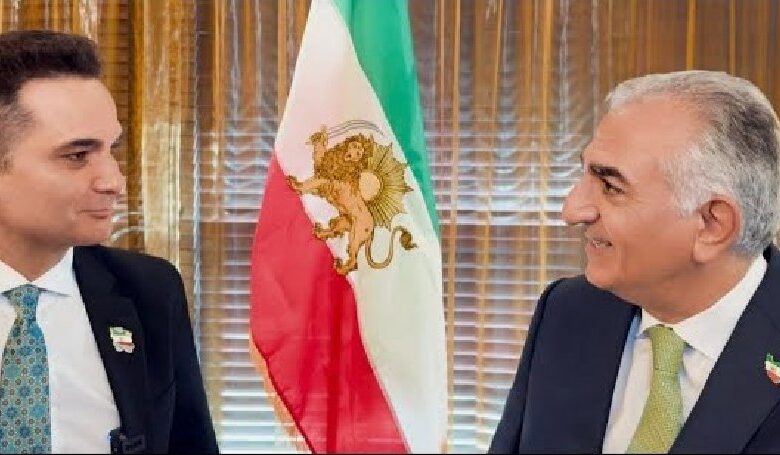
Prince Reza Pahlavi discussed the past, present, and future of Iranian sports with Mehdi Rastampour.
Last night, Prince Pahlavi, by publishing his conversation with Mehdi Rastampour about Iranian sports, once again demonstrated that despite immense pressures against him, he continues to work for Iran’s future.
Reza Pahlavi, the Shah of Iran, continuing his political efforts and meetings, after attending events in the United States and meeting with representatives of the U.S. Congress and Senate, departed for Germany on the third of Mordad. His destination was Munich, where on the fourth of Mordad a “Supreme National Cooperation Conference” was held with widespread participation of opposition forces against the Islamic Republic. Political observers described this gathering as an unprecedented event in the history of Iranian opposition—an event demonstrating efforts toward convergence and coordination among various political and civil forces of Iranians outside the country.
A prominent aspect of this conference was the continuous and active presence of His Majesty Reza Pahlavi. He was the only person who participated in all speeches from beginning to end, from 9 in the morning to 10 at night, without leaving the hall. This full-time presence demonstrated his commitment and seriousness regarding national solidarity.
The following day, coinciding with the anniversary of the death of Shah Aryamehr, other intensive programs were scheduled. These programs included meetings with families of those who died for freedom, meetings with representatives of various political parties, conversations with athletes and civil activists. Such intensity in activities reflects the coherent and persistent approach of the Shah of Iran in the path of struggle against the Islamic Republic and efforts for a better future for the country.
Despite media campaigns and virtual pressures against him, Prince Reza Pahlavi conducted his first detailed sports discussion since 1356 at the scheduled time. This conversation took place with Mehdi Rastampour and addressed the past, present, and future of Iranian sports after the collapse of the Islamic Republic. What doubles the importance of this interview is the 46-year gap from his last sports discussion.
This interview and continuous presence in programs represent only a part of the efforts and resistance of the Shah of Iran in recent decades; a long path that began when the monarchy fell in Iran and has continued to this day.
Prince Reza Pahlavi, in the aforementioned interview, responding to the question “What role can veteran athletes play for Iran’s freedom,” said: “Certainly, it is a national duty that includes every citizen. Regardless of what field or profession they are basically active in society, athletes must also find their own form of participation in a national project. In particular, one of the things that can be thought of now, and which I discussed in a meeting I had with representatives from the sports sector, considering many measures from the perspective of foresight within the country, is what can best provide conditions for Iran’s sports society.
Before anything else, there is discrimination that this regime practices even in the world of sports. For example, some individuals are excluded from participating in certain sports because they follow other religions, or in some cases there is gender discrimination that prevents athletes from participating in competitions. These discriminations can be changed immediately to be eliminated in Iran.
We can have many projects and programs in the future for the entire world of sports in Iran, not just in the sense of those who are athletes, but for training physical education coaches and the provision of sports education facilities that can be established across the country, which will be a very large project.
All athletes can offer their opinions and ideas on this, preserving the federation and issues like this should be part of the discourse, and since I myself was involved in sports, I believe that sports is a way to prevent deviation toward addiction and other problems, and when public health improves through sports, treatment costs will also decrease, and all of these are interconnected.
We can spread this mentality with the participation of athletes, pay more attention to it, and make the necessary planning for the future.”
He continued by saying: “Many existing problems such as corruption in federations, discrimination, and many other issues in which the regime is involved will be eliminated quickly. However, it requires a strategy, a plan, and comprehensive macro-planning so that the sustainability of this program and its structure can be provided in the long term. The sports community in the country should be one of the main pillars of national progress, and modernizing sports facilities should also be undertaken.”
Prince Pahlavi also emphasized: “All these issues can be reinstated among the people after transitioning away from the Islamic Republic. Many issues that existed at that time can be preserved and continued, and the faster it can have a positive impact on the future of Iranian sports. Unfortunately, what has so far caused limitations and even prevented athletes from competing in the Olympics is all due to current political issues in Iran, all of which can be resolved quickly. Therefore, this is a message of hope to athletes and the world of sports that all of these can be accomplished and resolved, and we must be able, in the transition from this system, to provide those conditions so that all issues are addressed seriously and all planning can be established.”