“Iranian Company Managers Use Passport Sales to Circumvent Sanctions”
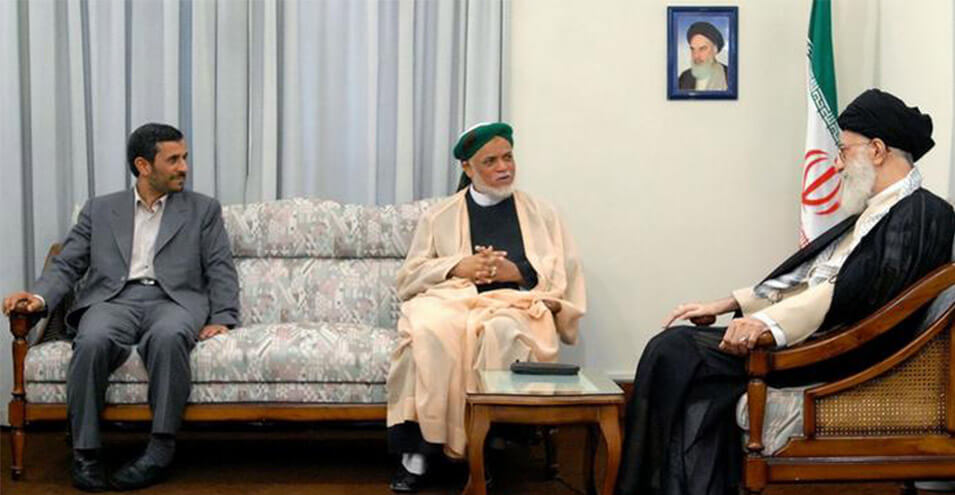
According to a Reuters report, the President of Comoros, who studied at the seminary in Qom and was called the “Ayatollah of Comoros,” issued 300 passports to managers of Iranian companies during the Ahmadinejad administration to bypass international sanctions.
The African nation of Comoros revoked a large number of passports purchased by foreign nationals in January 2018. The archipelago located off the southeast coast of Africa simply announced that these passports had been issued without adhering to regulations, without citing the reason for their cancellation.
However, a verified list of all Comoros passport recipients was obtained by Reuters. Reuters determined that the scope of this issue is greater than what the small African country’s authorities claim.
According to Reuters information, more than 100 of the 155 passports revoked in January belonged to Iranian nationals.
Among these individuals are managers of companies active in shipping, oil and gas, currency trading, and precious metals. All these sectors have been targets of international sanctions. Some of these individuals had purchased more than one Comoros passport.
Diplomats and security officials from Comoros and Western countries are concerned that some of these Iranians may have used the passports to circumvent international sanctions.
The report adds that although none of these individuals or companies were sanctions targets, under circumstances where restrictions were imposed on Iran, a second passport could have been of great help.
Comoros passport holders can travel visa-free to a number of Middle Eastern and Far Eastern countries. These passports could have provided Iranians the ability to open bank accounts and register companies in foreign countries.
The Iranian government does not permit its nationals to hold foreign country passports. However, an Iranian source familiar with the passport sales told Reuters that the Ministry of Intelligence and Security of the Islamic Republic had given the green light to a number of senior Iranian officials to obtain foreign passports in order to facilitate travel and provide business and financial transaction facilitation for themselves.
Kent Catsman, a Middle East expert at the U.S. Congress Research Institute, said in this regard that Comoros is just one African country through which Iran has attempted to continue its global trade through diplomatic influence.
Catsman added that with a Comoros passport, one can conduct activities that do not reveal the agent to be Iranian.
In the confidential list of all Comoros passport recipients obtained by Reuters, the birthplace of more than 1,000 people who purchased passports between 2008 and 2017 was Iran.
Most of these passports were purchased between 2011 and 2013, which is precisely when international sanctions against Iran, particularly in the oil and gas sector and banking activities, intensified.
Other individuals who purchased Comoros passports included nationals from Syria, Afghanistan, Iraq, China, and several Western countries.
Iranians Among Comoros President’s Personal Bodyguards
Comoros, with a population of 800,000, launched its passport sales program in 2008 because the country needed cash.
At that time, Comoros reached agreements with the United Arab Emirates and Kuwait to provide identity documents to Bedouins from these two Arab countries who lacked nationality and local citizenship rights. The governments of these two countries were to purchase Comoros passports and distribute them among the Bedouin populations.
In return, the Comoros government was to receive several hundred million dollars to strengthen its economic system. This amount reached 600 million dollars per year.
At the same time, the Comoros government established closer relations with the Islamic Republic of Iran. Ahmad Abdullahi Muhammad Sambi served as President of Comoros from 2006 to 2011. Muhammad Sambi had studied for years at the seminary in Qom, Iran.
Based on conversations Reuters had with local Comoros officials, several of Muhammad Sambi’s personal bodyguards were Iranian. Research by the Chatham House think tank shows that in Comoros, Muhammad Sambi was called the “Ayatollah of Comoros.”
Sambi traveled to Iran in 2008 (1389), which was when Mahmoud Ahmadinejad was seeking to expand the Islamic Republic’s relations with African and Latin American countries. The following year, Ahmadinejad also visited Comoros.
It was at this time that, at Sambi’s command, more than 300 Comoros passports were sold to Iranians.
Muhammad Sambi has not yet responded to questions from Comoros judicial investigation authorities regarding the issued passports.
Source: DW