Iranian University of Melbourne Professor Accused of ‘Infiltration’ Released
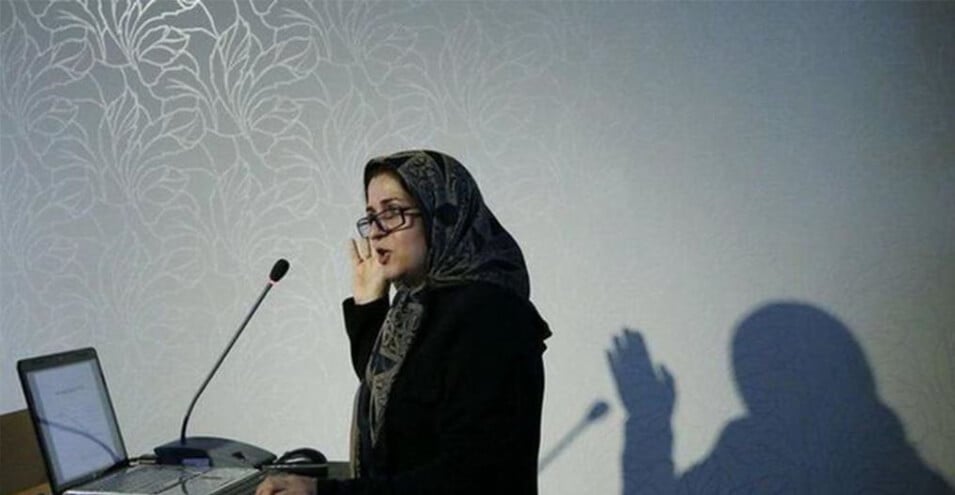
Memnath Hosseini Chavoshi, a demography professor at a university in Australia, who was detained in Iran some time ago, has been released.
Mahmoud Behzadi, a lawyer, told Iran’s IRNA news agency on Sunday, February 7, that Ms. Chavoshi was released from prison a few days earlier.
Ms. Chavoshi, a demographer and researcher at the University of Melbourne in Australia, is a retired expert from the Ministry of Health and has played a role in research and analysis of population and health statistics at that ministry.
She completed her master’s degree and doctorate using a scholarship from Iran’s Ministry of Health in the field of demography at the Australian National University. Her doctoral dissertation was on fertility regulation patterns in Iran. After completing her studies, she returned to Iran and retired from the Ministry of Health after some time.
This demography expert was invited by the Ministry of Labor, Cooperatives, and Social Welfare and the Welfare Organization in November of this year to speak at a regional conference on aging in Iran. She was detained while attempting to leave Iran after the conference.
Following Memnath Chavoshi’s detention, the Times of Israel reported: According to reports by state media in Iran, an expert has been detained on charges of cooperation with espionage networks and with the aim of downplaying Iran’s population crisis.
Ms. Hosseini’s name appears on the University of Melbourne’s website as a member of the “Faculty of Population and Global Health.” She has published numerous articles in the field of fertility and family planning policies, which were once encouraged in Iran.
Kayhan newspaper, whose editor is appointed by Ayatollah Khamenei, also reported at that time on the detention of several demography activists who, according to this state newspaper’s claims, had “engaged in infiltration into various state institutions under the guise of scientific activities.”
According to Kayhan’s report, they manipulated statistics and provided sensitive information as part of a cultural and social invasion to Iran’s enemies.
Iran was once an international model in population control, and data from the “World Bank” shows it reduced the fertility rate from seven births per woman in the 1980s to 1.66 in 2016.
Ali Reza Marandi, Iran’s former health minister, received the United Nations Population Fund award in 2000 for initiatives in family planning that had to overcome deeply rooted taboos in an Islamic society.
Memnath Chavoshi had written extensively in a book in 2009 about these efforts as the “fastest recorded decline in fertility rates.”
However, recently concerns have been raised that the birth rate has fallen below the population growth level.
Ayatollah Khamenei in 2012 criticized the continuation of family planning policies from the 1990s and called for measures to double Iran’s population to 150 million people.
In Kayhan newspaper’s report, it was written that Iran’s enemies use demography experts to counter these efforts and downplay the severity of population growth.
Nasrollah Pejmanfar, a representative of the Cultural Commission of the Islamic Consultative Assembly, says: “There is evidence that these individuals are connected to Western espionage networks.”
The Islamic Republic’s security agencies, particularly the Intelligence Organization of the Islamic Revolutionary Guards Corps, have in recent years detained a number of Iranian dual nationals and Iranian citizens residing in other countries on charges of attempting infiltration or espionage.
The United States and Western countries have called this action by the Iranian government extortion and believe the Islamic Republic intends to extract concessions from the West by detaining these individuals.
Source: Voice of America