Iran’s Health Ministry: Only 161,000 Vaccine Doses Administered in the Country
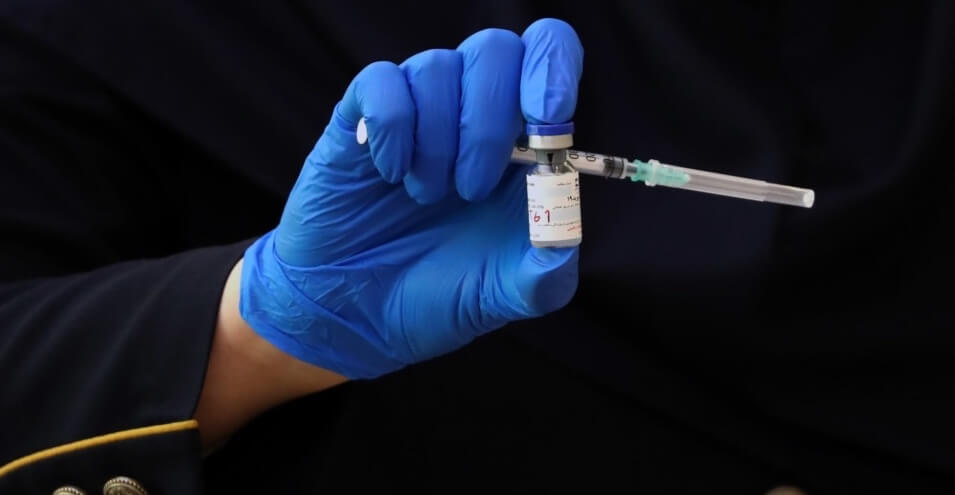
Iran’s Health Ministry says only 161,000 vaccine doses have been administered to citizens so far, and the country’s medical system has also acknowledged that “we have missed opportunities in vaccine imports.”
While various countries are rapidly vaccinating their populations, Kianoush Jahanpour, spokesman for Iran’s Food and Drug Organization under the Health Ministry, announced on Monday, April 29, that 695,000 imported coronavirus vaccine doses have been distributed through the country’s health network and 161,601 doses have been administered.
He identified healthcare workers as the main recipients of these vaccines.
The vaccines administered in Iran are of Chinese and Russian types, which have lower efficacy compared to their European and American counterparts.
Ayatollah Ali Khamenei, the Supreme Leader of the Islamic Republic, announced on December 10 of last year that the entry of American and British coronavirus vaccines into Iran is “forbidden” and the production of vaccines domestically should not be “denied.”
Now, while Turkey, Iran’s neighbor, announced on Monday the vaccination of 15 million of its population, Mr. Jahanpour says that in Iran fewer than 162,000 people have been vaccinated, which is equivalent to two-tenths of a percent of the country’s population. Of course, these individuals also need to receive a second dose of the vaccine.
This is while according to the plan, two million Iranian citizens were supposed to receive coronavirus vaccines before this year’s Nowruz holidays.
Currently, in countries surrounding Iran, the United Arab Emirates has administered more than 8 million doses, Azerbaijan 510,000 doses, Qatar 740,000 doses, Kuwait 360,000 doses, and Oman 130,000 doses of vaccine to their citizens. Pakistan has also administered 350,000 doses of vaccine.
Hosein Kerman Pour, director general of the medical system’s public relations, on Monday, referring to “missed opportunities in vaccine imports,” stated that “hundreds of thousands of vaccines imported are not a significant amount compared to Iran’s population of millions.”
At the same time, Mahmoud Najafi Arab, chairman of the healthcare economics commission of the Tehran Chamber of Commerce, also said that there was a missed opportunity in vaccine imports.
Two weeks after Ayatollah Khamenei’s announcement banning the purchase of vaccines produced in Britain and America, the Medical System Organization, by issuing a letter to Hassan Rouhani, Iran’s president, emphasizing the “necessity of purchasing coronavirus vaccines with a scientific approach,” warned against “politicization” in this regard.
Before Khamenei’s remarks about banning Western vaccine imports, Iranian officials made contradictory statements about the country’s vaccine import plan.
Abdolnaser Hemmati on December 8 claimed that purchasing foreign vaccines had faced obstacles due to America’s “inhumane” sanctions, while three days later, Naser Riahi, head of the Iranian Drug Importers Union, refuting the Central Bank governor’s remarks, said that “there is no problem” in transferring currency for the purpose of importing coronavirus vaccines and other pharmaceutical items from abroad to Iran.
He explicitly stated: “Today we import the country’s pharmaceutical needs through various means and even from American pharmaceutical companies, European companies and Indian, Chinese and Russian raw material producers, and currency is transferred in all these transactions.”
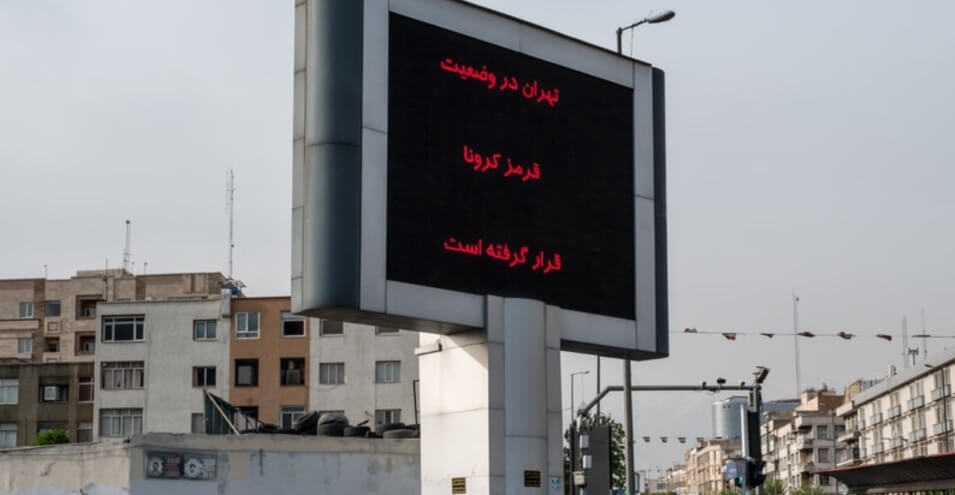
The resurgence of coronavirus in Iran and the slow pace of vaccination comes as the Civil Registration Organization has also abstained from publishing mortality statistics in Iran for months.
Source: Radio Farda