Iran’s Representative at IAEA: Our Response Will Be Very Severe If Resolution Is Passed
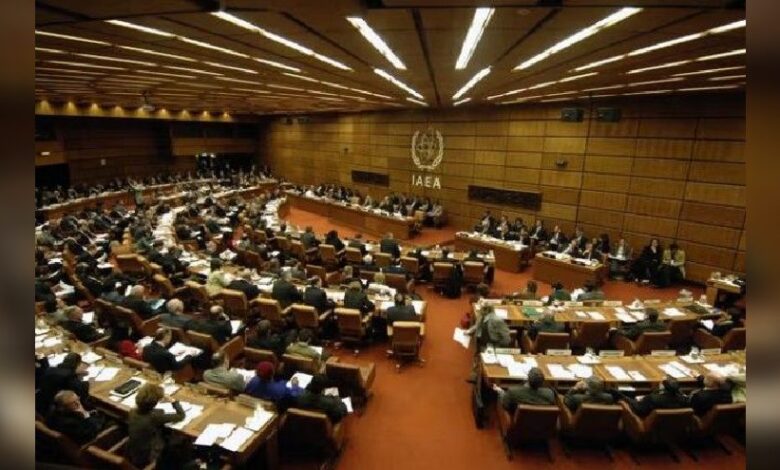
Iran’s representative at the International Atomic Energy Agency stated that if a resolution against the Islamic Republic is passed, they will have a very severe response.
According to France’s news agency, three European countries—Paris, Berlin, and London—along with Washington submitted a resolution against the Islamic Republic to the Board of Governors of the International Atomic Energy Agency on the evening of Tuesday, June 10. The submission of this resolution was aimed at increasing pressure on Tehran due to non-compliance with nuclear commitments.
The resolution was formally presented at the current week’s meeting of the IAEA Board of Governors in Vienna, and voting is not expected to take place before the late hours of Wednesday, June 21. In the draft text of this resolution, the Islamic Republic is accused of “violating its commitments under the Treaty on the Non-Proliferation of Nuclear Weapons,” and the aforementioned countries are calling for immediate rectification of this situation.
In the draft text of the resolution, while expressing regret over Tehran’s lack of full cooperation with the Agency despite repeated requests from the Board of Governors and numerous opportunities, it states: “The Agency’s inability to provide assurance as to the peaceful nature of Iran’s nuclear program raises questions that fall within the purview of the UN Security Council.”
The United States and the three aforementioned countries expressed concern in this resolution regarding Tehran’s less-than-desired cooperation. France’s news agency reported, citing diplomatic sources: “The report includes matters such as Iran’s inability to provide credible answers to the Agency’s questions, theft of confidential documents, and sanitization of undeclared sites.”
France’s news agency reports regarding the aforementioned resolution come at a time when the United States and the Islamic Republic have so far held five rounds of negotiations concerning the nuclear program with Oman’s mediation. Donald Trump announced on Monday, June 9, the sixth round of negotiations on Thursday, June 12 (corresponding to June 22 in the Persian calendar), but Ismail Baghaei, spokesman for the Islamic Republic’s Ministry of Foreign Affairs, stated that the sixth round would be held on Sunday, June 15 (corresponding to June 25 in the Persian calendar) in Muscat, the capital of Oman.
Reza Najafi, Iran’s representative at the International Atomic Energy Agency, while describing the resolution as political, warned of “a very severe response from Tehran” in case of its passage. He considered the Agency’s recent report on Iran’s nuclear program to lack a solid foundation and said that many of the issues raised pertain to the past.
Mohammad Eslami, head of the Atomic Energy Organization of the Islamic Republic, not only described Tehran’s non-compliance with commitments as a great lie but also stated: “Each day the other side, particularly the United States, demonstrates genuine goodwill, sincerity in speech, and seriousness in action regarding the lifting of sanctions, Tehran will likewise take appropriate and timely measures.”
He also added with a threat: “If the snapback mechanism is activated, we will make the necessary decisions at the appropriate time. The capacity of the Islamic Republic’s nuclear power plants by the end of the seventh development plan will increase to approximately three times the current capacity.”