Israel Warns Against Agreement with Islamic Republic’s ‘Terror Octopus’
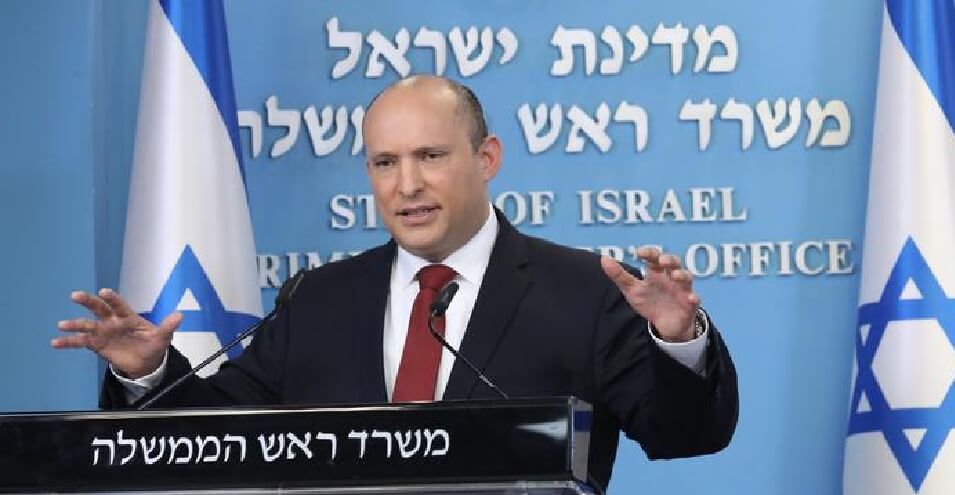
Israel’s prime minister called the Islamic Republic the source of terrorism in the region and warned against investment in Iran. Naftali Bennett said at the World Economic Forum that only an agreement with Iran that leads to the cessation of its nuclear activities would be acceptable.
Naftali Bennett at the World Economic Forum, held as a video conference in Davos, Switzerland, called the Islamic Republic the source of terrorism in the Middle East and warned against its destabilizing actions.
According to German news agency report, Israel’s prime minister on Tuesday, January 18, referring to negotiations to revive the JCPOA, the eighth round of which is being held in Vienna, emphasized that an agreement with the Islamic Republic is only acceptable if Iran halts its nuclear programs.
Negotiations to revive the JCPOA began in mid-Farvardin in Hassan Rouhani’s administration and resumed with the negotiating team of Ibrahim Raisi’s government after approximately six months of hiatus.
Enrique Mora, deputy responsible for foreign policy of the European Union, oversees the coordination of these negotiations, and the United States is participating indirectly for the first time since its withdrawal from the nuclear agreement in Ordibehesht 1397.
Lifting of American sanctions and Iran’s return to fulfilling its commitments under the Joint Comprehensive Plan of Action (JCPOA) are among the most important issues under negotiation in Vienna.
Warning About the “Terror Octopus”
Israel’s prime minister called the Islamic Republic a “terror octopus” which, according to him, has its head in Tehran and its tentacles spread throughout the Middle East region.
Israel views Iran’s regional presence and influence, particularly in Lebanon, Syria, and the Gaza Strip, as a threat to its security and has repeatedly emphasized that it will not tolerate the deployment of Islamic Republic military personnel and its proxy groups near its borders.
Since its inception, the Islamic Republic has always stated the destruction of Israel as one of its most important objectives and does not hide its financial and military support for groups such as Hezbollah in Lebanon and Hamas forces in the Gaza Strip.
Iran has always rejected accusations of attempting to acquire nuclear weapons and states that the purpose of its nuclear programs is the peaceful use of nuclear energy.
However, in recent years, documents have repeatedly been revealed indicating the existence of some undeclared and hidden nuclear programs and facilities in Iran.
Warning Against Investment in Iran After Agreement
Apparently, representatives of the Islamic Republic, the remaining five countries in the nuclear agreement, and the United States in the eighth round of Vienna negotiations have come close to agreeing on the general principles of an agreement, at least temporarily.
Israel has repeatedly stated that it does not consider itself bound by any agreement that does not commit Iran to abandoning its controversial nuclear programs in the long term, and if necessary, will act against it alone.
Israel’s prime minister, referring to the possibility of reaching an agreement in Vienna, warned potential investors in Iran that such action would be a mistake in any case, whether an agreement is reached or not.
In recent years, actions against some of Iran’s nuclear facilities and influential figures in them have occurred, which the Islamic Republic has in some cases attributed to Israel.
Israel’s Major Investment in Cyber Defense
Attempts to launch cyber attacks against Israeli companies and facilities is another accusation directed at the Islamic Republic.
According to Reuters, Naftali Bennett said in his video address to the Davos conference that Israel has made substantial investments in recent years in technologies to counter cyber attacks, accounting for nearly half of global investments in this field.
Israel’s prime minister says that increased remote work due to the coronavirus pandemic has made companies more vulnerable to cyber attacks, and this country has become a powerful center for cyber defense.
The World Economic Forum has been held regularly in January in the city of Davos for nearly half a century. In the past two years, the conference faced challenges due to the coronavirus pandemic.
Source: DW