Jomhouri-ye Eslami Newspaper Reacts to Proposed 1401 Budget: ‘Subsidy Alms’ Won’t Cure People’s Suffering
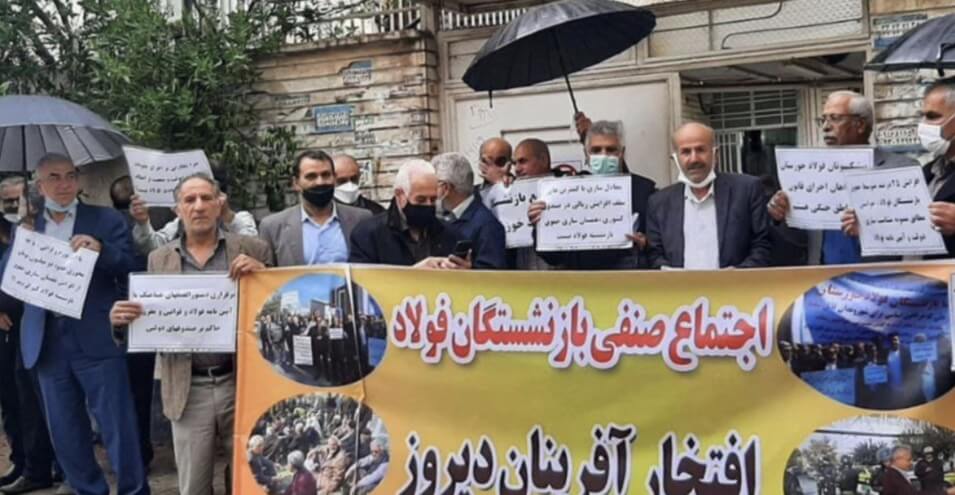
The Jomhouri-ye Eslami newspaper says that the Ibrahim Raisi government is exerting maximum pressure on people by eliminating preferential exchange rates and imposing burdensome tax demands.
This conservative newspaper warned on Thursday, the 7th of Bahman, referring to the controversial nature of the adjusted budget for the coming year, that this budget “if approved without making reforms, will subject people’s livelihoods to severe shocks and will cause severe public discontent in the face of increasing pressures.”
This comes as economic protests in Iran have intensified in recent months, and previously, multiple media outlets have warned of widespread protests resulting from inflation and price increases stemming from the government’s economic programs and policies.
The writer of a political analysis column in this newspaper, aligned with the traditional conservative faction of the Islamic Republic, criticizing the lack of serious commitment to diagnosing and solving economic problems, believes that the Raisi government has tackled problems using temporary subsidy solutions; whereas according to the writer, “subsidy alms will not cure people’s suffering.”
The Raisi government’s effort to eliminate preferential exchange rates has sparked considerable criticism regarding the escalating prices of essential goods. While supporters of this plan have presented increasing subsidies, allowances, and ration cards to help lower deciles as a solution to this problem.
The Islamic Republic’s economic planners have long experience using ration cards and subsidies. During the eight-year Iran-Iraq war, rationing and coupon economy were the primary tools for controlling prices, while the Ahmadinezhad government a decade ago implemented direct cash payments in exchange for cutting energy subsidies.
Although monthly cash payments to each person were considerable amounts for many low-income and large families, the multiple devaluation of the Iranian currency’s value over the past few years and consequently the exponential increase in prices of most goods, effectively caused these subsidies to lose their effectiveness.
The value of this cash assistance in the first year of payment, the year 1390 (Persian calendar), was around 38 dollars, in December 2017 this assistance was worth approximately 10 dollars, while the current value of this subsidy is around one and a half dollars.
Source: Voice of America