Judicial Authority Appoints Attorney for Jamshid Sharmahd, Iranian-German Prisoner, Using Same Lawyer as Ruhollah Zam
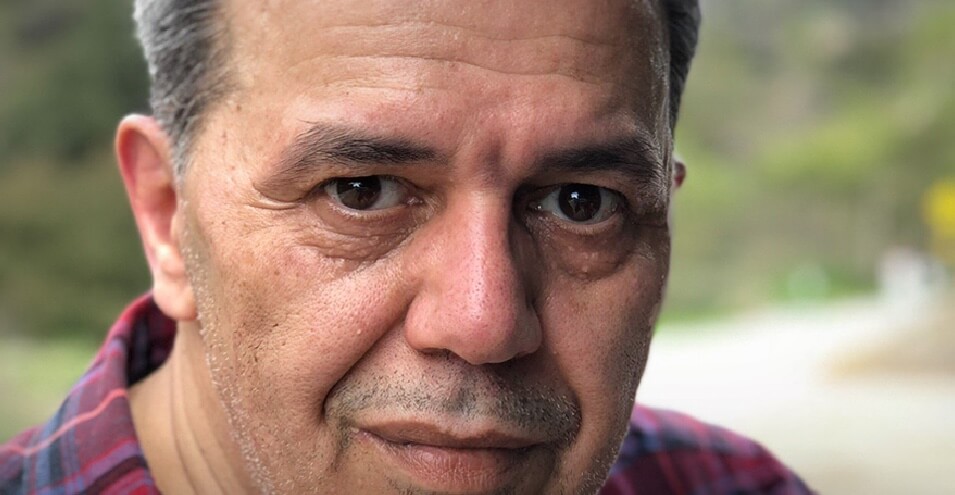
Gazelle Sharmahd: No One We Trust Has Been Allowed to Visit Our Father Yet
On Saturday, August 2, 2020, security officials of the Islamic Republic announced that Jamshid Sharmahd, a German-Iranian citizen and director of Radio Tavana, the media outlet of the Iranian Royal Association in America, had been arrested and brought to Iran.
Media outlets close to the Iranian government broadcast images of Jamshid Sharmahd showing him in the custody of the Islamic Republic’s security forces. The report also included excerpts from Sharmahd’s statements in which he introduces himself and provides explanations about his activities.
Four months after Jamshid Sharmahd’s arrest, Iranian Islamic Republic officials have still not clearly announced how Sharmahd’s abduction took place, and no details of his case have been released.
Gazelle Sharmahd, daughter of Jamshid Sharmahd, referring to the fact that during all these four months we have only been able to speak with our father four times, tells the Iran Human Rights Campaign: “We don’t know exactly where our father is being held or what his conditions are like. In telephone calls, he only explains his physical condition and constantly wants to tell us that everything is fine and there are no problems, and in fact provides us with no further explanation about the status of his case.”
Gazelle Sharmahd says that to date, no one we trust has been able to visit our father. Neither a lawyer we had in mind for him nor anyone from the German consulate in Iran. According to Gazelle Sharmahd: “We still cannot say with certainty that our father is in Tehran or somewhere else in Iran.”
According to Mrs. Sharmahd, judicial authorities in Iran announced that Mr. Dariabighi would be an appointed counsel for our father. Gazelle Sharmahd tells the Iran Human Rights Campaign: “After it was announced that Dariabighi was chosen as my father’s lawyer, the only thing I could do was ask my father not to cooperate with lawyers appointed by judicial authorities.”
Secretary Dariabighi was previously appointed by the judicial authority as the lawyer for Ruhollah Zam. Ruhollah Zam was a journalist opposed to the Islamic Republic government living in France who was abducted by Iranian security forces in an operation in Iraq, and after enduring more than a year of imprisonment, was executed on December 13, 2020.
Ms. Sharmahd, referring to the difficulties of finding an independent lawyer to follow up on her father’s case in Iran and the family’s unfamiliarity with the Islamic Republic’s judicial laws, tells the Iran Human Rights Campaign: “A few weeks ago we managed to reach an agreement with an independent lawyer to follow up on our father’s case, and when he went to the Evin Prison prosecutor’s office, he was told that no such person is imprisoned in Evin Prison and no such case exists here.”
According to Gazelle Sharmahd, in a telephone call she had with Mr. Sharmahd in early November, she explains to her father that the lawyer was told you are not in Evin Prison, and Mr. Sharmahd said: “I wasn’t in Evin at that time, but now tell the lawyer to go to Evin Prison again and inquire again.”
According to Gazelle Sharmahd, it was after this conversation that our lawyer went back to Evin Prison and prison authorities told him that Jamshid Sharmahd is imprisoned in Evin, but until the end of the interrogation phase, the lawyer does not have access to the case.
From Forced Confessions to Being Unaware of Case Details
The daughter of Jamshid Sharmahd tells the Iran Human Rights Campaign: “In the four times we spoke with our father, he only speaks about positive things and we know absolutely no details about his alleged crime and his case.”
According to Gazelle Sharmahd, the only things we know about our father’s case relate to his forced confessions that were broadcast on Iranian television and the Islamic Republic’s news media. In part of this video report, Mr. Sharmahd is blindfolded and makes reference to “Husainiyeh Shiraz.” In these television confessions that are broadcast in fragments, Jamshid Sharmahd says: “Before they went to the Husainiyeh, they contacted me… They had a good position and needed explosives and we provided them with explosives.”
These confessions, compiled alongside images of the 1999 explosion at the Shahada Husainiyeh affiliated with the Rahpouyan-e Vasal Foundation in the city of Shiraz, were intended to suggest that there was a direct connection between Jamshid Sharmahd and the Shiraz explosion. After the Husainiyeh Shiraz explosion, contradictory reports emerged about the causes of the incident. Pourmohammadi, the minister of interior at the time, announced several months after the Husainiyeh Shiraz explosion that the perpetrators of the bombing in Shiraz had been arrested.
In this video report, it was also claimed that Jamshid Sharmahd intended to direct and carry out several explosions throughout Iran that were neutralized by security forces.
Gazelle Sharmahd, referring to her father’s distressed state and frightened voice during the television confessions, says that the manner in which he spoke and also the blindfold he wore while speaking demonstrated pressure behind the scenes to obtain these forced confessions.
Gazelle Sharmahd, referring to the broadcast of part of her father’s confessions on television in which he said he had prepared explosives for the Shiraz explosion, says: “I told my father, if they want to help you, why did you falsely confess on television to trying to help with the bombing?” According to Gazelle Sharmahd, her father replied: “Those confessions were from before and now they want to help me.”
Ms. Sharmahd says her father constantly says in telephone conversations: “The people who arrested me want to help me.”
The Account of Jamshid Sharmahd’s Abduction and the Silence of UAE and Oman Authorities
Gazelle Sharmahd tells the Iran Human Rights Campaign: “My father was abducted by Iranian forces, and apart from our concern about his detention, we also demand explanation from the Islamic Republic authorities about what happened.”
Ms. Sharmahd, referring to the fact that abducting her father in another country violates all laws, says: “My father was on a business trip and when he informed my mother that he was in the UAE, my mother became concerned and from there we tracked my father’s movements via GPS, but suddenly there was no news of him for two days and GPS showed that my father had traveled overland to Oman.”
Gazelle Sharmahd, stating that after Oman there was no way to track her father, says: “It was after that when Iran announced that it had arrested my father in an operation in a foreign country.” Ms. Sharmahd says that before we spoke with international media and explained the circumstances of my father’s disappearance in Oman, government media in Iran spoke of contradictory accounts saying that Jamshid Sharmahd was arrested in Tajikistan, Iraq, or Turkey, but after we provided the accurate account, Iranian authorities offered no new account of how my father was abducted and in which country, and only said that Jamshid Sharmahd was arrested in a complex intelligence operation.”
According to Mr. Sharmahd’s daughter, her father was forced to stay for a few days at Dubai airport due to the spread of coronavirus on his way to his destination of India.
Gazelle Sharmahd tells the Iran Human Rights Campaign: “We were unable to contact the embassies of the UAE and Oman to get any explanation from them. The Iranian embassy in Germany, in response to our emails regarding the follow-up of this matter, says that the authorities of the UAE and Oman are also copied. A response that is of no use to us.”
Ms. Sharmahd says we are constantly in contact with German authorities and they say that Mr. Sharmahd is also a German citizen and we are making all efforts to follow up on the status of my father, but they provide no details and explain how they intend to help our father.
Gazelle Sharmahd, referring to the execution of Ruhollah Zam and that he too, like her father, was abducted and brought to Iran, said: “This is inhumane conduct and a violation of human rights standards, and we call on all international institutions to stop this inhumane treatment of dual-nationality prisoners.”
Jamshid Sharmahd is 65 years old and emigrated to Germany in 1983. Mr. Sharmahd, who also holds German citizenship, is the founder of an engineering company in that country that was active in designing and implementing software projects for the electronics and automobile manufacturing industries.
Sharmahd went to America in 2003 and a year later in 2004 founded the Tavana website and then in 2007 founded Tavana Radio as the media outlet of the “Iranian Royal Association.”
Efforts by security forces to build a case against Jamshid Sharmahd have fueled concerns that this dual Iranian-German citizen may face severe punishment.
In 2007, Fereydoon Foladavand, founder of the “Tavana” group and the Iranian Royal Association, disappeared at the Iran-Turkey border. Later, Amnesty International confirmed Foladavand’s disappearance and announced that in addition to Fereydoon Foladavand, two other men with dual Iranian-American and Iranian-German nationality also disappeared. No information about Fereydoon Foladavand’s whereabouts is yet available.
Concerns about Iran’s security forces’ new method of abducting opponents outside the country’s borders have increased. In recent months, in addition to Jamshid Sharmahd, Habib Issiou, an opponent of the Iranian government and former head of the “Arab Movement for the Liberation of Ahvaz,” was abducted by Iranian security forces in Turkey.
Earlier, Ruhollah Zam was taken to Iraq in a similar operation known as “Operation Deception” and was then abducted by Islamic Republic security forces and ultimately executed.
Source: Iran Human Rights Campaign