“Kamran Ghazanfari”: If Some of Rouhani’s Accusations Are Proven, His Sentence Is Execution

“Kamran Ghazanfari” stated in recent remarks: If Hassan Rouhani’s accusations are proven, his sentence will be execution.
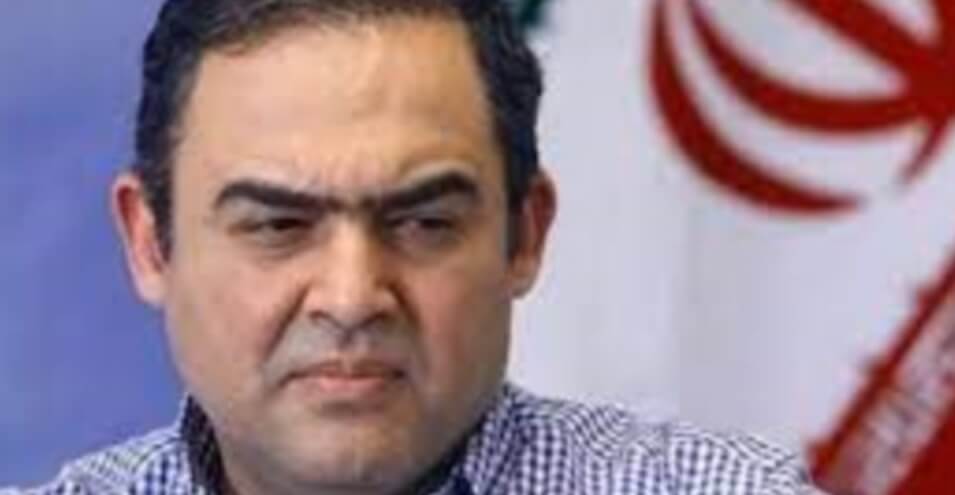
“Kamran Ghazanfari,” a member of the Islamic Consultative Assembly, in his latest remarks, raised the controversial cases of “Hassan Rouhani,” Iran’s former president, once again. He stated that the previous parliament sent at least eight complaints against Rouhani to the judiciary.
Ghazanfari emphasized: “If some of Rouhani’s accusations are proven, his sentence is execution.”
He added: “One of these accusations is ‘corruption on earth,’ an accusation that under the laws of the Islamic Republic can result in a death sentence.” Addressing “Gholam-Hossein Mohseni-Eje’ei,” the head of the judiciary, Ghazanfari said that according to law, the judicial system was obligated to examine these complaints “out of turn,” but there is no news of trial and punishment.
Ghazanfari referred to a case that the government of “Ebrahim Raisi” also initiated against Rouhani. The subject of the case was “the theft of 48 pieces of precious carpets from the Sa’dabad Palace,” and Rouhani was named as the primary defendant. Rouhani’s office called this case an attempt by the Raisi government to divert public opinion.
He reminded and added: “During his presidency, Rouhani filed complaints against hundreds of people, and the judiciary investigated all these complaints. But if someone files a complaint against Rouhani, the case is set aside.”
Ghazanfari also said: “Eight hundred thousand people signed a request for Rouhani’s trial in cyberspace, but to this day, no result has been achieved.”
Kamran Ghazanfari also described the nuclear agreement during Rouhani’s period as “JCPOA entirely damaging” and regarding Rouhani’s recent efforts to reduce tensions with the West, he said: “He has caused enough damage to the country. When he is not dealt with, his tongue loosens and from the position of a debtor, he transforms into a creditor of the system and speaks honeyed words.”
This comes as three European signatories to the JCPOA have initiated the process of activating the “snapback mechanism” against Iran, and Iran’s government has only until the end of September to reach an agreement with the West.
Hassan Rouhani has also repeatedly emphasized in recent weeks the necessity of negotiations with the West and reducing tensions with America, saying: “If we can improve relations with Europe, neighbors, East and West, and even reduce tensions with America. If it serves our interests, what’s the problem? There is no problem; rather, it is necessary and incumbent upon us.”
He also said regarding recent clashes with Israel: “Israel’s account is separate, and if America doesn’t want it, it is effectively nothing.”
While Islamic Republic officials like Rouhani enjoy immunity from serious accusations of financial and political corruption, thousands of Iranian citizens face imprisonment, torture, and even execution because of their religious beliefs, personal convictions, or demands for human rights. Christians, civil activists, and journalists are often direct targets of suppression.
This contradiction shows a system filled with internal corruption simultaneously suppresses the voices of justice-seeking and religious citizens. Corruption at the highest levels of government on one hand and violence against the powerless people on the other present a clear picture of complete injustice and inequality in Iran.