Kermanshah: Water Scarcity and Devastated Environment
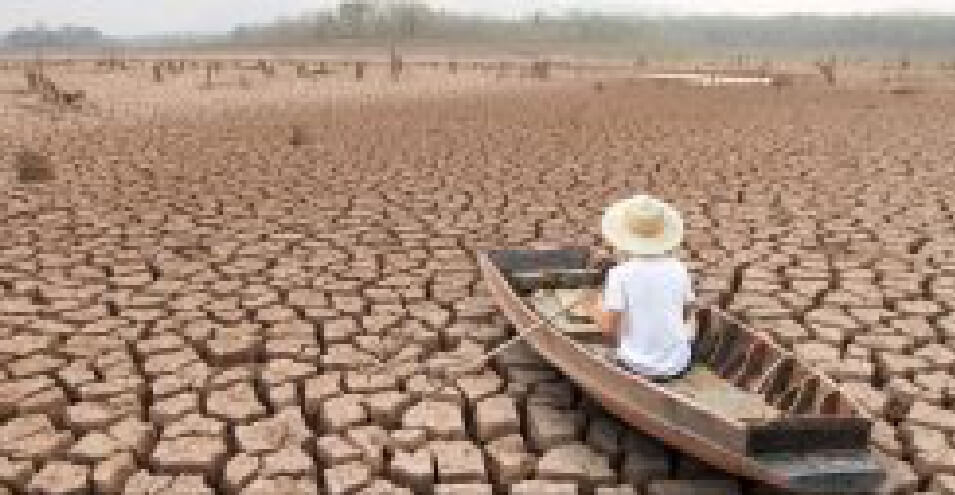
The vast province of Kermanshah, with an area of 25,009 square kilometers—representing 1.5 percent of the country’s total territory—has over the past 42 years been plundered and devastated as if by a merciless enemy, transformed into an arid, waterless wasteland. Kermanshah now faces a severe water scarcity crisis while the province’s environment has been destroyed.
All of the province’s rivers have dried up, and its springs have evaporated their last drops and vanished. The seven major rivers of the province—Qarah Su, Razavor, Garab, Morg, Gamasiyab, Dinur Ab, Simareh, and others—have all dried up. Of the beautiful and verdant springs that once existed throughout the province, nothing remains except the cracked, dry earth at the bottom of their beds. Springs such as Taghbastan, Khayralias, Yavareh, Khezerzendeh, and Niloofar Spring—which were once believed to have no end and to connect to the boundless seas of the world, springs where locals believed the mythical Cup of Jamshid, which King Shiroyeh son of Khosrow Parviz had thrown in and was never found, now lie dry with dust and sand rising from their beds.
With the drying of the province’s rivers and springs, the city of Kermanshah faces an imminent dangerous crisis of drinking water shortages, as a large portion of the city’s drinking water is currently supplied by the Gamishan Dam in Kamyaran. Should the Kamyaran Dam’s water supply become insufficient, there will be no drinking water available in Kermanshah.
Throughout the province, there is no longer a single leafy tree whose shade one can rest under and seek comfort. Except for a few small areas that have endured, the entire province presents nothing but scorching heat and parched, drought-stricken earth that assaults the eyes in every direction.
All this suffering has resulted only from the incompetence of officials and the inability and lack of expertise of unqualified managers who, through negligence and irresponsibility, have brought ruin to the province’s fate. They deprived it of its surface water and relentlessly drained its groundwater aquifers without account for agricultural purposes. They left the abundant natural forests unprotected and without care, discarding all previously studied environmental plans for the province’s future that had been prepared before the establishment of the Islamic Republic to preserve the ecosystem. Thus came to pass what should never have occurred—a land that experts believe will become uninhabitable within less than two decades. Although this situation has occurred or is occurring in many other provinces of the country, Kermanshah province bears its own unique suffering and compounded problems.
Kermanshah Province on the Brink of Water Bankruptcy
With a population of over two million, Kermanshah province was once one of the relatively water-rich provinces with vast fertile plains and fields. However, due to the incompetence, negligence, and political maneuvering of Islamic Republic officials in dealing with water, soil, and environmental issues over the past four decades, the province has now transformed into an arid, drought-stricken region on the verge of water bankruptcy and land subsidence—a phenomenon referred to as the catastrophe of the century.
Over the past forty years, through faulty planning, mismanagement stemming from poor judgment, and political discrimination among cities, all the province’s surface water—comprising seven rivers, dozens of springs, and others—has been withheld from the province. Its waters have been diverted out of the province, while in their place, through the digging of deep and semi-deep wells, both legal and illegal, all groundwater aquifer reserves have been depleted over four decades. Kermanshah has transformed into a region of dry, depleted lands and now stands on the brink of a major water crisis and land subsidence.
A Review of Kermanshah Province’s Water and Soil Conditions
The rivers Morg in Sarfeyruzabad, Razavor in Kamyaran, Garab in Ravansar, Gamasiyab in Bisotun, Dinur Ab in Dinur, and Qarah Su and Simareh in Kermanshah are seven major rivers that flow through this province. All these rivers form the headwaters of the great Karun River, which ultimately flows into the Hoor al-Azim. These seven major rivers, along with numerous seasonal streams, wetlands, and hundreds of springs and marshes, once gave the province a verdant, lush, and vibrant landscape.
Over the past four decades, despite precise scientific studies and implementation plans for the rational and optimal use of surface water for irrigating the province’s lands, and despite future water and soil prospects having been considered, all these efforts and scientific studies were abandoned upon the establishment of the Islamic Republic. Unfortunately, the substantial volume of water from all seven rivers flowing through the province, without a single drop being used within the province, was diverted toward unknown purposes and regions. The government apparatus encouraged and urged farmers to dig deep and semi-deep wells and use groundwater. Not content with this alone, the government also supplied drinking water to cities and villages from groundwater aquifer sources.
This resulted in, after forty years have passed, Kermanshah province now facing an enormous and insoluble water crisis and land subsidence, causing farmers and herders in the province to suffer, driving continued migration from villages to cities, and subjecting cities to the dangerous crisis of water shortage.
The Inevitable Fate of the Germaab Diversion Dam on White Mountain in Kermanshah
Before the Islamic Revolution, a diversion dam project was studied to irrigate the vast plains of Mahidasht—the largest plain in the province—as well as Sarfeyruzabad, Sanjabi, Goran, Qalkhani, and Ravansar. More than 25 percent of the dam’s construction work had been completed. Through this diversion dam, which was planned for an area called Tangeh Germaab on White Mountain, part of the Simareh’s water would be directed to the Sarfeyruzabad spring and flow through the natural course of the Morg River, irrigating the plains of Sarfeyruzabad, Mahidasht, Kozran, Sanjabi, Goran, Qalkhani, Ravansar, and others—totaling approximately 1,200 square kilometers—after which the water would naturally continue its course toward the Qarah Su River, flowing in a circular system so that no drop would be wasted, with excess water returning to the main river basin. This was considered one of the unique and unparalleled projects in the field of watershed management in the world.
Unfortunately, with the establishment of the Islamic Republic, this grand and beneficial plan was shelved. Following this abandonment, the Islamic Republic government pursued new plans to control the large Simareh and Karun rivers. According to these plans, no provision was made for the people of Kermanshah to use surface water, and farmers were not permitted even minimal withdrawal from the seven aforementioned rivers. Meanwhile, the water from these rivers was completely redirected through the Simareh River course after passing through the province’s lands. In the continuing course of the Simareh and Karun, at least 18 small and large dams were constructed. Most of these dams had defects and problems, and in various ways have caused the ecosystems along their course complex and insoluble difficulties.
In addition to this major project, plans for protecting natural resources and afforestation within the natural forests of this section of the Zagros Mountains were implemented to maintain and develop the region’s natural ecosystems, covering vast areas. Unfortunately, upon the establishment of the Islamic Republic, all these plans and programs were abandoned. The Germaab diversion dam project was forgotten, all protective fencing was destroyed, barbed wires were stolen, and seedlings planted within the vast oak forests perished. Shepherds allowed their flocks to graze in protected pastures and forests, and any concept of environmental conservation ceased to exist.
Pumps That Completely Emptied the Groundwater Aquifers and Reduced the Region to Desolation Over Four Decades
Instead of all those beneficial and studied plans, the dangerous project of digging deep and semi-deep wells and uncontrolled use of groundwater aquifers became the policy of Islamic Republic governments. Based on this approach, deep and semi-deep wells, both legal and illegal, were dug throughout the province’s plains, and permissions for groundwater use were recklessly granted.
Water pumps operated continuously day and night, and farmers, competing and vying with one another, exerted all efforts to extract as much groundwater as possible without any oversight. Meanwhile, irrigation was conducted in a traditional manner, wastefully consuming dozens of times more water than necessary. A decade or two later, semi-deep wells dried up, and thereafter the practice of deepening wells became customary. Farmers, encouraged by government incentives and loans, dug deeper wells to bring the last remaining drops of groundwater from great depths. Continuing this process, after more than forty years, neither water remains in the rivers nor in even the deepest wells, and in some areas of the province, no water—surface or groundwater—remains at all.
The vast oak forests have withered, and nothing remains of the abundant fruit orchards that once existed. This process continues toward other regions. More than 80 percent of the traditional livestock operations in the province have been destroyed due to the loss of pastures and forests and the lack of water and fodder for animals, while the remaining operations struggle to survive. All industrial livestock operations in the province have become bankrupt due to faulty planning and uncontrolled inflation, with their owners fleeing or imprisoned due to bank debts.
At present, after more than forty years of this chaos, what remains for the province is scorching heat, arid land, and other harsh and devastating phenomena that continue to deepen the environmental catastrophe of the region and, consequently, the human disaster.
The flood of migrations toward cities from areas where water has run dry and no shelter remains has been ongoing for some time and continues to expand at such a rate that it will not be long before all villages in Kermanshah province are emptied of their inhabitants.
Source: Hrana