Khatibzadeh: 98% of Vienna Agreement Text is Ready, But Three Main Issues Remain Unresolved
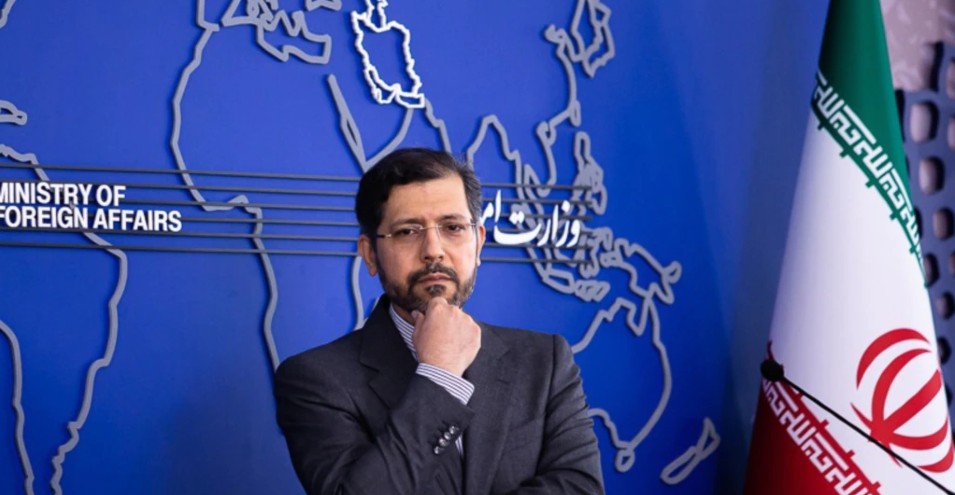
Saeid Khatibzadeh, spokesman for Iran’s Ministry of Foreign Affairs, says “over 98% of the draft text of the agreement to revive the JCPOA has been jointly drafted,” but regarding three main issues – “lifting sanctions, guarantees, and certain claims” related to Iran’s nuclear program – the United States and Europe have yet to make decisions.
Stressing that Iran’s Supreme National Security Council “oversees the negotiations,” he stated that the council has provided “necessary directives” to Ali Bagheri, Iran’s senior negotiator in Vienna, and Iran “will certainly not cross its red lines” while Western countries “should not push further.”
Iran’s Foreign Ministry spokesman did not provide specific details about the red lines in question. Javad Karimi Qodoosi, a member of the parliamentary National Security Commission, reported yesterday that “thirteen red lines have been specified by the Supreme National Security Council for the negotiating team.”
Iran’s reiteration of its demands for essential measures from the West comes as Western powers have repeatedly warned Iran in recent weeks that little time remains for a deal.
According to reports published in the media, Iran seeks the removal of all sanctions imposed during Donald Trump’s administration, but the United States says it cannot lift sanctions imposed for human rights reasons or “Iran’s support for terrorism,” though it will lift nuclear-related sanctions inconsistent with the JCPOA.
The Iranian government also seeks assurances from the U.S. government that it will not withdraw from the JCPOA again, but U.S. officials say they cannot provide such guarantees.
Iran also describes certain International Atomic Energy Agency reports alleging Iranian concealment in four areas related to its nuclear program as “political claims,” saying the agency’s investigation file on this matter should be closed.
According to reports, inspectors of the International Atomic Energy Agency have identified four “suspicious” locations in Iran, one of which is in Turquzabad, on the outskirts of Tehran, and another in Isfahan, both of which were “likely destroyed in 2003 and 2004 to eliminate traces of enriched uranium.”
Iran’s Foreign Ministry spokesman also promised that if an agreement is reached in Vienna, the text of this agreement will be made public.
Regarding speculation about setting a deadline for concluding JCPOA revival talks, he said this is a “tedious game” and Western governments should act in “good faith.”
Mehdi Saadati, representative of Babol in parliament and member of the parliamentary National Security Commission, also said the United States “desperately needs” to return to the JCPOA and “it’s unclear when negotiations will conclude, but it appears they have started a new game and are setting deadlines to exert pressure.”
Ali Bagheri, Iran’s senior representative in the JCPOA revival talks, returned to Vienna today. He had traveled to Tehran on February 23 for consultations on the nuclear deal.
The eighth round of talks aimed at reviving the JCPOA continues in Vienna with the participation of representatives from Iran, Russia, China, France, Britain, Germany, the European Union, and the United States. American representatives are participating indirectly in these talks, and Iranian officials say they are not willing to hold direct negotiations with them.
The ultimate goal of these talks is to return to the spirit of the June 2015 nuclear agreement between Iran and world powers – lifting sanctions against Iran, including important industrial and oil export sanctions, in exchange for limiting Tehran’s nuclear activities and extending the time needed to produce enriched uranium necessary for nuclear weapons development.
Source: Radio Farda