Lale Saaeti Sentenced to Two Years in Prison for Receiving Baptism
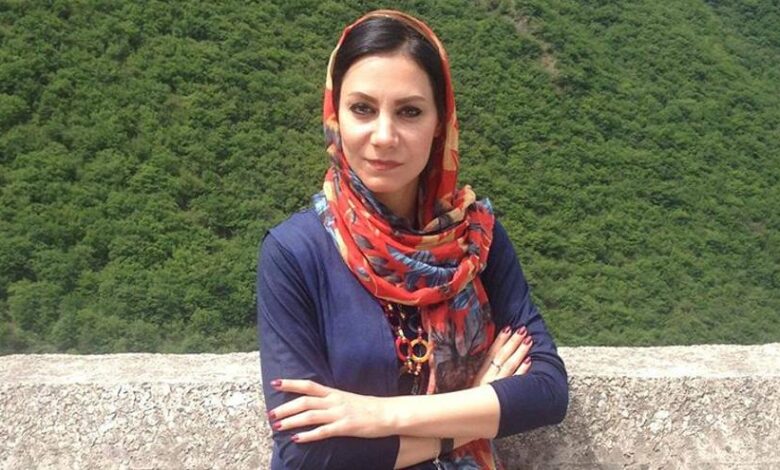
Lale Saaeti has been sentenced to two years in prison for receiving baptism.
Lale Saaeti, a Christian citizen, was sentenced on Monday, April 25, 2024, to two years in prison and two years of travel ban from the country on charges of “actions against national security through contact with Christian Zionist organizations.”
She was arrested on February 13, 2023, following a raid by security officials on her father’s house in Tehran, and was tried on March 17 by Judge Iman Afshari, head of Branch 26 of Tehran’s Revolutionary Court, on charges of “acting against national security.” According to her case file, Ms. Saaeti engaged in religious activities and attended house churches after returning to Iran, and upon examination of her mobile phone contents, authorities accessed images including documents and video recordings of her baptism in Malaysia and other activities at a Malaysian church.
Lale Saaeti had been residing in Malaysia and returned to Iran in 2017 due to the prolonged processing of her asylum case, economic hardship, and the loneliness of her elderly parents. Since her return to Iran, she has been repeatedly subjected to pressure and interrogation by security forces.
It should be noted that Ms. Saaeti was denied the right to choose a lawyer through the implementation of Note 48 of the Criminal Procedure Code by the judiciary, and her trial was conducted with a court-appointed lawyer.
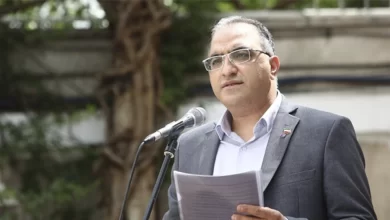
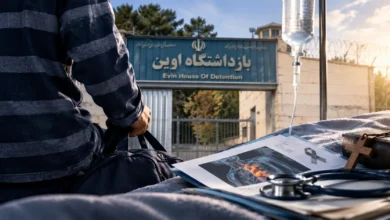
According to human rights organizations’ reports, Lale Saaeti was interrogated for more than a month by intelligence agents and subsequently transferred to the women’s ward of Evin Prison. Hossein Ahmadi-Nezhad, a lawyer based in the Netherlands who has defended a number of civil activists and ideological prisoners in Iran, while emphasizing the injustice of Iran’s judicial system, stated: “The problem is that the mere existence of a video on a mobile phone camera cannot be evidence of a crime or justify charges against the accused; however, since the judicial and security system does not follow the rule of law and is merely focused on suppressing, harassing, and inhumanely persecuting citizens, particularly in cases involving ideological and political matters, it has engaged in unlawful detention and illegal prosecution. In other words, this matter has fundamental and basic flaws both in terms of procedural and substantive laws. The main problem lies in the absence of the right to judicial recourse and lack of fair trial.”
The UN Special Rapporteur on human rights in Iran and human rights organizations have repeatedly published multiple reports, with documentation, regarding persecution and discrimination against Christians, showing that asylum requests from many Christians with a history of church activities, and some imprisoned due to Christian beliefs and peaceful religious activities, have been rejected.