Lebanon’s Christian Leader Warns of Hezbollah, a Group Dragging the Country Toward War
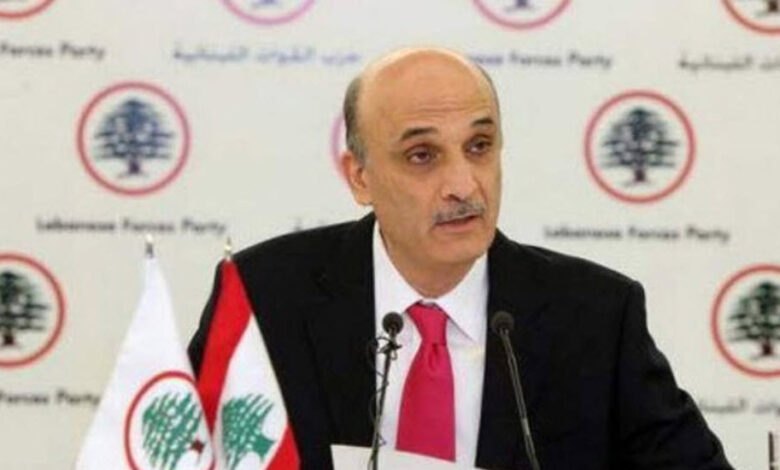
The leader of Lebanese Christians warned about Hezbollah, the crisis of war, and Iranian influence that has brought Lebanon to the brink of a humanitarian catastrophe.
As military clashes between Israel and Hezbollah-affiliated forces in Lebanon have entered a new phase, one of the country’s most prominent Christian leaders has warned about the consequences of this group’s presence and activities.
Samir Geagea, leader of the Lebanese Forces party and a recognized Christian figure in Lebanese politics, in response to escalating Israeli airstrikes against various areas of Lebanon, declared that the continuation of Hezbollah’s military activities has effectively transformed the country into a battlefield, with Lebanese people paying the price.
In recent weeks, Israeli airstrikes against various areas of Lebanon, including the south of the country, the Bekaa Valley, and the southern suburbs of Beirut, have intensified; areas recognized as Hezbollah’s main strongholds.
Geagea took a clear stance on the position of this paramilitary group in an interview with Al Arabiya network. He said: “Following the Lebanese government decision, Hezbollah is considered illegitimate and illegal.” He also emphasized that the Lebanese government is considering serious and bold decisions regarding this Tehran-backed group.
According to Geagea, the continued presence of Hezbollah’s military wing not only threatens Lebanon’s stability but has actually drawn the country into a war in which the Lebanese government had no role in deciding.
In recent months, tensions along the Lebanon-Israel border have increased significantly. According to reports, Hezbollah’s missile attacks on Israeli territory have led to the escalation of Israeli military operations inside Lebanon. Geagea believes that this situation is a direct result of Hezbollah’s military activities and has drawn Lebanon into a war whose consequences for the people of this country have been catastrophic.
He stated in this regard that an end to the clashes will only be possible when Hezbollah’s military wing is dissolved. His statements are also consistent with his previous positions, as he has repeatedly emphasized in the past that Hezbollah’s weapons should be placed under the control of the Lebanese government and the monopoly of military power should belong to the army.
Following the escalation of clashes, Israel has expanded the scope of its attacks to new areas in Beirut; areas that were previously less frequently targeted. According to reports, neighborhoods such as “Ramlet al-Baida,” “Roueche,” and “Zqaq al-Blad” have also been added to the list of airstrikes targets.
These developments occurred after Hezbollah announced that starting March 2nd, it opened the Lebanese front in the war against the Islamic Republic.
As a result of these clashes, Lebanon has faced a widespread humanitarian crisis. Reports indicate that more than 800,000 people have been forced to leave their homes due to attacks and clashes.
Additionally, hundreds of people have lost their lives in these clashes and many residential areas in southern Lebanon have suffered severe damage.
Meanwhile, Israel has also launched limited ground operations to advance toward southern Lebanese areas; an action that has increased concerns about the expansion of the war.
Lebanon’s Christian community, which has played an important role in the country’s political history, is now closely following recent developments with concern. Samir Geagea, whose party is considered one of the largest Christian parties in Lebanon, has repeatedly emphasized that Hezbollah’s influence and weapons outside government control have weakened Lebanon’s sovereignty.
He also warned that Hezbollah’s military decisions are not only against Lebanon’s interests but have exposed the country to destruction and economic and humanitarian crises.
While clashes continue, many analysts believe Lebanon is at one of the most critical junctures in its contemporary history.
On the one hand, war and regional tensions have placed severe pressure on the country’s economy and infrastructure, and on the other hand, internal disputes over Hezbollah’s role and Iranian influence in Lebanon persist.
For many Lebanese political leaders, including Samir Geagea, resolving the crisis will only be possible if the Lebanese government takes full control of weapons and military decisions and all armed groups outside the state structure are disarmed.