Local Officials Warn of Increased COVID-19 Spread in Fars, Khuzestan, and Zanjan
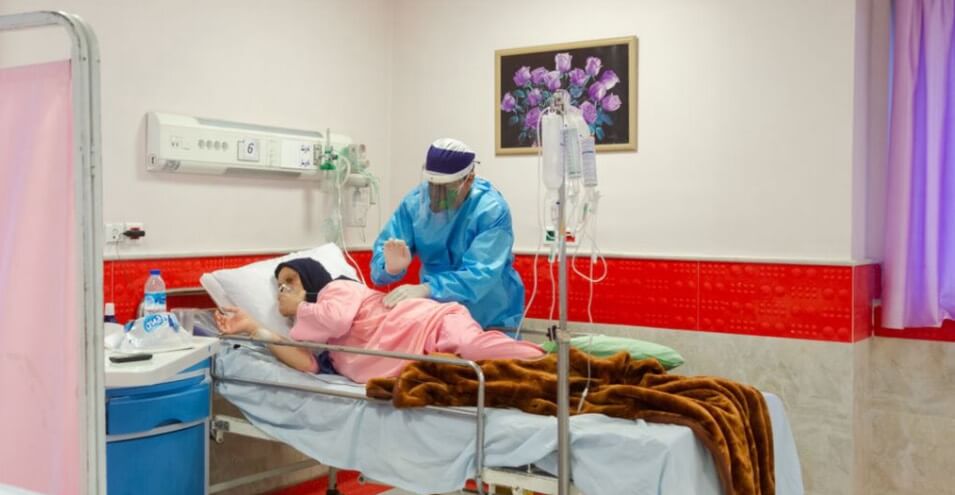
Local officials in Khuzestan, Fars, and Zanjan provinces have reported an increase in the prevalence of the disease and described the situation as “concerning.”
Gholamreza Shariati, governor of Khuzestan, reported a “concerning spread” of COVID-19 in the city of Ahvaz and called for greater public vigilance.
Speaking on Thursday, April 24, at the inauguration ceremony of a laboratory, he attributed this to “carelessness” among the public over the past 10 days, stating: “The number of patients has increased relatively.”
Mr. Shariati did not provide specific statistics for the city of Ahvaz but said the situation is “stable and under control.”
Meanwhile, Ali Akbari, representative of Shiraz in parliament, told the ILNA news agency that the spread of COVID-19 in Fars province has been on an “upward trajectory” over the past ten days.
He attributed this to the removal of “travel restrictions” and increased traffic movement, stating that there is “considerable concern about the spread of a second wave of COVID-19.”
Starting from April 13 of this year, the Iranian government announced that it would shift from social distancing measures, which included strict limitations on travel and business activities, to a “smart social distancing” plan.
These changes, which were implemented in Iranian provinces except Tehran from April 13 and in Tehran from April 20, have led to an increase in intra-city and inter-city traffic, the resumption of some businesses, and the return of a significant portion of government employees to their workplaces.
In Zanjan, Mohammad Reza Saeeini, deputy director of the Medical Sciences University of that city, told IRNA that the number of COVID-19 cases has gradually increased.
Expressing concern about the spread of COVID-19 over the next two weeks, he said that “failure to maintain social distancing” is the cause.
Mr. Saeeini described “cases of death from this disease” as a “concerning issue” and stated that this situation “may continue at the same pace, such that within the next month an unpleasant situation will prevail.”
In the city of Qom, Mohammad Reza Qadir, head of the Medical Sciences University, warned about the failure to observe “social distancing” and said that if neglected, “we will again face an epidemic with a second peak that could be more severe.”
After meeting with Alireza Arafi, head of Qom’s seminaries, he called for a gradual reduction of restrictions and said, “Let us not abandon the city.”
Mr. Arafi had previously called for an earlier reopening of religious centers.
Hassan Rouhani, president of Iran, announced on April 20 in a meeting of the National Coronavirus Task Force that the government’s plan was to reopen religious sites by the end of Ordibehesht (May), but at Arafi’s request, the government changed its decision and accelerated this date by 15 days.
Recent disagreements over the reopening of religious and public places have resulted in multiple exchanges of letters.
Mohammad Reza Zafarghandi, head of Iran’s Medical Organization, on April 24 in a letter to Hassan Rouhani urged him not to rush the reopening of these centers and universities, warning that it “will lead to the spread of disease and harm to people’s health, wasting past efforts, and exhausting the country’s medical staff.”
On the other hand, Alireza Marandi, president of Iran’s Academy of Medical Sciences, in a letter to Hassan Rouhani called for the reopening of “the courtyards of the holy shrine and mosques” “in these very days.”
Source: Voice of America