Marginalization; A Report on Children Deprived of Education in Khavarshahr District
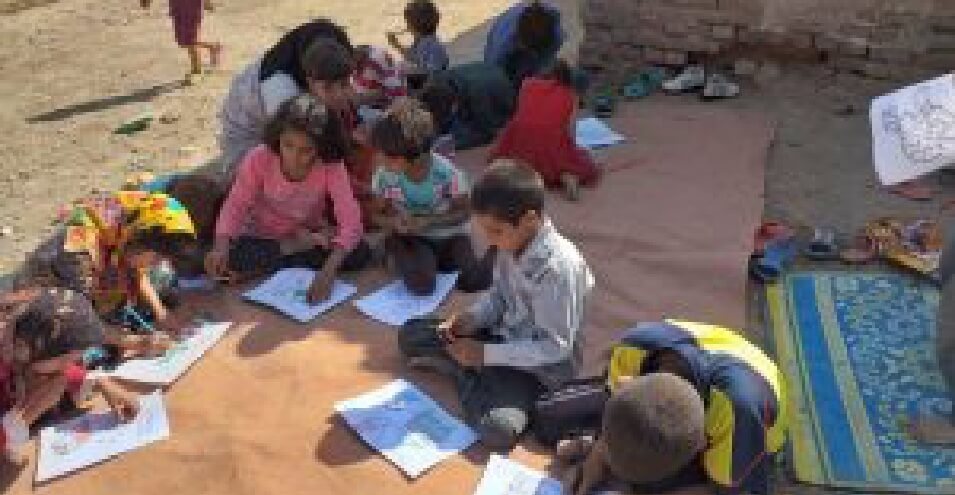
Children in Khavarshahr district, one of the marginal areas of Tehran, are living in unfavorable conditions due to the lack of educational and welfare facilities. Many of them do not have access to virtual space platforms and have been deprived of education following the outbreak of the coronavirus pandemic and school closures. Most of these children are forced to engage in hard labor such as waste collection and brick work at a young age to cover their living expenses. Early marriage of these children due to poverty and social problems is another major issue in this area. The negligence of officials and their failure to address the problems and hardships of these neighborhoods, coupled with poverty, economic problems, and lack of health facilities, are major concerns for the residents of Khavarshahr, with children being the primary victims of this mismanagement.
According to Hrana news agency, citing ILNA, children in Khavarshahr district of Tehran have been deprived of education due to the lack of educational facilities and access to smartphones and tablets.
According to residents of these areas, after the coronavirus outbreak, their children abandoned their studies and turned to waste collection. Severe economic poverty has deprived them of their most basic right—education—to the extent that some children do not even know they should study virtually and believe classes are currently suspended.
Sodabeh is one of the residents of this area. She has two daughters aged 7 and 8, both of whom are students.
She says: “None of the children living in this area have mobile phones. Some children’s teachers have told them to come to school in person, but my husband did not allow my daughters to go to school because of coronavirus, as we cannot afford to pay for their treatment if they get infected.”
She continues: “We don’t have an Android phone to communicate with our children’s teachers. There are no good facilities or conditions here to help our children with their studies. I am 39 years old and illiterate. I cannot help my children with their lessons. I have to go to neighbors so they can teach them, but sometimes they won’t even let us into their homes.”
Sodabeh says: “Not everyone here has a television. Those who do don’t watch the school television program at all because the network is blocked on our TVs.”
Samiyeh is another middle-aged woman living with her children and grandchildren in one room. She talks about their educational situation: “We only had one tablet, which the children broke due to mischief.”
Mohadesseh is a sixth-grade elementary student. She is older than all the other children. The tablet that the children broke belonged to her. Mohadesseh used to study through that tablet and also helped other children.
Soheil is a student who has fallen behind in his education due to the coronavirus outbreak, school closures in this area, and not having a mobile phone. He talks about his situation: “I am in second grade. Since the coronavirus started, I only go to school on Mondays and spend the rest of the day collecting waste. Now that schools are closed, when they reopen, we will go back to school.”
Elham is another resident of these houses and has an Android phone that her two children use. She talks about the educational situation of children in this area: “We have no expectations of the Ministry of Education to provide each student with a tablet or phone, but if they provide one tablet for each family so that two or three people can study with one tablet, that would be enough.”
According to these individuals, the internet in Khavarshahr does not have proper signal coverage, which has created more problems for students in this area. Although most students here do not have Android phones, even the one or two that do cannot make much use of virtual education due to slow speeds and weak signal coverage.
Elham continues: “The internet here has no signal at all. Each time we spend over 20,000 tomans on an internet package, and even then we can only use Shad for two weeks.”
Another problem in this area is frequent power outages. According to residents, electricity is cut off for two to three hours daily.
Elham says: “They don’t have electricity to charge their phones’ batteries, and this causes problems during children’s online classes and angers their teachers.”
She continues: “Teachers don’t think that perhaps our children don’t have internet. Maybe their father doesn’t have money to buy them phones and internet packages. They say it’s not our problem. They must be present in virtual classes. If we don’t do this, they deduct from our children’s grades or say your child must come to school and we are not responsible for them.”
Elham says: “People here don’t even have bread to eat, let alone mobile phones. Their fathers don’t have work, which is why children are forced to collect waste. But it’s a shame that these become child laborers and waste collectors.”
Residents of this area say that fathers here send their children to work, and girls, when they reach the age of 15, are forced to marry.
Amir Mohammad is a fifth-grade elementary student whose father sends him to work at a bakery. He says: “I used to study through television, but now our TV screen shows no image. We don’t have the school television network so I can watch its programs.”
Mohsen is in fourth grade. He says: “I postponed my studies for later. I’m not working either because there’s no work. When there was work, I used to earn some money from collecting waste, but now I can’t even do that.”
According to the slum residents of Khavarshahr, some children in this area work until night just to bring warm bread for lunch and dinner. Some parents even send their children to collect bricks so they can use the money they earn to buy bread.
Source: Hrana