Mohammad Reza Shah Pahlavi: The Monarch Who Dreamed of a Powerful Iran
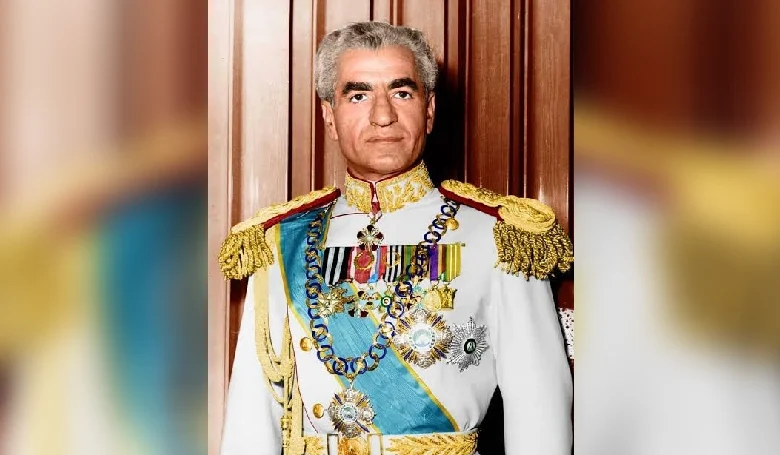
Today, July 27, marks the forty-sixth anniversary of the death of Mohammad Reza Shah Pahlavi, Iran’s last monarch; a figure whose name remains one of the most controversial and simultaneously influential figures in contemporary Iranian history. He died on July 27, 1980, after months of battling cancer, at the age of 60 in the Maadi Military Hospital in Cairo, Egypt, and was laid to rest with an official funeral ceremony ordered by Anwar Sadat, the then-President of Egypt, in the Al-Rifai Mosque in Cairo.
For many Iranians, Mohammad Reza Shah was not merely a monarch, but a symbol of an era in which Iran advanced at an unprecedented pace along the path of modernization, economic development, industrialization, and increased international standing. From the earliest years of his reign at age 22, he considered Iran’s development to be the main mission of his government and repeatedly emphasized that his goal was to bring Iran to a status befitting its ancient civilization and history.
One of the most important programs during his reign was the “White Revolution”; a series of economic and social reforms that included land reform, expansion of education, profit-sharing for workers in factories, development of public health, women’s suffrage, and the fight against illiteracy. These reforms, though facing criticism, played an important role in transforming Iran’s economic and social structure and provided the groundwork for the growth of the middle class, the expansion of universities, and the development of the country’s infrastructure.
During Mohammad Reza Shah’s reign, massive development projects were implemented across the country. The construction of dams, power plants, steel and petrochemical industries, refineries, ports, airports, extensive road networks, and the development of higher education were part of a program aimed at transforming Iran into one of Asia’s industrial powers.
In the 1970s, Iran ranked among the countries with the highest economic growth rates in the world, and many international observers referred to it as one of the emerging economies.
Patriotism is one of the characteristics that Mohammad Reza Shah’s supporters emphasize above all else. In his speeches and writings, he repeatedly referred to Iran as the “eternal homeland” and believed that the country’s progress should transcend political differences. His interest in the history, culture, and civilization of ancient Iran was also reflected in many cultural programs of that era, including the celebration of the 2,500 Years of the Persian Empire festival and investments in preserving historical monuments.
Mohammad Reza Shah also sought to transform Iran into an independent and influential country in the region. His foreign policy was based on strengthening defensive capabilities, economic development, and playing an active role in the Middle East. In the final years of his reign, Iran had become one of the region’s important powers and played a determining role in the security of the Persian Gulf. Although he maintained close relations with Western countries, particularly the United States, he also emphasized Iran’s independent decision-making at various junctures and adopted positions on matters such as oil prices and OPEC policies that were not aligned with the wishes of some Western powers. This approach led to his relations with some Western governments being marked by tension at times.
Following the 1979 Revolution and the beginning of the Islamic Republic’s rule, Mohammad Reza Shah left Iran and spent the final months of his life in difficult exile in several countries. Many governments, under the pressure of the political circumstances of that time, refrained from permanently accepting him until Anwar Sadat, the President of Egypt, welcomed him and remained by his side until the end of his life. The Shah finally closed his eyes to the world on July 27, 1980, in Cairo.
Four decades after the death of Iran’s last monarch, the assessment of his record remains a living topic in Iran’s political and historical sphere. Nevertheless, even many of his critics acknowledge his role in industrialization, infrastructure development, expansion of education, strengthening of the armed forces, and increasing Iran’s international standing, although there are differing views regarding his style of governance, concentration of power, and the state of political freedoms during that period.
Today, on the forty-sixth anniversary of Mohammad Reza Shah Pahlavi’s death, his name remains, for a large segment of Iranians, intertwined with the memory of “a developing Iran,” “the aspiration for progress,” and the belief in building “a powerful, prosperous, and dignified nation”; an aspiration that continues to live in the minds and hearts of many Iranians.
May his soul rest in peace and his memory be cherished.
Author: M.R