Narges Mohammadi’s Letter About Torture of Detained Protesters

Narges Mohammadi, a human rights activist imprisoned in jail, has reported in a letter about her observations of the painful conditions of two detainees from recent protests.
Narges Mohammadi, vice president and spokesperson of the Human Rights Defenders Center, released a letter from Evin Prison addressing the painful conditions of two detainees from recent protests and reported on the physical and psychological torture they have endured. Condemning the suppression and killing of protesters by the government, she called for punishing those responsible for the massacre of helpless people to become a public demand.
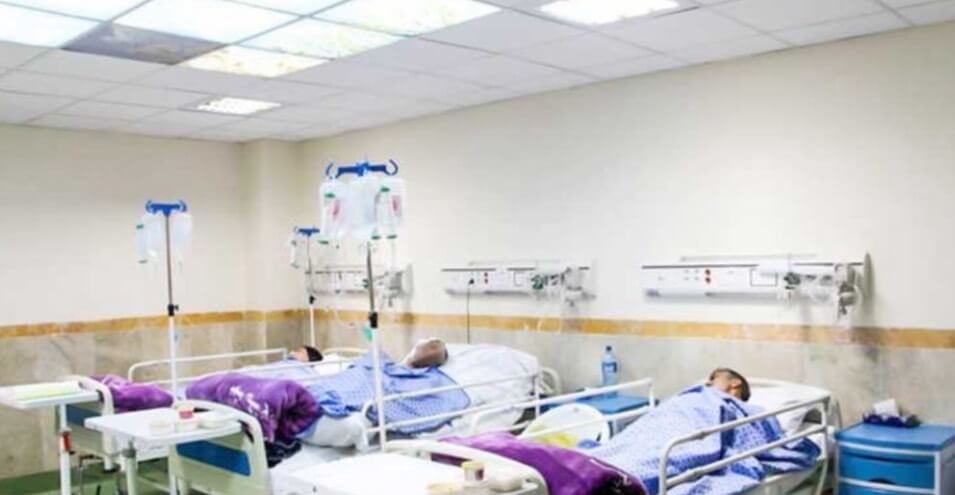
Mohammadi, in her letter dated December 1st, describing her observations of a young gunshot victim looking pale in Evin Prison, writes: “His appearance shows that bleeding, infection, and unimaginable foot swelling have left him unable to walk, prompting the guards of Section 209 in Evin’s security ward to bring him from solitary confinement to the infirmary. He is a young man from Islamshahr, from the same class that the Islamic Republic was supposed to serve. When we told him to insist that his foot be treated or it would be amputated, he said: I am supposed to be executed anyway, what difference does it make whether I have a foot or not. Since the day I was detained, they haven’t even put iodine on my wound.”
Mohammadi also described another observation. She refers to a 20-year-old girl who was transferred from Vezarat Prison to the women’s ward: “Her eyes showed the intensity of her anxiety. She got out of the car on the side of the road and approached a group that had gathered due to gasoline prices and was detained. During interrogation, or rather coerced confessions, the male interrogator grabbed and pulled her hair and used vulgar insults that she couldn’t bring herself to repeat. He unbuckled his belt and struck her against the desk and chair so that the young girl would be terrified and say whatever he wanted on camera, not just once but several times. She, like many of her generation, failed to study at university and was working, was transferred to Qarchak Prison and placed among those accused of murder, drugs, and other crimes.”
A Demand That Should Become a Public Call
The Islamic Republic of Iran has so far refused to publish accurate statistics on victims, detainees, and the wounded from recent protests. Some parliament members have called for establishing a truth commission, and Amnesty International in its latest statistics reported over 200 deaths. Previously, the spokesman of the National Security Commission of the Iranian Parliament reported the detention of “approximately seven thousand people” in recent Iranian protests.
Mohammadi, continuing her letter and referring to the claims of Islamic Republic rulers that “protest is the right of the people,” writes: “But we do not remember a protest or even criticism that has not been met with suppression by the government. The government has shown that it does not tolerate the most peaceful protests and even responds to silent demonstrations with bullets.”
The spokesperson of the Human Rights Defenders Center concluded her letter from prison by emphasizing the need to transform the demand for punishing those responsible for the massacre into a public call: “The massacre of people exhausted and worn down by repression is so brutal and violent that it cannot be justified by any excuse or pretext by the government, and there is only one request: the punishment of those responsible for the massacre of helpless people, and this matter must be transformed into a public demand.”
Narges Mohammadi, vice president of the Iranian Human Rights Defenders Center, has been imprisoned in Evin Prison since May 2015 on charges of “propaganda against the system” and for her activity in the Step by Step campaign to abolish capital punishment. She has been sentenced to 16 years in prison and is deprived of visits and phone contact with her two children.
Kiana and Ali live with their father Taghi Rahmani outside Iran.
Source: DW