National Consensus for Transitional Leadership; Widespread Support from Ethnic Groups and Christians for Prince Reza Pahlavi
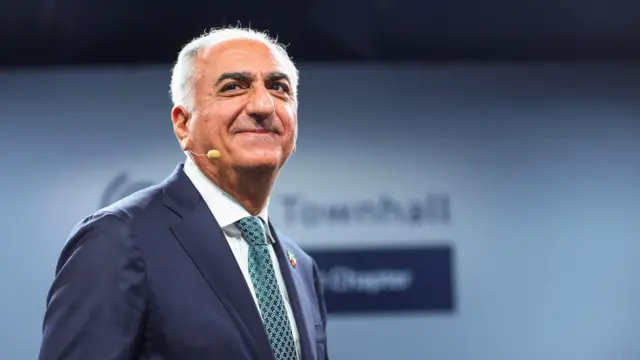
Widespread support from ethnic groups and religions, particularly Christians, for Prince Reza Pahlavi has become a comprehensive demand for transitional leadership; from Arab tribes of Khuzestan to hundreds of Iranian Christians, diverse voices are shaping a national consensus.
As Iran’s political landscape enters a new phase following domestic crises and international pressures, various ethnic and religious groups both inside and outside the country have announced their support for Reza Pahlavi to play a role in transitional leadership; a support that political observers interpret as an indication of the formation of a broad social coalition.
In the latest developments, Arab tribes of Khuzestan, including “Bani Kaab” and “Bani Turf”, announced their formal support for Prince Reza Pahlavi through a joint statement. This announcement of support by two recognized Arab tribes in Khuzestan province is significant from analysts’ perspective; because Khuzestan, as one of Iran’s strategic provinces, has always played an important role in the country’s political and security equations.
Simultaneously, a group of 715 Iranian Christians also announced their backing for Prince Reza Pahlavi for leading the transitional phase of power through an open letter. This action continues a wave of support that has been raised in recent months by civil activists, some academic figures, human rights advocates, and parts of Iranian society abroad.
Some observers believe that support from ethnic groups and religious minorities for a political figure can indicate a search for a “common ground” to overcome the current situation; a point that should be based on national unity, political secularism, and reconstruction of governance structures. In recent years, Reza Pahlavi has repeatedly emphasized in his speeches and messages “peaceful transition,” “return to the people’s will,” and “formation of a transitional government based on the nation’s free choice.”
The support announced by Arab tribes of Khuzestan as well as the Christian signatories of this letter, from a political perspective, demonstrates an effort to transcend ethnic and religious boundaries and focus on the concept of “national identity”; a concept that is introduced as the main axis of transition in the discourse of Prince’s supporters.
Subsequently, the full text of the letter from 715 Iranian Christians, which was published independently without organizational affiliation, is presented verbatim. It should be noted that the names of the signatories of this letter are kept with the secretariat of Prince Reza Pahlavi.
A collective letter from Christians in support of Prince Reza Pahlavi:
“We, a group of Christians, hereby announce our complete support and backing for Prince Reza Pahlavi as the leader of the national uprising and symbol of Iranian unity. At this historical juncture, we stand alongside millions of our compatriots who, with unparalleled sacrifice and unity, have come to the streets and chanted the Prince’s name, and we express our support for him to lead the transitional period and for any responsibility that may be entrusted to him in the future by the choice of the majority of the Iranian people.
Based on the example of Jesus Christ, we believe that a good leader is a servant of his people, not their ruler. In Prince Reza Pahlavi, we have observed humble behavior, incomparable forbearance toward critics, and lack of thirst for power and position. His steadfastness, patience, and composure over the years are both evidence of inner strength and proof of his deep love and unbreakable covenant with the country and people of Iran.
For these reasons, we consider Prince Reza Pahlavi a worthy leader and extend our hand to support him. In our prayers, we have always prayed for his peace, protection, and blessing, and for his esteemed family. We beseech God and our Heavenly Lord Jesus Christ to elevate Prince Reza Pahlavi as he did Cyrus, to take his hand, to open doors before him, to go before him, and to smooth his way. (From the Book of the Prophet Isaiah, Chapter 45).
We bless Prince Pahlavi in his weighty responsibility of leadership and ask God to surround him with honest, truthful, and wise advisors and colleagues who love Iran and Iranians, and to keep his heart always humble.
Along with our prayers, we announce our readiness to cooperate with Prince Reza Pahlavi and his team for the reconstruction of our beloved country and service to our compatriots. The signatories of this letter have expressed their personal views not on behalf of institutions related to him, but independently.”
With the expansion of such statements, it appears that Iran’s political landscape has entered a new phase of social forces alignment; a phase in which ethnic groups, religions, and various groups seek to play an active role in determining the country’s future course.