New Appointments in Islamic Revolutionary Guard Corps with Supreme Leader’s Decree
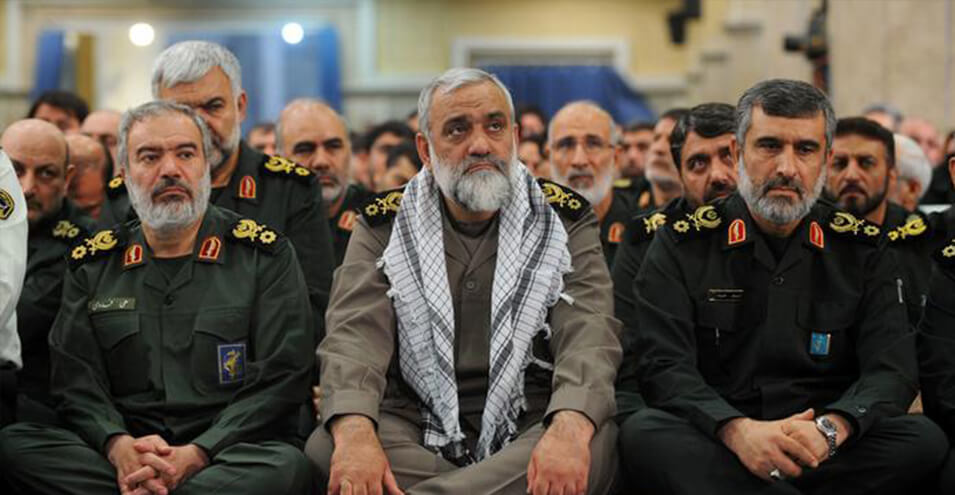
Ayatollah Khamenei appointed Rear Admiral Ali Fadavi as Deputy Commander-in-Chief of the Islamic Revolutionary Guard Corps and Brigadier General Mohammad Reza Naqdi as Coordinator Deputy of the Guard Corps. Naqdi had previously been convicted of torture of several mayors in a military court and later acquitted.
On Thursday, 26 Ordibehesht (May 16), Ali Khamenei made changes at the top of the Islamic Revolutionary Guard Corps. In a decree issued to Admiral Ali Fadavi, he wrote: “Based on the recommendation of the Commander-in-Chief of the Guard Corps and considering your valuable experience and competence, I hereby appoint you to the position of Deputy Commander-in-Chief of the Islamic Revolutionary Guard Corps.”
Khamenei stated that he expects Fadavi to play “a jihadi and revolutionary role in enhancing the level of operational readiness and the dignified advancement of the Guard Corps’ missions in consultation with the Commander-in-Chief of the Guard Corps.”
In the decree for “Brigadier General Basiji” Mohammad Reza Naqdi, it is stated: “Based on the recommendation of the Commander-in-Chief of the Guard Corps and considering your valuable experience in the Guard Corps and Basij and your competence, I hereby appoint you to the position of Coordinator Deputy of the Islamic Revolutionary Guard Corps.”
Regarding Naqdi’s duties, Khamenei wrote: “Enhancing the expertise and efficiency capacities of the Guard Corps headquarters by utilizing the capabilities and elite and jihadi potential of the Guard Corps and Basij in achieving progress and obtaining comprehensive readiness in protecting the Islamic Revolution and preserving its achievements in a constructive and synergistic interaction with the General Headquarters and other armed forces organizations, taking into account the measures of the Commander-in-Chief of the Guard Corps, is expected.”
Career Background of Fadavi and Naqdi
Revolutionary Guard Ali Fadavi, born in 1340 in Ardestan, Isfahan Province, was the Coordinator Deputy of the Guard Corps until Thursday. Previously, he served as the commander of the Naval Forces for 13 years.
Fadavi received the “Fath” (Victory) Medal from Khamenei, the Supreme Commander of the Armed Forces, in February 2016 along with four other commanders of this force.
This medal is awarded to combatants for wars with remarkable victory. The “remarkable victory” of five Guard Corps commanders was the seizure of two American vessels and the detention of their crew within the vicinity of Farsi Island. The ten American sailors were released a day later.
The United States State Department, based on the Iran Threat Reduction and Syria Humanitarian Relief Act, has banned Ali Fadavi’s entry into the country.
Mohammad Reza Naqdi, born in 1340 in Tehran, began his political activities in Gilan as a Basij member and volunteered to join the Guard Corps, taking on the cultural responsibility of the Guard Corps in that province.
Afterward, he held several intelligence positions in the Guard Corps in various parts of the country and during Mahmoud Ahmadinejad’s presidency, along with several other posts, also took on the responsibility of heading the headquarters for combating smuggling of goods and currency.
He was appointed as the Deputy for Cultural and Social Affairs of the Islamic Revolutionary Guard Corps in December 2016.
Among Naqdi’s prominent actions is the widespread arrest and interrogation of Tehran’s mayors. In this regard, he was convicted in a military court on charges of “canceling an order of unauthorized entry in the Tehran municipality case” and slander to eight months in prison, but the appeals court acquitted him.
Moreover, Naqdi’s name is linked to the attack on the University of Tehran Avenue in July 1999. He himself has claimed several times that he had no role in suppressing students on University Avenue.
Mohammad Reza Naqdi’s name appears on the United Nations Security Council sanctions list due to human rights violations.
The European Union has also banned him from entering European Union member states due to his role in widespread violations of Iranian citizens’ rights.
Source: DW