One Year After Arrest: Environmental Activists Coerced into Confessions ‘Under Death Threats’
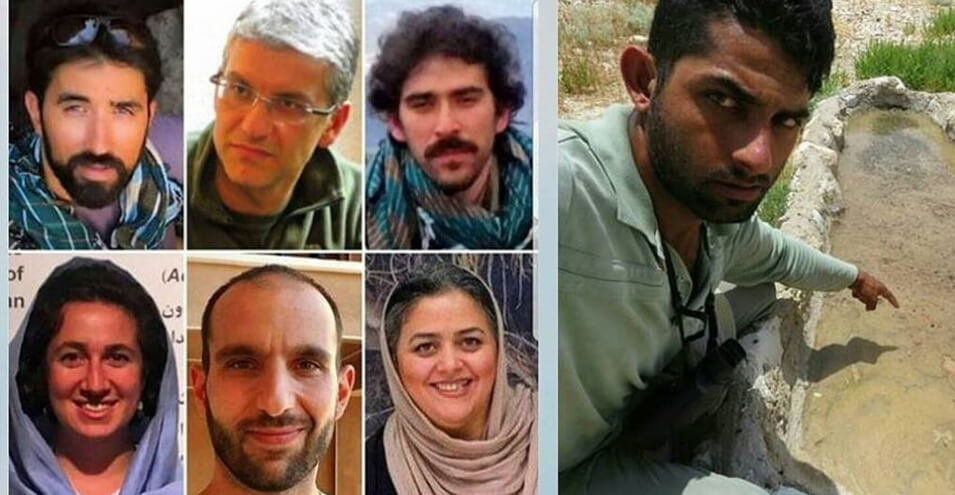
A year after the mass arrest of environmental activists in Iran, the Campaign for Human Rights in Iran reported, citing “informed and close sources,” that these individuals were “forced under threat of death” to confess against themselves.
The website reported that based on “new details” recently obtained, judicial authorities of the Islamic Republic, “in close cooperation” with officers from the intelligence organization of the Islamic Revolutionary Guards Corps, “played a role in fabricating cases against these activists based on false confessions obtained under severe coercion and pressure.”
Human Jokkar, Taher Ghadiriyan, Morad Tahbaz, Sepideh Kashani, Niloofar Bayani, Amir Hossein Khaleghi, Sam Rajabi, and Abdolreza Koohpaee are environmental activists currently in detention.
In recent months, several environmental activists have also been arrested in Kurdistan. According to reports published on some human rights websites, detainees are under pressure for “forced confessions.”
Kavous Seyed Amami was also among the detained activists, but he died in prison and Islamic Republic officials called his death “suicide.” However, according to Seyed Amami’s family lawyer, the initial autopsy report showed bruising in various parts of his body and also evidence of an injection mark.
The initial charge against these individuals was announced as “espionage,” and shortly afterward, it was announced that the charge against four of them had changed to “corruption on earth.”
Earlier this year, Issa Kalantari, head of Iran’s Environmental Organization, stated that Hassan Rouhani had formed a four-person committee consisting of the ministers of justice, interior, and intelligence, as well as the legal deputy to the president, to review the cases of these individuals. This committee ultimately concluded that these individuals should be released.
However, Gholam-Hossein Mohseni-Eje, spokesman for the judiciary, emphasized the charge of “espionage” against these individuals and said that Rouhani’s committee did not have access to the case file.
One of the reasons these individuals were accused of espionage was their use of trail cameras used to protect a rare species of Asian leopard. Officials of the Revolutionary Guards believe these researchers used them to identify military areas and the Islamic Republic’s ballistic missile programs, something that Issa Kalantari, head of Iran’s Environmental Organization, has denied.
The judiciary and court have also pressured these individuals to change their lawyers. When the charge of “corruption on earth” was served, Mohammadhossein Aghassi, lawyer for some of the defendants, said these individuals “had chosen lawyers,” but “their lawyers were not accepted and they were assigned a court-appointed lawyer.”
About a month ago, Mohammadhossein Aghassi told Voice of America that the judge of branch 15 of the Islamic Revolutionary Court had asked Sam Rajabi and Taher Ghadiriyan, two defendants in this case and Aghassi’s clients, to change their lawyer.
The Iranian judiciary several months ago announced, by notifying courts of a list of “approved lawyers,” that defendants in political and security cases can only select lawyers from among the individuals on this list.
In recent months, activists in various fields have been arrested on charges such as “infiltration” and mainly by the intelligence organization of the Islamic Revolutionary Guards Corps. These include the arrest of Maimunah Hosseini Chavoshi, an Iranian-Australian sociologist, and Laila Khatibi, a child rights activist.
Source: Voice of America