One-Year Prison Sentences and 74 Lashes Handed Down to 15 Protesting Hepco Arak Workers
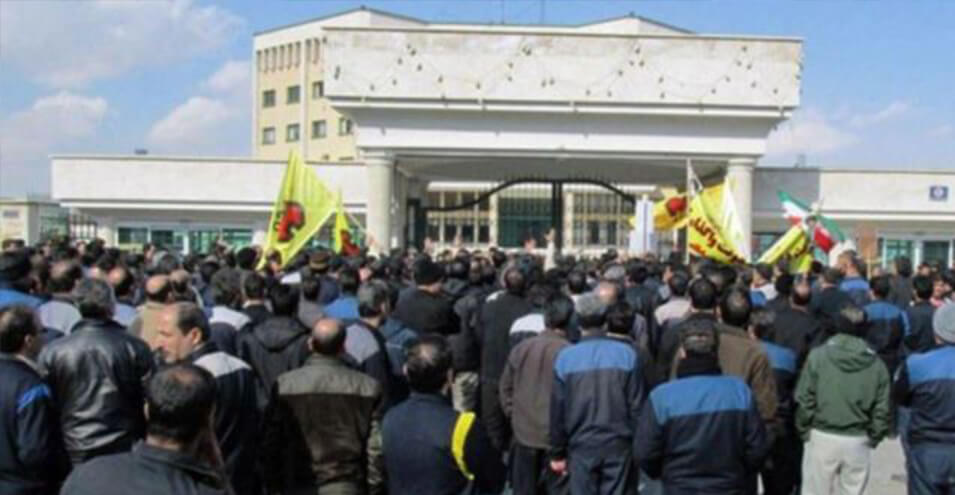
Workers at the Hepco Arak factory, who protested against their working conditions and non-payment of wages, have been sentenced to imprisonment and flogging.
Hrana news website, which publishes human rights news from Iran, reported on Sunday, October 27, that prison and flogging sentences have been issued for protesting workers of Hepco Arak company.
Hepco Arak workers, who after the factory’s transfer to the private sector repeatedly protested against late wage payments and demanded the return of ownership to the state, went on strike in April of this year in protest against unpaid wages and uncertain employment status, blocking the Arak railway line for several days.
Following these protests, while Iranian labor sources reported the summoning and case filing for approximately 10 protesting Hepco Arak workers, Hrana website reported that the workers’ cases were reviewed by Branch 106 of the Arak Criminal Court, and sentences of one year imprisonment and 74 lashes of disciplinary flogging have been issued for 15 workers on charges of “disrupting public order through participation in illegal gatherings and demonstrations.”
The sentences were reportedly issued for “Majid Latifi,” “Behrouz Hasanvand,” “Hamidreza Ahmadi,” “Amir Houshang Pour Farzangan,” “Morteza Azizi,” “Hadi Fazeli,” “Abolfazl Karimi,” “Farid Kodani,” “Majid Yahyaei,” “Amir Fattah Pour,” “Yaser Gholi,” “Amir Farid Afshar,” “Mehdi Abedi,” “Ali Maleki,” and “Behrouz Velashjerdeh,” whose charges were examined in a group case file. However, the court ruling stated that the sentences are suspended for 5 years under Article 46 of the Islamic Penal Code.
The reason for the suspension of the sentences was stated in the court ruling as “non-payment of monthly wages by Hepco company” and “circumstances affecting the company including workforce reduction, non-operation, and company privatization.”
Hepco is one of Iran’s largest manufacturers of heavy road-building machinery, which began operations before the Islamic Revolution and came under state control after the Revolution. Since privatization from 1386 (2007) onwards, the factory’s problems intensified.
Economic recession, bankruptcy of production units, and mismanagement have caused many workers to be deprived of wages and work benefits. Recently, protest gatherings by workers have increased. Over the past year, reports indicate that approximately six thousand workers’ gatherings have been held, mostly protesting non-payment of wages for several months, mass layoffs, uncertain situations following factory privatization, and low wages.
Source: Voice of America