Parliament Should Prioritize Approving Women’s Security Bill Against Violence
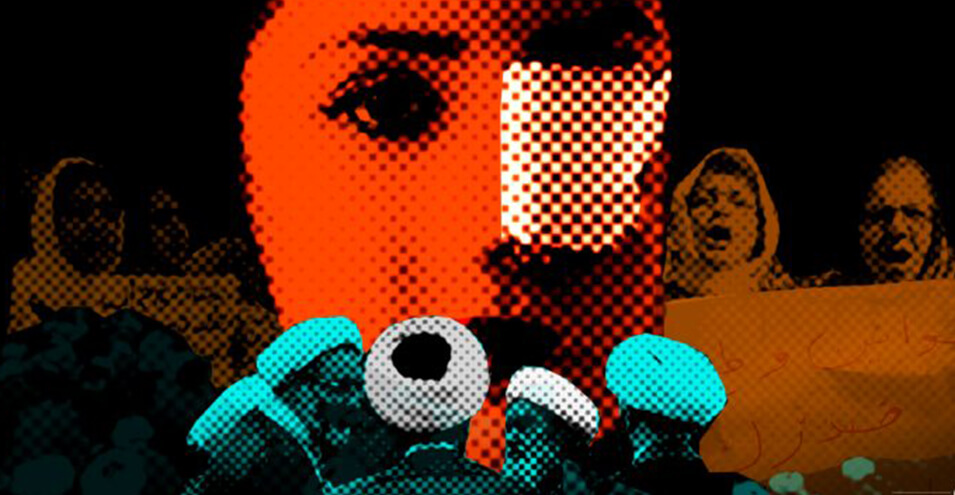
The law on ensuring women’s security against violence remains pending while women face abuse due to non-punishment of perpetrators of violence against women
Women with disabilities and other vulnerable groups are at greater risk of violence than others
December 23, 2018 – The Iran Human Rights Campaign today issued a statement urging the government to send the bill on ensuring women’s security against violence, which has been delayed for years, to parliament so that women in Iran can benefit from the protections envisioned for them in international human rights documents.
In this statement, released on the occasion of the International Day for the Elimination of Violence Against Women, it stated that women in Iran experience severe and sometimes fatal violence without effective protective mechanisms to prevent and stop violence and protect women. At the same time, the government, contrary to its international obligations, has not taken effective measures to establish such protective mechanisms.
The Iran Human Rights Campaign specifically calls on the Iranian government to:
- Prioritize the approval of the bill on ensuring women’s security against violence in its programs;
- Enable civil society activists, especially individuals and groups active in the field of violence against women, to participate in and influence the review of this bill and assessment of women’s needs;
- Allocate sufficient resources to conduct independent studies on violence against women so that the problem of lack of necessary information and data is resolved;
- Ensure that the issues facing marginalized women, such as those from religious and ethnic minorities, refugee or migrant women, women with disabilities, and widowed women, receive attention.
Hadi Ghaemi, director of the Iran Human Rights Campaign, said: “A government that can arrest, convict, and execute individuals within three months has still not been able to pass a law to save women’s lives and protect them from violence after seven years.”
Lack of Support for Women Victims of Violence in Iran
The laws in Iran not only lack adequate protection for women against violence, but sometimes even facilitate the escalation and repetition of domestic violence. For example, according to Iran’s civil law, a woman has no right to leave the shared residence unless she proves the existence of a threat to her life or honor in court. This legal obligation increases women’s vulnerability to violence, including sexual assault within marriage, especially given the need to present witnesses to prove the occurrence of violence in circumstances where the testimony of two women is considered equal to the testimony of one man. Moreover, the existence of a legal restriction that if a woman leaves the shared residence and refuses to perform her marital duties, she will not be entitled to alimony, prevents many women from leaving their abuser.
Multiple articles in Iran’s civil law effectively prevent the protection of women from violence. For example, according to Article 1105 of the civil law, “In relations between spouses, the headship of the household is an exclusive characteristic of man.” Article 1108 of the same law stipulates that “if a woman refuses to perform her duties toward her husband without a valid excuse, her alimony shall be forfeited.” Article 1114 also states that “a woman must reside in a residence designated by her husband, unless she has previously been given the choice of residence.”
Furthermore, misconceptions about domestic violence increase women’s vulnerability to it. One domestic violence campaign activist told the Meidan website: “Many abused women, even those who die as a result of domestic violence, have gone to the police, but since domestic violence is not a crime, it is treated differently from street assault, which is why they have opened cases for these women and sent them to homes where the perpetrator was present.”
While establishing a simple mechanism to prevent contact between the perpetrator and victim after proving the occurrence of violence could prevent escalation or repetition of violence, the absence of such legal mechanisms in Iran has sometimes led to irreversible tragic incidents. One recent example was the killing of a young woman in Ahvaz by her brother in a hospital in front of other patients and their companions. Although this woman was hospitalized because of knife wounds inflicted by the same brother, there is no law in Iran that would prevent the abusive brother from approaching his sister, and as a result, he is allowed to easily complete his unfinished work.
A Bill Delayed for Years
The bill on protecting women against violence was first introduced seven years ago during the Ahmadinejad administration. The draft bill was later prepared during Hassan Rouhani’s government and, according to legal procedures, was sent to the judiciary for review. The judiciary significantly changed the bill and deleted 40 of its 91 articles and gave it to Sadegh Larijani, head of Iran’s judiciary, for approval.
Despite this, in October 2018, it was announced that Larijani had sent the plan to Qom for study and to receive opinions and approval from religious authorities. While according to Iranian law, there is no need for such a referral, as the Guardian Council is legally responsible for reviewing all Iranian laws and ensuring their compliance with Islamic principles.
Hadi Ghaemi said: “While the clerics in Qom have kept this bill pending, women are losing their lives due to acts of violence.” He added: “This indifference by the government to the lives, health, and well-being of half the population is inhumane and illegal.”
The director of the Iran Human Rights Campaign added: “Iranian officials must end the delay of this bill and remove it from Qom and send it to parliament so it can follow the normal procedure and be approved.”
Violence Against Women: Widespread and Beyond Official Reports
Although statistics on the extent of violence against women in Iran vary, even these figures demonstrate the severity and extent of this problem. A national study conducted in 2004 showed that two out of every three women experienced violence at least once during their marriage. Another study conducted in May 2017 by a prominent Iranian charity organization showed that 32 percent of Iranian women in urban areas and 63 percent in rural areas have experienced some form of domestic violence. Other scientific studies in Iran show that this rate could be much higher. Furthermore, there are considerable reports showing that victims of domestic violence have been pressured to remain silent about their experiences and what they have suffered.
Lack of Protection for Women Violates International Law
Iran is one of only six countries in the world that has not yet signed the Convention on the Elimination of All Forms of Discrimination Against Women. Nevertheless, Iran’s obligations under other international conventions require the Iranian government to take significant measures to prevent violence against women.
Delay in approving laws to prevent violence against women and punish perpetrators violates Iran’s international obligations such as the International Covenant on Civil and Political Rights, the International Covenant on Economic, Social and Cultural Rights, and the Convention on the Rights of Persons with Disabilities, which require governments to take such action.
Violence against women is a form of discrimination and a violation of Articles 3 and 26 of the International Covenant on Civil and Political Rights, Article 3 of the International Covenant on Economic, Social and Cultural Rights, and Article 3 of the Convention on the Rights of Persons with Disabilities.
Violent conduct can also violate other articles of the International Covenant on Civil and Political Rights, including the right to life mentioned in Article 6, prohibition of torture, cruel and inhuman treatment that causes physical and psychological harm, as mentioned in Article 7, as well as denial of freedom and personal security in Article 9 and violation of privacy in Article 17.
Furthermore, violence against women can violate Article 12 of the International Covenant on Economic, Social and Cultural Rights regarding sexual and reproductive health rights, Article 6 regarding the right to work and freedom of occupation, and Article 13 regarding the right to education.
Women with Disabilities Are Especially at Risk of Domestic Violence
Articles 6 and 16 of the Convention on the Rights of Persons with Disabilities have called on states to end widespread discrimination against women with disabilities and take necessary measures to protect them from violence and abuse.
None of the officials of the Rouhani government, including his advisers on women and family affairs, as well as members of the judiciary and parliament, have commented on the need for special protections for vulnerable groups, including persons with disabilities.
In the 2018 report of the UN Secretary-General on the situation of women and girls with disabilities, it states: “Women and girls with disabilities experience gender-based violence at disproportionately higher rates and in unique forms both in terms of gender and disability. For example, women and girls with disabilities experience domestic violence at twice the rate of other women and also experience specific forms of violence due to their disabilities, including isolation, organizational violence, and lack of access to medicines, mobility, vision, and hearing aids.”
Women with disabilities face other issues that increase their vulnerability to domestic violence such that if they want to report it and have it addressed, they still face difficulties and obstacles. For example, the judicial system is highly inaccessible to persons with disabilities. The lack of appropriate training among officials and judicial authorities and a system that is not equipped or is inadequate for communicating with persons with disabilities creates obstacles for persons with disabilities, as persons with disabilities depend on others, which itself can lead to their abuse.
Hadi Ghaemi said: “As the International Day for the Elimination of Violence Against Women on December 25 indicates, we call on the international community to pressure the Iranian government to adopt necessary protections for Iranian women, including special care for those most vulnerable, such as women with disabilities.”
Source: Iran Human Rights Campaign