Parliamentarian: Security Officials Predicted Flooding Two Months Before It Occurred
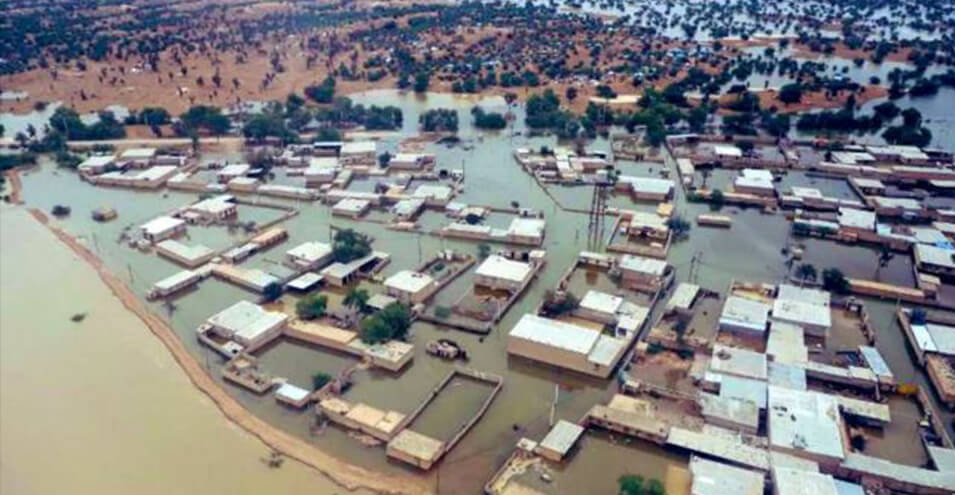
Mohammad Dehqan, deputy chairman of the faction known as “State Representatives” in parliament, announced that the danger of flooding in early Bahman of last year had been warned about in writing by security officials to senior government officials, including the Ministry of Power.
According to Mehr news agency, this parliamentarian, who traveled to flood-affected areas in Khuzestan province to investigate the situation and causes of the flooding, wrote in a letter to Hassan Rouhani, Iran’s president, and Ali Larijani, speaker of parliament, that despite this warning, “no measures were taken by these officials to prevent the flooding, at the very least they did not take timely action to evacuate the dams.”
This letter was published on Thursday, the fifth of Ordibehesht, by Mehr news agency.
He identified his source as “statements from a group of experts and some received information” and added: “The phenomenon of extreme rainfall and extreme flooding has been known to experts at least since Dey month of 1397 [December 2018], and according to received reports, the danger of flooding in early Bahman month of 1397 was warned about in writing by security officials to senior government officials, including the Ministry of Power.”
This parliamentarian, expressing regret over the fact that “the government took the simplest route in dealing with the flood,” wrote that the government, by announcing the necessity to evacuate six cities and 400 villages, closed administrative agencies and in some cases left people to face the flood alone.
Previously, images and videos circulated on social media showed that people themselves were taking action to build flood barriers.
Also, in some of these videos, there was criticism of the performance of executive agencies in relation to the flood or assistance to flood victims.
Meanwhile, according to the Student News Agency, Fereydoun Hassanvand, chairman of the parliamentary energy commission, said on the 25th of Farvardin that about two months before the flooding occurred, the Ministry of Power was warned about this matter, but no action was taken, and based on this the first defendant is guilty.
He added: Also, security officials wrote a letter in the first week of Bahman month regarding the occurrence of flooding and unfortunate incidents, which the president referred to Reza Ardakanian, the Minister of Power, and the Minister of Power wrote that it was noted, but no action was taken, and if all these matters are true, the first defendant in these incidents is the Minister of Power and his team.
According to Mehr news agency, Mohammad Dehqan also criticized the Ministry of Power in his letter to Iran’s president and the speaker of parliament, saying that “over the past years, it has not fulfilled its legal duty regarding the preservation of the riverbed and riparian areas of the province’s rivers.”
He added: “Illegal construction along the path of rivers in the province (Khuzestan), issuing permits for building construction in the depths of riverbeds by some mayors, and rampant construction in river riparian areas, has been one of the factors in intensifying damage to the people of this province.”
The deputy chairman of the faction of state representatives in parliament, referring to “neglect of dredging of dams and Karun and Karkheh rivers and failure to dredge artificial channels and canals and failure to create a system for collecting water runoff,” added that this situation has caused a reduction in the capacity of dams and reduction in the capacity of rivers, reduced water flow speed, rising water levels, and flooding of agricultural lands and rural homes.
Mohammad Dehqan also considered the failure to discharge urban sewage as one of the most important problems of cities and villages in Khuzestan province, especially the city of Ahvaz, and called for sewage drainage and urgent planning for the construction of sewage treatment plants to prevent the outbreak and spread of diseases.
This parliamentarian further emphasized the need to complete the half-finished Bakhtiari dam with a capacity of several billion cubic meters of water.
One of the other axes mentioned in Mohammad Dehqan’s letter to Hassan Rouhani and Ali Larijani was compensation for damages caused by the flood. Referring to the fact that the main income of Khuzestan people comes from agriculture and livestock, he added: “Khuzestan’s agricultural lands have been submerged and their crops, which are all the people’s assets, have been almost completely destroyed.”
He asked the government, especially the Ministry of Agricultural Jihad, while providing the necessary fodder for livestock in Khuzestan province from five percent of the budget allocated for unforeseen incidents, which amounts to around 24,000 billion tomans, to urgently pay a percentage of damages caused by the flood to farmers and livestock breeders in this province.
Previously, the Iran newspaper reported in mid-Farvardin month that Khuzestan province had the “highest flood damage rate” in the recent flooding.
In this regard, reports indicate hundreds of thousands of billions of tomans in damage to the agricultural sector in Khuzestan province.
ISNA news agency also reported on Wednesday, the fourth of Ordibehesht, quoting Gholam Abbas Bahrami Nia, director general of roads and highway transportation of Khuzestan, that 645 billion tomans in damage from flooding was incurred in the road infrastructure of this province.
Also, Amir Hossein Nazari, head of the organization of industry, mines and commerce of Khuzestan, said on Thursday to IRNA: The initial estimate of flood damage to small industrial units in Khuzestan province is 500 billion tomans.
Source: Radio Farda