Parliamentary Plan to Implement Gasoline Rationing System
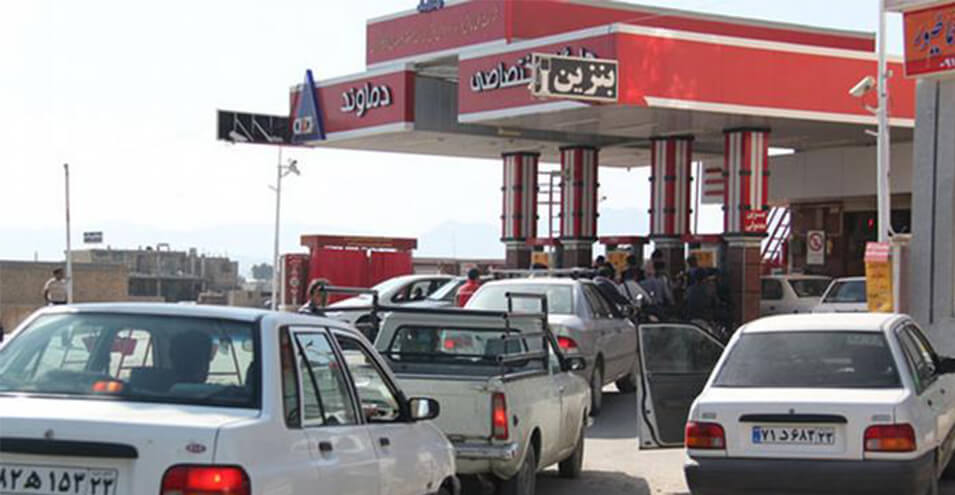
Iranian parliamentary representatives have presented a plan to reimplement gasoline rationing, which is said to distribute gasoline subsidies to all citizens in a “fair” manner. Under the rationing plan, each Iranian is entitled to one liter of gasoline per day.
One liter of gasoline per national ID is deposited daily into the household head’s account. This is a summary of the plan presented by parliamentary representatives. Based on the plan’s proponents’ projections, each Iranian can use their quota in any manner they wish or “sell all or part of it at market price” and even “export” it.
Some Iranian media outlets have named Hossein Ali Hajideligan as the original architect of “gasoline rationing,” but details on how to “export rationing coupons” have not been disclosed so far.
According to Hajideligan, a member of Iran’s Parliament Budget and Planning Commission, studies show that 20 percent of Iranians have no vehicles or motorcycles at all, and 20 percent consume more gasoline than the quota set in the current fuel card.
“The underprivileged class can sell their gasoline”
According to the designers and supporters of returning to gasoline rationing, in the event of a gasoline price increase that the government is pursuing, the “underprivileged” class can sell their allocated gasoline at “market price.”
The price of rationed gasoline has not yet been announced, nor has it been discussed in parliament or government, but it is expected that a specific daily amount of gasoline quota will be allocated to each Iranian at a “subsidized price.” This price has not yet been reviewed or announced.
Some media outlets have referred to this plan as the “gasoline quota allocation plan for all Iranians.” Previously, various plans had been proposed for gasoline pricing and consumption methods in Iran, and the reuse of fuel cards and distribution of subsidized gasoline to all people in coupon form had been considered.
The Presidency of the Islamic Consultative Assembly, upon receiving this plan which is said to be supported by Ali Larijani, Parliament Speaker, has effectively abandoned the Hassan Rouhani government’s option to “increase” gasoline prices in 1398.
Following Parliament’s opposition to the government’s plan to raise gasoline prices to 1,500 tomans and the government’s insistence on increasing fuel prices, the proposal for rationing and two-tier pricing of gasoline in 1398 has been seriously raised.
People’s market for buying and selling gasoline
In the second section of the rationing plan, the government is asked to create a system allowing Iranian citizens to sell their excess quotas. A matter that “Economy World” has cited, quoting Asadollah Gharkhani Alvastani, spokesman for the Parliament’s Energy Commission: “Some have proposed government intervention and purchasing of excess gasoline quotas and selling them to interested parties at market rates, and others have proposed establishing a market for this purpose where the government, alongside other individuals, would participate as a buyer or seller, and prices would be determined based on supply and demand principles.”
Reports indicate more than an 8 percent growth in gasoline consumption in 1397 compared to 1396, such that consumption this summer exceeded 100 million liters per day. It is estimated that the average gasoline consumption in 1397 is between 80 to 90 million liters per day.
Energy consumption in Iran and fuel smuggling are other issues said to have made reform of gasoline distribution policies necessary. In recent months, particularly following the increase in exchange rates in Iran, domestic media reported increased fuel smuggling from Iran to neighboring countries, reporting the price difference per liter of gasoline or diesel in Iran and neighboring countries at around 15,000 tomans; a matter that has caused “intensification of fuel smuggling.”
There is no official and accurate statistics on gasoline and diesel smuggling in Iran, but the Organization to Combat Smuggling of Goods and Currency has announced it at around 11 million liters per day; a figure that some unconfirmed statistics have reported to be as high as 30 million liters per day.
Source: DW