Parliamentary Representative: Without Resolving Issues with the World, Iran’s Economic Problems Cannot Be Solved
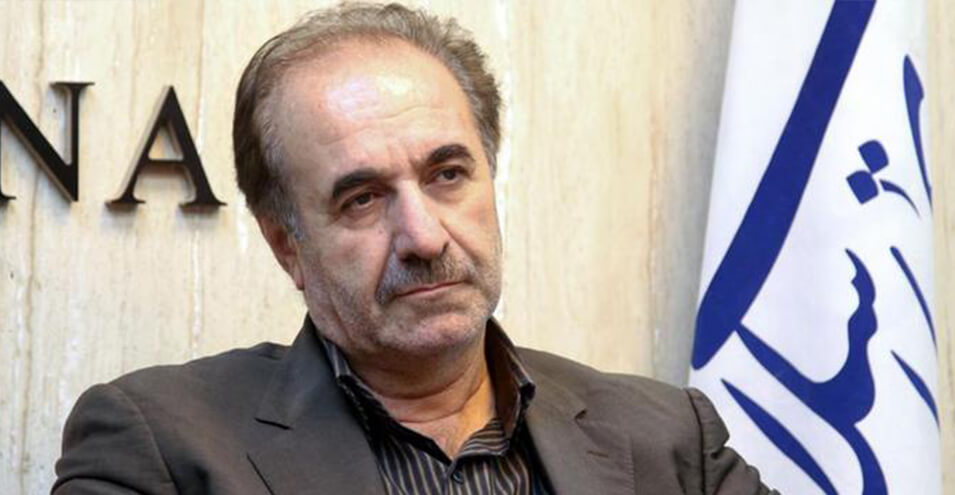
The representative of Shiraz in the parliament said that if the Islamic Republic does not resolve its political problems with the world, Iran’s economic problems will not be solved either. Masoud Rezaei also considered social harms as “a serious threat to the system and governance in the long term.”
According to Masoud Rezaei, the representative of Shiraz in the Islamic Consultative Assembly, if the Iranian government cannot resolve its political problems with the world, the country’s economic problems will not be solved.
This Iranian parliamentary representative, in his interview with Etemad Online, the text of which was published on Saturday, October 6 (September 29), also warned about social harms as a threat to the “system and governance.”
Masoud Rezaei, referring to unemployment as one of the most important social harms in Iran, said: “The problem of unemployment and lack of jobs exposes youth to all social harms, and the totality of these harms threatens the system and governance in the long term.”
This member of the social affairs commission of the Iranian parliament emphasized: “We all know that employment is created through investment, and until investment takes place, we will have no production and no employment will be provided.”
Rezaei added: “Therefore, to attract investment and create production and employment, we need to attract foreign capital alongside domestic capital, and under these sanctions conditions, we cannot solve production and employment problems with domestic capital alone.”
This parliamentary representative, while expressing regret about “the vulnerability of domestic and foreign investment in poor economic and sanctions conditions,” said: “If we cannot resolve our political problems with the world through the primary method, we cannot make progress in the economic field either.”
Masoud Rezaei, referring to the “chain-like” connection of all these problems together, added: “The lack of employment, the stagnation of production, and the disorder of youth conditions follow, but if we can solve our political problems with the world through collective deliberation and wisdom, we can certainly use foreign capital as a backup to our domestic capacity.”
This parliamentary representative called for resolving the Islamic Republic’s political problems with the world at a time when the leader of the Islamic Republic not only considered the path of negotiations with America “closed,” but also called for “complete loss of hope” in Europe.
Ali Khamenei last Thursday, calling Europe and America “malicious” and while emphasizing that “the motives of European hostility toward the Islamic Republic have no fundamental difference with American enmity,” said: “Europeans apparently enter as mediators and speak long words, but all of it is hollow.”
The leader of the Islamic Republic also, while emphasizing that “the remedy for the country’s issues and problems is insisting on slogans and the revolutionary path,” recommended using “forces loyal to the revolution” for “presence in sensitive centers” of Iran.
Under such circumstances, it seems that not only has no development occurred to ease Iran-US tensions, but the current process could also bring Europe into a new round of tensions with the Islamic Republic.
The International Atomic Energy Agency in its latest report last Thursday announced that Iran, by enriching uranium through advanced centrifuges and programs it has for installing other advanced devices of this type, has violated the nuclear agreement known as the JCPOA.
One day after this report, some media reported that the three remaining European countries in the JCPOA—Britain, France, and Germany—have warned the Islamic Republic that if Iran’s fourth step in reducing its nuclear commitments is “significant,” they will withdraw from the JCPOA.
Source: DW