People Are Dying While Officials Are Digging Wells
The Impact of Drought on Increased Insecurity in the Country
The examination of crime indices in the country has been the subject of attention by judicial and security authorities for several years. However, the functional results of this attention are limited to merely announcing statistics and issuing warnings during the weeks of the Judiciary and Law Enforcement Force.
In other words, it appears that these announcements are merely tools for passing the buck to others. This is a process that has become common in Iran over the past four decades and continues to victimize the people.
This year, these indices were also studied and measured routinely, and shocking statistics were announced.
The statistics indicate that the prevalence of various crimes and offenses in the country is not acceptable and does not befit Iran.
NAJA reports, increased prisoner statistics, exponential growth in cases entering the judicial system are among the indicators that suggest alarming conditions in Iran.
Decrease in the Age Index of Criminals
According to Abolqasem Zolghadr, Deputy Strategic Advisor of the Judiciary, we rank among the top 10 countries in terms of the number of prisoners. This judicial official announced this warning during the Judiciary’s week this year.
According to Tasnim news agency, based on current statistics, we now have prisoners nearly three times the capacity of the country’s prisons. The age group between 26 and 32 years has the highest frequency among them.
The statistics of cases entering the judicial system also indicate the growth of crime in the country.
According to IRIB news agency and Mostafa Pour Mohammadi, Head of the Judiciary, the number of cases entering the Judiciary in 2015 was more than 14 million cases.
According to Hamid Shahryari, Head of the Judiciary’s Statistics and Technology Center, approximately 32,000 cases were submitted to criminal courts.
While the same statistic, according to him, in 2014 included 20,000 incoming cases.
Shahryari emphasized in the same remarks that this statistic had a 17 percent growth compared to the same period in 2013, and 50 percent of national charges with the highest statistics respectively included theft subject to discretionary punishment, intentional assault and battery, insult to ordinary persons, unintentional bodily harm, threats, destruction, fraud, breach of trust in custody and possession of narcotics.
Growth in Violent Sexual Assault
According to IRNA, the representative of the Judiciary’s Strategic Deputy reported last year a sudden increase of 200 to 300 cases of violent sexual assault from 2010, and announced that in 2014 approximately 1,313 cases of violent sexual assault were reported. Of course, officials, given the severity of the situation, have remained silent regarding statistical changes in this crime in 2015. And they prefer to resort to concealing the issue rather than making efforts to reduce crime. While Qanbarnezad last year announced that the statistics of 72,000 cases of harassment against women and girls in 2010 reached 142,933 cases in 2014, representing a 98 percent increase. He also emphasized that assault and battery, insult, threats, and destruction were among the top 10 charges in the country over the past 5 years.
Officials’ Inability to Control the Crisis
These statistics are glimpses of realities that prove Iran and Iranians are living in crisis conditions and our country is seriously exposed to irreparable harms.
In other words, officials have become unable to control the unbridled growth of insecurity and crime in the country and have reached a deadlock.
There is no doubt that in such conditions, the growth of marginalization and uncontrolled migration intensifies this vulnerability.
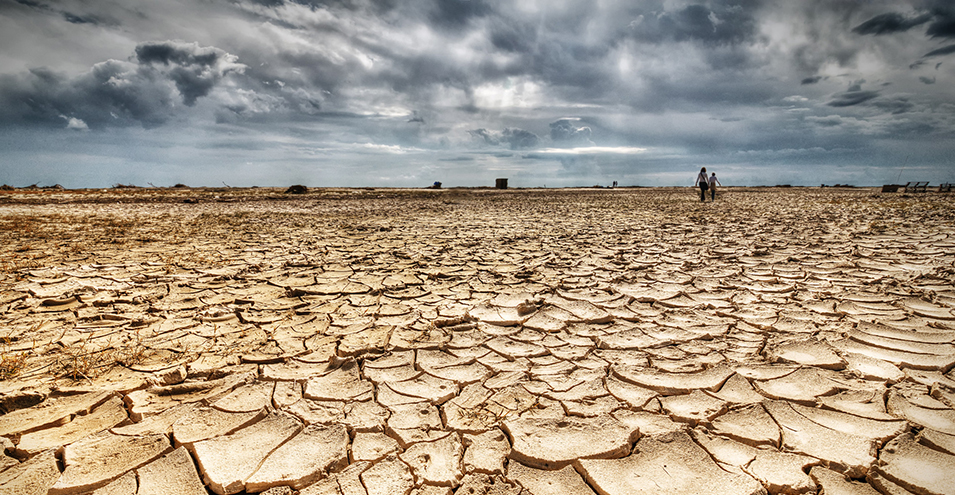
This is happening due to drought and the negligence of managers and government officials toward the necessity of optimal water consumption management, and it is ongoing.
Abandonment of Villages
The depopulation of a large portion of villages in Kerman and Sistan and Baluchestan is a glimpse of these problems that the country’s incompetent managers have created for the people.
The drying up of the Helmand River, the Jazmourian Marshes, and Hamoun, which caused dust storms and intensified sandstorms in these provinces, brought about this situation for the people.
While in the past, residents of this part of our country struggled with such problems in the second half of the year, now the crisis has progressed to the point that even cities in the eastern provinces have become crisis-stricken and unsafe.
The abandonment of more than 16 villages in Rigan County is part of this tragedy. Evidence suggests that approximately 50 other villages are also facing depopulation. This is despite the fact that this county is covered by a support plan called the International JIFF Plan. It was expected that under this plan, by revitalizing damaged lands, protection of this county under crisis conditions including sandstorms would be implemented.
Residents of the southern part of the country, including Ahvaz, have also been threatened.
The problems of this part of the country began with the construction of the Karun Dam on the Karun River in southwestern Iran.
Placing this dam on the salt domes of Gachsaran caused the salinity of the water behind the dam to reach levels higher than the oceans and destroyed one hundred hectares of fertile lands in the Aqili Plain.
Beyond this, residents of the southern part of the country face serious problems even in providing drinking water.
According to Javanan newspaper, the water flow in the Gorgan River currently shows a decrease of approximately 49 percent compared to the previous year. This situation has caused serious problems for residents of Gonbad, Minoudasht, and Galikaish.
These are just samples of the bushel.
The Pervasive Problem of Indifference
The frequency of such news in Iranian media in recent decades has created a kind of indifference, and especially officials prefer silence in the face of its consequences.
The people, who have no other option, see migration to other cities or provinces as the solution. While the destination provinces have no ability to accept these migrants and cannot meet their economic, social, and health needs.
There is no doubt that neglecting this matter leads to an uncontrollable increase in unemployment rates and subsequently the expansion of social harms and crime.
While managers and government officials could have prevented the worsening of the effects of drought in the country in recent decades by implementing various plans.
Neglect of cropping patterns and failure to apply incentives to increase motivation among farmers and gardeners to adhere to these patterns, coupled with inability to combat illegal well-drilling and unlawful extraction from resources, constitutes another part of the problem called the lack of optimal management of water resources in the country.
This managerial weakness is such that even effective efforts were not made to welcome farmers and gardeners to pressure irrigation schemes. And a large portion of the country’s groundwater has been wasted due to traditional irrigation methods.
And today we have reached a point where the consequences of drought have directly made residence impossible in many rural areas of the country.
There is no doubt that given the alarming statistics in water management and drought and crime in Iran, preventing the expansion of these risks should be considered as a necessary matter. And officials must accept that coercive and criminal measures alone are not effective.
However, it is unclear which institution or organization is responsible for crime prevention in the country. As a result, everyone announces statistics and issues warnings, but no official is accountable for the intensification of danger from this situation and the victimization of people. People who have inadvertently become involved in conditions that lead them to commit crimes.
The severity of this situation becomes clearer given statistics showing a decrease in the age of criminals in the country. And it threatens Iran’s future.
In simple terms, the incompetence of managers and their greed and self-centeredness have mired our country in a swamp where people’s endless struggles bring it closer to destruction and greater vulnerability day by day.
Sara Kh, CNN correspondent