Persepolis and the Ravages of Time: From Land Subsidence to Acid Rain
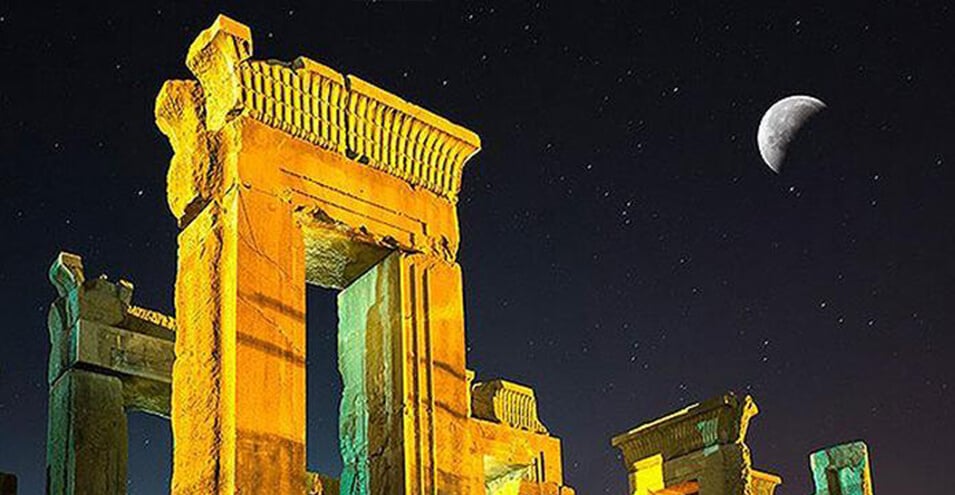
Cultural heritage experts, such as Bijan Rohani, warn of the danger that acid rain can pose to stone structures. The ground beneath Persepolis is not so stable either; we ask Dr. Raissi Ardakani if subsidence can be prevented.
When ancient and historical monuments of Iran are mentioned, Persepolis is among the first names that come to mind of any admirer of these ancient monuments. It is rare to find a foreign tourist who has traveled to Iran without taking a commemorative photo beside this structure.
However, Persepolis has undergone many changes over the centuries; setting aside enemy invasions, weather and geological factors over long periods have left their mark on the face of Persepolis, and archaeological plunderers have looted whatever they could from Persepolis over the past 100 years. What remains of this great world heritage has not been spared from the unkindness of uninformed visitors or enemies of ancient Iranian culture. But what is the current condition of what remains of Persepolis?
While in recent years the concerns of culture lovers and archaeologists about maintaining this historical monument were amplified by dangers such as moisture from the Sivand Dam or land subsidence in Marvdasht, a new concern has now been added to this complex, known as Shiraz Petrochemical. Experts say that the pollution resulting from the activity of Shiraz Petrochemical has a destructive effect on the Persepolis world complex and warn of the need for quick solutions to this crisis.
The vast Persepolis complex is spread across the north of Marvdasht County (northeast of Shiraz).
Acid Rain and Its Danger to Persepolis
Experts believe that the activity of Shiraz Petrochemical can cause acidic rainfall on the columns and stone reliefs of Persepolis. Mehdi Kara is one of these experts who, according to Jam-e Jam, believes that the current conditions have increased the erosion process of Persepolis world heritage by 20 times compared to previous years.
On the other hand, some experts believe that given the high humidity of the air in Marvdasht County, the combination of gases and morning dew can lead to acid formation, in which case acidic rain is not necessary. This is while Masoud Rezaei Manfred, the former director of the world heritage base, in conversations with news sites in Iran, does not deny the vulnerability of Persepolis due to acid rain, but believes this phenomenon is less significant compared to other damages that threaten this complex.
Bijan Rohani: The Statement About the Role of Acid Rain in the Destruction of Stone Architecture is Correct
Bijan Rohani, senior researcher at the Institute of Archaeology at Oxford University, regarding the possible damage that acidic rainfall can bring, says: “If we measure the danger of acid rain on a large scale, such as major cities that have other pollutants, these rains have an effect. But this option can only be examined in the vicinity of ancient sites when, although there is no large city nearby and pollution is not high, next to industrial complexes and centers, the danger of gas dispersal and consequently acidic rainfall increases.” According to this expert, this issue is more important where there is “stone architecture,” because stone undergoes corrosion due to precipitation and acid.
When asked how one can determine whether these rains have affected Persepolis or not, Bijan Rohani says: “To answer this question, a research team must test the rainfall that has occurred at different time intervals and the materials within them, examine changes in different seasons of the year, and see if over time these rains have had an effect or not, and if this process continues, what will happen.” Rohani points to atmospheric factors that cause erosion of historical structures; from sand particles, rainfall, stone cracking due to day-night temperature differences, and the penetration of moisture into cracks and the enlargement of gaps due to water freezing in the cracks.
This expert then refers to surface flooding and heavy rainfall and its danger to buildings, saying: “If groundwater levels rise, they damage the foundation and base of the building.” Rohani believes that from the perspective of cultural heritage experts, water is not a blessing for these structures and should be kept away from historical buildings and directed to places where rain is a blessing.
Dr. Raissi Ardakani: “There is a Plan to Prevent Land Subsidence”
If groundwater levels do not rise but fall, another damage threatening Persepolis that is discussed is land subsidence.
Dr. Ezzatollah Raissi Ardakani, professor at Shiraz University and one of Iran’s prominent hydrologists, in an interview with Deutsche Welle, attributes land subsidence to the falling water level, over-extraction, and illegal wells within the Persepolis boundary. This expert says that current subsidence has occurred in agricultural lands and not within the Persepolis and Pasargadae complex itself. Referring to the fact that continued over-extraction may result in new subsidence, Dr. Raissi Ardakani sees the only way to prevent subsidence as controlling the water level and preventing extraction, and believes this is a management measure. Raissi Ardakani says that there is a management plan in this regard and refers to the installation of smart meters on the wells in the area, and sees the only way to prevent subsidence as controlling extraction.
Restoration of Persepolis in Various Periods
Whatever the cause of damage to Persepolis, Persepolis, like any other historical monument, requires restoration for preservation.
To maintain these ancient monuments in various periods, different restoration activities have been underway at Persepolis. These activities, which date back to the early years of the current solar century, were carried out between 1343 and 1357 by Italian archaeologists and conservators. The Italian Istituto Italiano per il Medio ed Estremo Oriente (ISMEO) group, under the supervision of the couple Tilia, was invited to Iran in 1343 to prevent the destruction of Persepolis.
Shahram Rahbar, who previously headed the Persepolis restoration team, refers to the activities of “ISMEO” and says: “During this period, the restoration team carried out stone-related activities, and in case of stone shortage in the structure, they extracted it from the same quarries and used various materials, including resin, to connect it to the historical body.” This cultural heritage expert says: “Resins lose their chemical and physical properties over time and experience problems in some areas. That is why new restoration teams must carefully remove worn materials and replace them with new restoration materials such as ‘ladan’ (gum laudanum).'”
Some time ago, international collaborations for the restoration of Persepolis have resumed.
Among the latest measures taken in this regard, one can refer to the collaborations of restorers without borders and Iranian cultural heritage experts, the first phase of which ended in the second half of Khordad 98. The second phase of these activities at Persepolis ended on Wednesday, November 22. IRNA news agency writes that filling cracks and gaps with “ladan” lime mortar to prevent moisture-related damage was the most important activity of Italian and Iranian restorers in the second period.
The historical Persepolis complex, built during the Achaemenid period, is one of four registered monuments of Fars Province on the UNESCO World Heritage List. The construction of Persepolis dates back to 518 BCE. This historical site has been recognized as one of Iran’s registered monuments in UNESCO’s World Heritage since 1979.
Source: DW