Phone conversation between Iranian and UAE foreign ministers over Yemen crisis
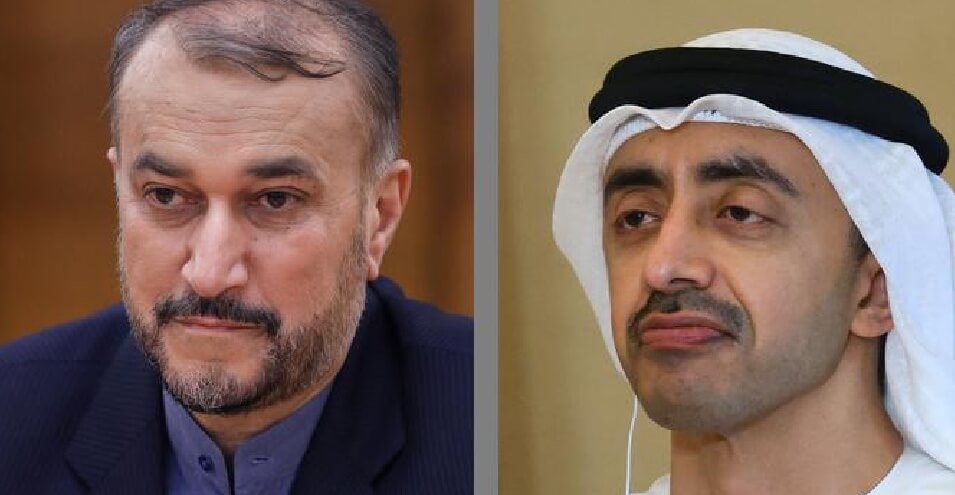
The foreign ministers of the Islamic Republic and the UAE held a phone conversation discussing the Yemen crisis and regional issues. Hossein Amir-Abdollahian, Iran’s foreign minister, described Israel as “a threat to all countries and the region” during this conversation.
Hossein Amir-Abdollahian, foreign minister of the Islamic Republic, held a phone conversation with Abdullah bin Zayed Al Nahyan, his UAE counterpart, to discuss the Yemen crisis and bilateral and regional issues.
According to Iran’s news agency IRNA, Amir-Abdollahian described Iran-UAE relations as progressing and said “good meetings and consultations” have been held between their officials.
Iran’s foreign minister, in an implicit reference to Israel and the normalization of relations between the country and the UAE, described Israel’s presence in the region as “a threat to all countries and the region.”
He emphasized: “We believe that the continuation of war and the escalation of conflicts and disputes are not in the interest of any of the parties or the region.”
Amir-Abdollahian added: “Efforts must be made to prevent crisis-creating factors from taking root in the region.”
This conversation comes after consecutive drone and missile attacks by Yemen’s Houthi militias on the UAE, one of which occurred simultaneously with a visit by Isaac Herzog, president of Israel, to the country.
Israel’s president described the visit as historic and called himself “a messenger of peace for the entire region.”
The United Arab Emirates and Israel began normalizing relations in 2020 under the “Abraham Accords” framework and expanded their relations in the fields of economy, tourism, and security.
Abdullah bin Zayed Al Nahyan, UAE’s foreign minister, spoke in his phone conversation with his Iranian counterpart about his country’s seriousness in expanding relations with the Islamic Republic.
He emphasized: “We are striving to encourage all Yemeni parties to reach a political solution with the support of the United Nations.”
Source: DW