Police Commander: Complete Mahsa Amini Video Cannot Be Released ‘Due to Length’
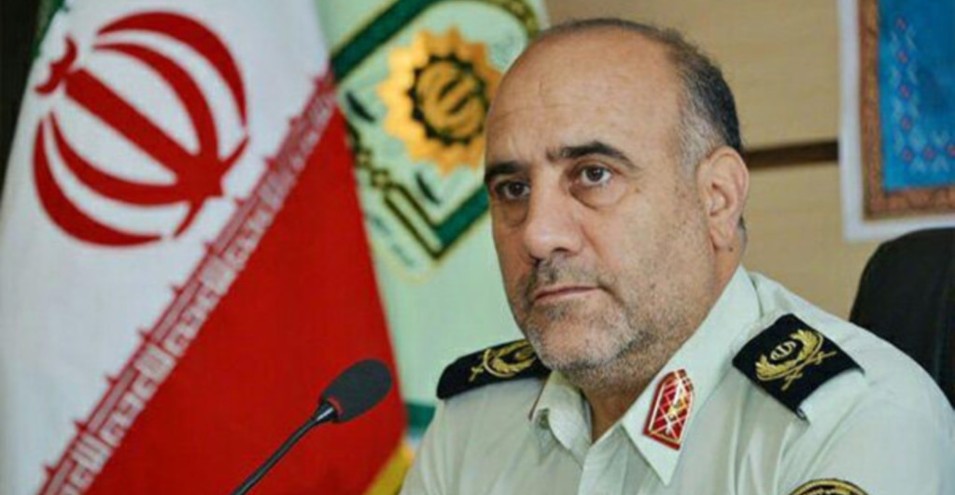
Following confirmation of the “edited” footage of Mahsa Amini released from Tehran’s police morality unit by the Deputy Interior Minister, the commander of Tehran’s police force also confirmed the video was incomplete.
Hossein Rahimi, commander of Greater Tehran’s police force, said Monday in a special press conference about Mahsa Amini’s death: “The video is half an hour long and it cannot be completely released due to the lengthy duration.”
Mahsa Amini, who had traveled to Tehran with her family from Saqez, died Friday, September 16, three days after being detained by guidance patrol officers, at Kasrai Hospital in Tehran. Her body was buried in Saqez on Saturday amid public protests.
According to Kasrai Hospital’s announcement, when the 22-year-old was transferred to the hospital, she showed no vital signs.
Nevertheless, the police force provided footage to state media claiming that Amini was not mistreated at the detention facility.
However, many media outlets, civil activists, and Amini’s family emphasized that the released video was “edited” and it is unclear what happened to the 22-year-old during the periods deleted from the footage.
Mahsa Amini’s father also stated: “The video they showed from the detention facility was edited.”
Massoumeh Ebtekar, former presidential advisor on women and family affairs, also told the Iran Watch website on the same day: “This video is edited and its release has raised questions.”
The Tehran police commander, despite attempting to avoid calling the deletions from the video “editing,” confessed to removing parts of it Monday and said the “complete video” from the closed-circuit cameras was shown to Amini’s family.
Tehran’s police chief also responded to whether Mahsa Amini’s clothes matched what was shown in the surveillance footage at the police facility when she was arrested, saying: “No. The guidance patrol officers have body cameras on their uniforms, but in this case they did not have cameras.”
Earlier, Majid Mirahammadi, the Interior Ministry’s security and police deputy, also confirmed to IRNA that the Mahsa Amini video was “edited.”
He stated that “the video was edited because it was somewhat lengthy.”
This government official also claimed that the “edited sections are unimportant sections” and “there is no important scene in the complete video other than what has been reported.”
While the Islamic Republic’s security officials continue to refrain from publicly releasing the complete video of Mahsa Amini’s presence at the police detention facility with various justifications, the mere confirmation that the released video is incomplete is an important step for investigations and justice in the case of this young woman’s death.
Ebrahim Raisi, head of the Islamic Republic’s Judiciary, promised Monday that Mahsa Amini’s case would be pursued “with speed and precision.”
He said he has instructed Tehran’s prosecutor to “examine all public and private surveillance cameras at the locations she visited.”
Previously, state media and Ahmad Vahidi, the Interior Minister, rejected any “beatings” or “torture” of Mahsa Amini at the detention facility. However, this is not the first time a detainee has died in the Islamic Republic’s detention facilities due to mistreatment by officers.
The deaths of Zahra Kazemi, an Iranian-Canadian photographer, and Sattar Beheshti, a blogger, are notable cases in this regard.
The Islamic Republic has also not permitted independent investigations into Mahsa Amini’s death in recent days, and shortly after Kasrai Hospital’s announcement, it forced the hospital to delete its statement from its Instagram page.
Last year, a group called “Ali Justice” hacked surveillance cameras at Evin Prison and released images of violent mistreatment of prisoners for the first time.
Following the release of these images, the head of the Islamic Republic’s Judiciary promised that such treatment of prisoners by prison guards at Evin Prison would be investigated, but no news has emerged about the outcome of these investigations since then.
Source: Radio Farda