Pope Leo and the Historic Shift of the American Catholic Church in Support of Migrants
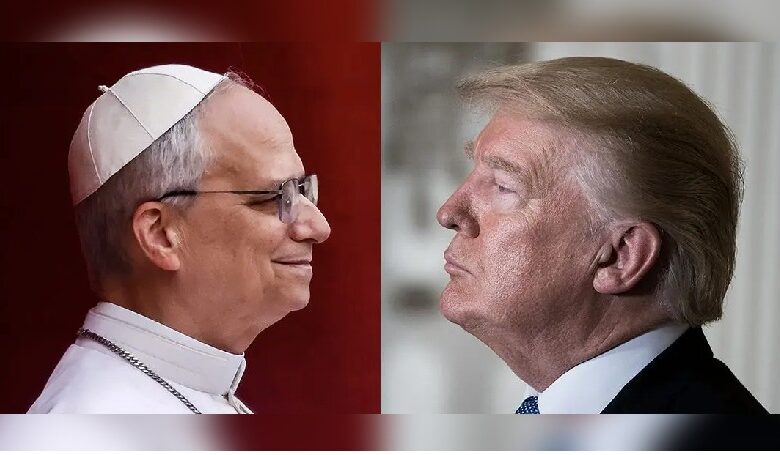
The apparent shift of the American Catholic Church in papal appointments, with emphasis on defending migrants’ rights, represents a fresh and more comprehensive approach to the “pro-life” doctrine.
In a notable change in the leadership structure of the Catholic Church in the United States, Pope Leo, the leader of the worldwide Catholic Church, is fundamentally transforming the clergy’s response to the migration policies of the Donald Trump administration by selecting bishops known for their support of migrants.
These appointments, which some analysts describe as one of Pope Leo’s most significant acts during his papacy, have attracted widespread media and religious institutional attention.
According to reports, of the total of 13 new bishops appointed by Pope Leo in the United States, at least 10 of them have taken explicit positions criticizing the Trump administration’s immigration policies and have called for improved treatment of migrants. These positions not only include criticism of government hardlines but have also employed words such as “cruel” to describe some measures.
One of the most prominent of these appointments is the selection of “Ronald Hicks” as the new Archbishop of New York. Hicks, who replaces Cardinal “Timothy Dolan,” a figure with conservative leanings, has a record of missionary service in “El Salvador” and years of work among migrant communities in his resume.
In his first press conference following his appointment, he declared his full support for the American Catholic Church’s statement condemning the Trump administration’s immigration policies, a statement that calls for more humane treatment of migrants and emphasizes respect for legal rights before their deportation.
Religious experts believe these appointments, which have replaced bishops with more conservative approaches, reflect an expansion of the traditional concept of “pro-life”; a concept that goes beyond mere opposition to abortion and now includes defense of the dignity of migrants and socially vulnerable populations. According to a Vatican official in charge of episcopal appointments, this approach demonstrates the Church’s maturation in understanding the true meaning of support for life.
This new perspective in the Catholic Church’s policy highlights the relationship between religious teachings and contemporary social challenges. Pope Leo has repeatedly emphasized that the “pro-life” doctrine should include respect for the dignity of all human beings and not just issues limited to the beginning of life.
In remarks that received widespread coverage, he said: “Someone who says they are against abortion but agrees with inhumane treatment of migrants in the United States does not have a correct understanding of the concept of ‘pro-life.'”
Beyond Hicks, some of the newly appointed bishops also have notable personal and professional backgrounds in supporting migrant communities. These include “Michael Pham,” Bishop of San Diego, who was himself a refugee and has participated in legal proceedings to support asylum seekers, as well as “Ramón Bejarano,” who grew up in Mexico and participated in protests against harsh immigration policies.
This overall approach by the Vatican and Church leaders in America comes at a point where political tensions between the Church and segments of the conservative religious community in the United States have also increased. “J.D. Vance,” the Vice President of the United States, in defending the Trump administration’s positions, has said that every country has the right to control its borders and has described these policies as humanitarian, a position that is clearly at odds with the Church’s message.
Internal criticisms and external reactions to this shift in the Catholic Church’s strategy show that how migration is addressed and vulnerable populations are supported has become one of the most central moral and social issues in the structure of the American Church. Religious analysts believe these appointments could influence the Church’s direction in the United States for decades to come regarding social justice, human rights, and the role of religion in public policy.