Prevention of Atena Daemi’s Transfer to Hospital for MRI and Medical Care
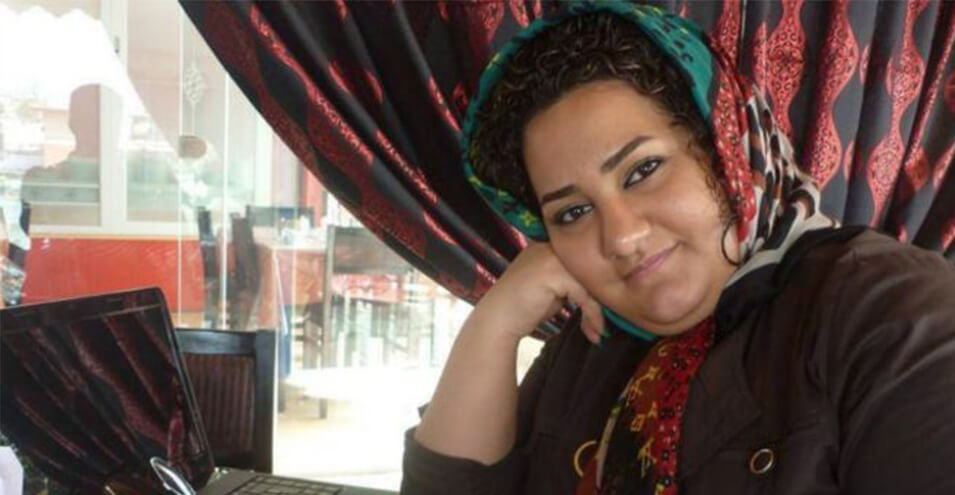
An informed source regarding the situation of Atena Daemi, an imprisoned civil activist, told the Iran Human Rights Campaign that she has been suffering from dizziness and constant headaches as well as numbness in her right eye area for months. Although the prison health officer at Qarchak Prison in May 2018 wrote a request for her to undergo an MRI, she has not been transferred to a hospital for this purpose and examination since that time. According to this source, the prosecutor overseeing the prison has also rejected the family’s requests for visits for months, and as a result, they have not been able to obtain permission to transfer their daughter to the hospital.
This source explained further to the Campaign: “Atena has been suffering from headaches and numbness in her right eye area for months. The health officer at Evin Prison examined her several times and told her that she has Multiple Sclerosis. However, after undergoing an MRI, it became clear that Atena fortunately does not have MS. But when she was at Qarchak Prison, the doctor there told her that she might have MS, and sometimes this disease in its early stages does not show itself in an MRI. He prescribed another MRI for Atena, but she has not yet been transferred to a hospital for this. Shortly after the Qarchak doctor wrote the MRI prescription for her, she and Golrokh were returned to Evin Prison, and although Atena mentioned at Evin that she needed to go for an MRI, no one has listened to her so far.”
This source, noting that prisoners are transferred to hospitals in two ways, said: “Sometimes the prison health officer issues a transfer order, or the health department does not issue her transfer to the hospital, but the prisoner herself thinks she should be transferred to a specialist doctor and her family requests the transfer from the prosecutor’s office. However, regarding Atena, the doctor at Qarchak Prison prescribed an MRI for her and she herself thinks she needs to see a specialist, but this has not happened for nearly 10 months.”
According to this source, Atena Daemi’s family has always had difficulties getting her transferred to the hospital: “Atena’s father has had to go to the prison prosecutor multiple times and request it, but now for months the prosecutor overseeing the prison does not see him at all. They think because Atena is standing and can do her work in the prison, therefore she does not need to see a specialist doctor either.”
Atena Daemi was first suspected of having Multiple Sclerosis in 2014 by the prison health officer due to constant headaches. However, specialist examinations at Sina Hospital showed that she does not have MS. Nevertheless, due to severe headaches and numbness in her right eye, she needs to undergo an MRI and medical care. According to the source, in addition to this, Atena Daemi suffers from high blood pressure and problems with kidney and gallstones following multiple hunger strikes.
Atena Daemi, a civil activist and former employee of Enghelab Sports Club, was arrested on October 20, 2014 by the Intelligence Organization of the Islamic Revolutionary Guard Corps and transferred to Evin Prison. Her trial was held on March 5, 2015 in Branch 28 of the Revolutionary Court presided over by Judge Moghisseh. She was sentenced to a total of 14 years in prison on charges of “gathering and conspiracy and propaganda activities against the country,” “insulting the Supreme Leader and sacred values,” and “concealing evidence of crime.” The judge considered the most severe punishment for each of the charges against this civil activist. According to Article 134 of the Islamic Penal Code regarding the aggregation of sentences, she must serve seven years in prison.
This source also emphasized that the health condition of all women in Evin Prison is not appropriate and said: “Most women in the women’s ward of this prison suffer from pain in the knee, lower back, and neck areas, and it is not clear what exactly the cause is. Also, due to the extremely unhealthy water in the prison, most prisoners suffer from kidney stones.”
According to this source, prisoners have also been deprived of hot water for months, and the constant use of cold water for bathing and washing has also caused one of the problems .
Source: Iran Human Rights Campaign