Priest Convicted for Preaching Gospel Near Abortion Clinic
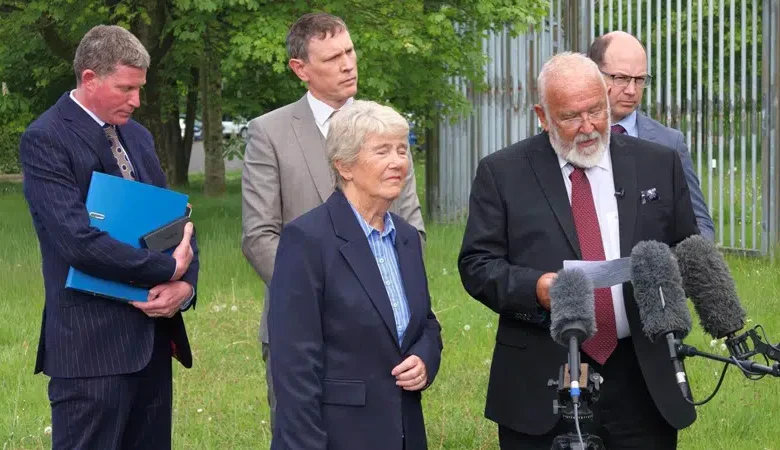
The conviction of “Clive Johnston,” an elderly Northern Irish priest, for delivering a brief sermon based on the famous verse John 3:16 near a medical facility has sparked a new wave of debate over freedom of speech, religious freedom, and the limits of laws regarding “safe access zones” for abortion. Supporters of the priest say he neither held a protest against abortion nor caused any disturbance to patients, yet the court found his presence and preaching to be a violation of the law. This case has now become one of the most controversial examples of the conflict between new abortion laws and religious freedom in Britain.
The “Coleraine” court in Northern Ireland found 78-year-old priest “Clive Johnston” and former chairman of the Baptist Union of Ireland guilty of violating the “Safe Access Zones” law in the vicinity of abortion service facilities. The verdict was issued after he conducted a street sermon centered on the famous verse John 3:16 near “Causeway” Hospital in July 2024.
Under the “Abortion Services (Safe Access Zones) Act,” which has been in effect in Northern Ireland since 2023, any action that could directly or indirectly affect individuals visiting these centers to receive abortion services is prohibited within the designated boundaries. These buffer zones were created to prevent psychological pressure, protest, or harassment against women seeking such services.
Nevertheless, Johnston’s advocates insist that he did not speak about abortion and did not carry protest signs or slogans. According to published reports, the brief service held on Sunday consisted only of a cross, a Bible, a loudspeaker, and a few Christian hymns, and the abortion clinic was even closed that day.
After the verdict, the priest described the incident as “a dark day for Christian freedom” and said: “We made no reference to abortion. If someone commits violence or harms people, it is natural that action should be taken against them; but I did nothing of the sort.” He also emphasized that at 78 years old, this is the first time in his life that he has faced a criminal conviction.
“Simon Calvert,” an official from the Christian organization supporting this case, argued that the verse John 3:16 is fundamentally unrelated to abortion and stated: “This is one of the most well-known Bible verses about God’s love and contains no reference to abortion whatsoever.”
He regarded this legal prosecution as a sign of “expanding restrictions on religious freedom and freedom of speech” in Britain. The verse Johnston read in his sermon is among the most famous passages of the New Testament: “For God so loved the world that he gave his one and only Son, that whoever believes in him shall not perish but have eternal life.” (John 3:16)
This case has gained prominence as laws regarding “safe access zones” around abortion facilities in various parts of Britain have become stricter in recent years. Supporters of these laws believe women should be able to access medical centers without feeling fear, pressure, or judgment. However, critics warn that the broad definition of these laws could even encompass prayer, preaching, or peaceful religious gatherings.
This incident has once again brought the biblical view on the value of human life to the forefront. Although abortion debates in today’s world are often pursued in political and legal spheres, many Christians emphasize that the Bible never encourages the deliberate ending of fetal life. In contrast, numerous verses affirm God’s recognition of human beings even before birth. For example, in the Book of Jeremiah it is written: “Before I formed you in the womb I knew you.” (Jeremiah 1:5)
Additionally, in Psalm 139, David says: “Your eyes saw my unformed body.”
Many Christian theologians regard these verses as evidence of the value and sanctity of human life from the moment of conception in the womb. At the same time, Christian leaders have repeatedly emphasized that the defense of life should be accompanied by love, support for vulnerable women, and avoiding violence or the humiliation of others.
Clive Johnston’s case has now transcended a local trial and become part of a broader debate about the boundary between religious freedom, freedom of speech, and laws related to abortion in Europe; a matter that will likely generate widespread responses in human rights and Christian circles in the coming months.