Prince Reza Pahlavi’s Remarks on Lack of Consensus Among Candidates to Join the ‘Solidarity Charter’
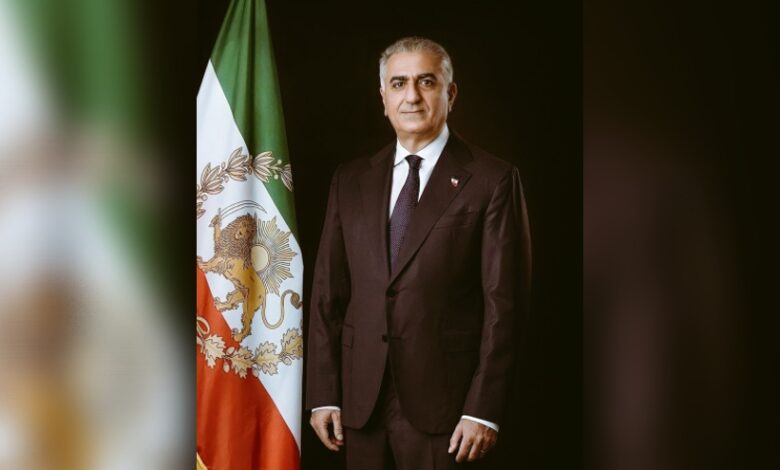
Prince Reza Pahlavi, who was one of the signatories of the “Solidarity Charter” (Mahsa), announced the lack of consensus among other candidates to join this charter.
The “Solidarity Charter and Organization for Iran’s Freedom” (Mahsa) was formed in mid-Esfand 1401 to achieve a free and democratic Iran, a path that represents a transition from the Islamic Republic. The signatories of this charter were well-known figures opposed to the Islamic Republic: Prince Reza Pahlavi, Nazanin Boniadi, Hamed Esmaeilion, Shirin Ebadi, Masih Alinejad, and Abdollah Mohtadi.
On April 4, 1402, less than a month after the publication of the “Solidarity Charter,” Prince Pahlavi proposed names to be added to the charter. The Prince wrote on his Twitter page: “After hearing criticisms and opinions from those who felt their voices were not reflected in the charter and solidarity group, I transmitted their suggested letters and names to the group last week. Without referring to the suggested names, he stated: I believe that the charter and group can better reflect the political plurality of Iranian society with the addition of new figures.”
However, now the Prince announced the lack of consensus among other signatories regarding the proposed candidates for the charter. In response to the lack of consensus among the candidates on his Twitter page, he stated: “My goal, effort, and preference has always been for the maximum secular and democracy-seeking forces from different factions to cooperate together. However, no consensus was reached on the joining of the proposed figures to the charter group. I have not limited myself to support and cooperation with only one limited group, and I will continue to maintain relative neutrality toward all groups in my role as an encourager and supporter.”
Prince Reza Pahlavi also emphasized that the goal is for all efforts to ultimately lead to the freedom and prosperity of Iran.