Prison and Lashing Sentences for Protesters Against Ukraine Plane Downing in Amol; Civil Activist Shora Fekri Imprisoned
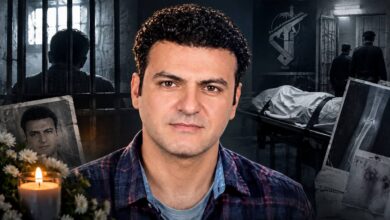
Shora Fekri, a civil activist in the city of Amol, was imprisoned on Monday, May 19, to serve a sentence of 5 months detention due to protesting against the downing of the Ukrainian airplane by an Islamic Revolutionary Guard Corps (IRGC) missile, while to date none of those who ordered the firing of the missile at the Ukrainian passenger plane have been summoned, and Islamic Republic officials have stated that the person who pulled the trigger is in custody.
At dawn on Wednesday, December 9, 2019, a Ukrainian airplane with 176 passengers crashed minutes after takeoff from Imam Khomeini Airport due to an IRGC missile strike near Tehran, and all passengers were killed. Officials of the Islamic Republic initially cited technical failure as the cause of the plane’s crash, and three days after the tragedy, the Joint Chiefs of Staff of the Armed Forces of the Islamic Republic officially acknowledged in a statement that the IRGC air defense had erred and mistakenly targeted this airplane. They described “human error” as the cause of this horrific tragedy.
From Saturday, December 21, thousands of people in Tehran and various Iranian cities, especially students, held protest rallies in objection to the downing of the Ukrainian airplane by the IRGC.
In some cases, these gatherings turned into clashes and violence.
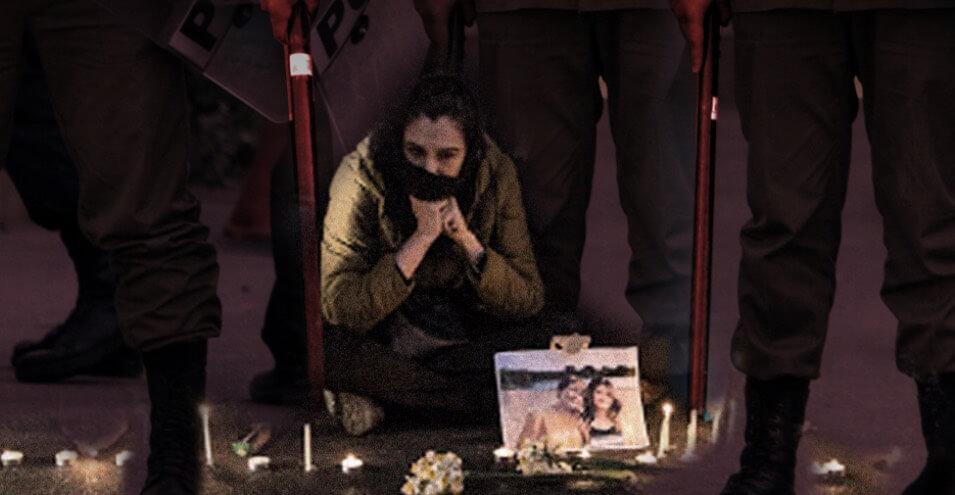
Prison and lashing sentences have been issued for more than 16 protesters against the plane downing in the city of Amol. Protesters who on Sunday, December 22, 2019, intended to light candles at Qaem Square in this city to express sympathy with the families of the victims of the Ukrainian airplane, but were arrested by military and security forces.
Shora Fekri, Mohsen Rezaei, Mithm Khalili, Mehdi Raei, and Salman Farrokhi are 5 of these protesters who were arrested by IRGC Intelligence and were each sentenced to 5 months imprisonment by Branch One of the Amol Revolutionary Court.
11 other citizens of Amol; Amin Foroughi, Ali Shekari, Azadeh and Aydin and Aida Javani, Alireza Mohammadnejad, Farshte Mahmudi, Hossein Mostafania, Mithm Khodabandelo, Hamid Mohammadi Irani, Amin Foroughi, and Mohammad Reza Shojaii, who were arrested by security police, were charged with anti-system propaganda activities by Branch One of the Amol Revolutionary Court and sentenced to a total of 88 months imprisonment, and by the Amol Criminal Court charged with disrupting public order to 5 months imprisonment and 20 lashes. The criminal court’s sentence is suspended for one year.
An informed source told the campaign that the trial of these citizens in Branch One of the Amol Revolutionary Court under the presiding of Mortaza Mahdavi consisted of one-minute trials and they had no opportunity to have a lawyer or defend themselves. This source told the campaign: “The trial didn’t even last a minute. The judge asked if you were in the gathering? Did you chant slogans? And that’s it. And then he issued a verdict. The judgment he gave is not even two lines long and wrote that based on the police report, each of these citizens is sentenced to 8 months imprisonment. In fact, neither the manner of conducting the trial nor the judgment issued have any legal or judicial validity.”
All detainees in the city of Amol are free on bail, but Shora Fekri, the civil activist, was imprisoned on Monday, May 19, when the prison sentence was executed.
An eyewitness in the city of Amol told the campaign: “It was supposed to be at 6 PM at Qaem Square in Amol that a ceremony would be held to commemorate the victims of the Ukrainian plane crash and people would light candles, in fact it would be a memorial ceremony. A number of people gathered, but the police force began to disperse them and did not allow the ceremony to be held and to disperse them, they resorted to beating people. The gathering of people was without any violence, they were just chanting and were completely on the sidewalk and had not entered the street, there were between 1,500 to 2,000 people, the vast majority of the crowd, about 70 percent, were women who were all beaten by military and security forces, and some were arrested by IRGC Intelligence and some by security police, and while those being arrested showed no resistance because they had not committed any illegal acts, the officers beat them with batons, fists, and kicks to the point that two people had their heads split open and were bleeding, but they were taken away in the same condition.”
An informed source informed the campaign about the stripping of detainees by IRGC Intelligence and said that “they behaved very badly, stripped everyone and even removed their underwear under the pretext of body search and then handcuffed them on a chair and beat them severely to the point that when they were released, there were marks of beating on their bodies. When they were in IRGC Intelligence. Rahim Rostami, the case investigator, also interrogated them at the detention site and severely insulted and cursed the young people.”
According to this source, the detainees arrested by security police were 14 people, of whom three were acquitted and 11 were sentenced to imprisonment and lashing. He told the campaign about how the security police treated the detainees:
“The detainees were taken to the basement of the Security Information Administration detention facility, which is shared with the Information Administration detention facility, and no measures were taken to treat the two people who had bleeding from their heads. This was while a young man with the appearance of Hezbollah was present there and claimed to have come from the Leader’s Office to see if there was any problem and beating, and in response to the young people’s protest against the beating, he said that what happened on the street has nothing to do with me! Meanwhile, Mehdi Alizadeh, who was in charge of the case, took the young people’s phones and read their private matters and laughed and mocked them.”
This source told the campaign: “What happened in Amol was really not a security issue at all, it was a very simple event that a number of people were really grieved and sad after that tragic incident and what happened to the airplane passengers, and wanted to express condolences. People need to mourn collectively and receive sympathy and comfort, but they did not give people this permission. People provoked to chant slogans, people chanted but did not make any violent movements. People were completely calm, but unfortunately we live in a city where the governor, as chairman of the province’s security council, with some planning and management, none of these problems would have occurred. They killed two hundred people and now they have a problem with slogans?”
Source: Iran Human Rights Campaign