15 Days of Resistance in Qarchak Prison: Death Row Inmates’ Strike Against Endless Execution of Sentences
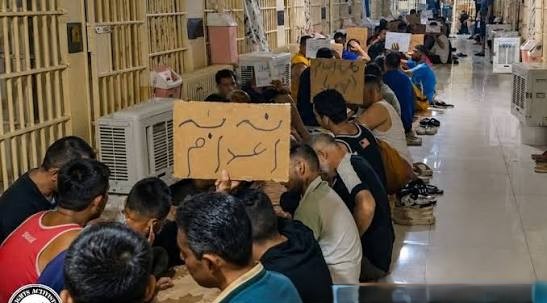
In one of the longest collective protests by inmates in recent years, prisoners in Ward Two of Qarchak Prison in Karaj have for the fifteenth consecutive day refused to receive food and staged a sit-in inside their ward, demanding a halt to the execution of death sentences. These protests continue amid growing concerns about the fate of dozens of death row inmates and the transparency of judicial processes in Iran.
The protest by inmates in Ward Two of Qarchak Prison is not merely a professional or prison-specific complaint; rather, it has once again brought the broader issue of capital punishment in Iran to the center of attention.
According to reports released by human rights sources, inmates in this ward have been on hunger strike and sit-in since late July in protest of the transfer of several death row inmates to solitary confinement cells and over concerns about imminent execution of sentences. They are demanding a halt to the execution of sentences until their cases are reviewed and related laws are reformed.
The continuation of this protest for more than two weeks reflects the depth of concern among inmates who believe that some death sentences have been issued without adequate review of case circumstances and without the possibility of reconsideration.
Qarchak Prison in Karaj has been one of the most important centers for execution of death sentences in Iran over recent years, particularly in cases related to drug offenses. Human rights organizations have repeatedly warned about the high number of executions in this area and the need for the Islamic Republic to reform its judicial approach.
Critics argue that many defendants in drug-related cases come from disadvantaged segments of society, and in some cases, their role, degree of involvement, and personal circumstances require more careful examination. However, the execution of a death sentence leaves no opportunity to correct a potential judicial error.
In recent days, the transfer of a large number of inmates from Ward Two of Qarchak to other sections has increased concerns among families and human rights activists. According to released reports, following these transfers, a significant portion of death row inmates are expected to remain in this ward.
The absence of official clarification about the reason for these transfers has led some families and human rights activists to suggest the possibility of faster execution of sentences.
The current protest has emerged at a time when inmates in this same ward had previously gone on strike in protest of executions. Following those previous protests, judicial authorities had promised that the execution of some sentences would be halted and the possibility of case review would be provided. However, from the perspective of protesting inmates, the continuation of the execution process suggests these promises have failed to restore lost trust.
The core issue is no longer simply the halt of a few specific sentences, but rather a broader question about Iran’s overall policy on capital punishment has been raised: Is the purpose of punishment to administer justice or to instill fear and serve as a social deterrent?
International human rights institutions have repeatedly warned in recent years about the increase in executions in Iran. These organizations have called for adherence to fair trial standards, defendants’ access to independent counsel, and prevention of irreversible sentences in cases where ambiguity exists about the judicial process.
The strike by Qarchak prisoners has now become a symbol of protest against capital punishment policy in Iran; a protest that began behind prison walls but raises questions that extend far beyond a prison ward: about the value of human life, the right to a fair trial, and governments’ responsibility in wielding punitive power.